Why do you need to deworm cats regularly? The importance of deworming cats! As shovelers, deworming cats is a routine and important responsibility.
Many people feel that domestic cats do not need deworming? In fact, this is a big blind spot. People will bring a lot of bacteria when they go out. Domestic cats will occasionally sneak out to visit. You may not know it~
We Today, I will start an in-depth chat on the topic of deworming cats. Do cats need deworming? Repel what insects? How to deworm? How often do you deworm?
1. What kind of worms do cats deworm?
In fact, cat deworming is roughly divided into two categories: inside and outside the body. Outside the body, there are some bugs that we can distinguish with the naked eye or those that are not easily detected. Worm eggs, the cat's uncomfortable symptoms in the body will be felt by the pet owner. In fact, it is relatively serious~ Let's first understand, where did the worms come from?
1. Cat deworming - Exoparasites
Common cat bugs: fleas, mites , ticks, lice, etc. These insects will not only cause great harm to the health of cats, but also infect people to a large extent. We really need to pay great attention to them.
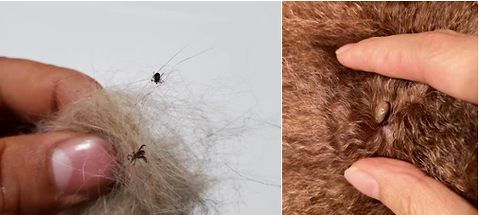
2. Cat deworming - Endoparasites
In other words, the parasites in the body are relatively hidden, and it is more difficult for pet owners to find them. Only some symptoms can be used to judge whether the cat is infected.
(1) Roundworms
It is transmitted from cat's breast milk to kittens, or there are Ascaris eggs in the environment, (such as eating mice infected with Ascaris) and caused by the cat's accidental ingestion. If the eggs are not removed in time, they will grow in the body and affect the cat's nutrient absorption. Therefore, it is recommended to do a good job of deworming the kittens in the kitten period to ensure that the eggs should be killed before they fully grow into adults. For general insurance, it is once a month.
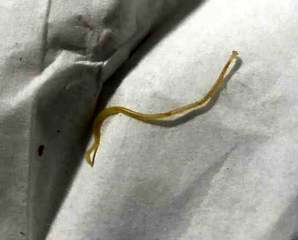
(2) Hookworms
The main mode of transmission also includes mother cat breast milk transmission or environmental infection , and may also be spread by soil and cockroaches, so domestic cats are also at risk of hookworm infection. Once a cat is infected with hookworms, it will cause no meat growth, anemia, lack of energy, etc., then you should pay attention to whether it is infected with hookworms.
(3) Tapeworms
If you have the habit of eating mice, you are more likely to be infected with cat tapeworms. If you eat fleas on your cat, you will also have a high probability of getting tapeworms. Tapeworms are relatively secretive. If you see small milky white particles on the cat's anus, or if your cat likes to rub his butt, it is likely to be infected with tapeworms.
These three common parasites are mainly used to deworm the cat's body. It is best to deworm your cat at least eight weeks after entering the house.
(4) Toxoplasma gondii
Possibly infected with Toxoplasma gondii. This thing sounds terrible, and it is very likely to be zoonotic, and it is not harmful to the healthy human body, but if it is pregnant, you need to go to the hospital for investigation.
Second, how to deworm cats
There are many cat deworming drugs, some are single in vivo or in vitro, and there are many deworming drugs that are both internal and external. There are also people who think that getting a collar will be all right. I suggest that when choosing insect repellent products, the safety and reliability of the product are the first.
1. Deworming collars and needles?
1) Deworming collar: Remember, it cannot be used for cats to deworm for a long time. Wearing the collar for a long time will easily poison the cat. Many collars are soaked with dichlorvos, which is very toxic.
2) Deworming needles: generally used for cattle, sheep and livestock, with different sizes, and the weak body of cats cannot carry such poisonous things!
2. In fact, there are a lot of professional deworming products, such as deworming sprays, drops and deworming oral medicines, which are relatively safe.
Common anthelmintic drugs are divided into in vitro deworming, in vivo deworming, and in vitro and in vivo deworming.
1) There are sprays and drops for in vitro deworming. On the back of the neck, drops are generally more convenient, and you can give the cat drops at home.
2) The main deworming agents in the body are Hailemiao, Bayer, etc.
3) Drops that are integrated inside and outside the body are generally drops, mainly including Dafafa, Bolaien, Love Walker, etc.
Here I will organize a table for you:
A few notes:
A. Kittens under 8 weeks old are not suitable for deworming, you can try deworming spray. Freshen spray is relatively easy to control the dosage. That's what I do with my kittens, and it's relatively safe. Be sure to remember to use the spray in small amounts, and be sure to dry it quickly after spraying, otherwise the milk cat will easily catch cold; and each cat should be temporarily isolated to prevent accidental rubbing. I personally (cat) use Brien, which is integrated inside and out, and it is easy to operate. Cat owners know that feeding cats and taking medicine is already a lot of trouble. If you are not careful, you will be scratched by cats, and you can solve most of the bugs at once The problem is that it is simple and convenient, and it is still very effective.
C. The drops are very simple, grab the back of the cat's neck, remove the hair, and drop a drop on the skin and you're done;
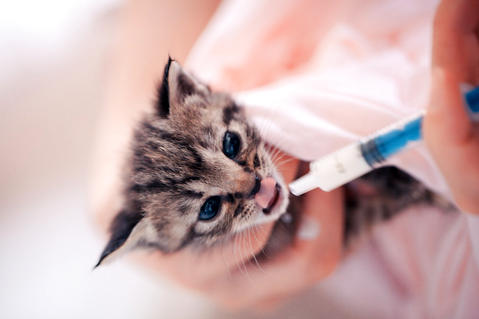
D. As for the deworming medicine, this is rather difficult, and the commercially available medicine-feeding artifact has to be operated quickly, accurately and ruthlessly! A quick stab at the cat's throat.
Third, how often do cats deworm?
Generally, the frequency of deworming will be written on the product packaging, once a month or once in three months. Personally, I think the frequency of deworming cats cannot be one size fits all. It depends on the situation. If the pet has been infected with parasites, the frequency of use is higher, but if the pet is free of worms, it only plays a preventive role, then There is no need to deworm so frequently.
For example, for a kitten that has just been brought home, make sure whether it has been dewormed before buying it. If not, it should be dewormed first to ensure health and safety and avoid hidden dangers.
Cats who do not go out often have good health in all aspects, have a regular and orderly diet, have no abnormal bowel movements, have shiny hair, and have a clean home environment, and do not need special deworming frequency High, once a quarter can also be.
3. Are there any precautions for cats after deworming?
The cat has a weak stomach and may experience diarrhea or loss of appetite for a day or two after taking the deworming medicine. Seek medical attention as soon as possible. After all, it is the medicine that is eaten in the cat's body, and you must buy qualified medicines in a regular hospital. In order for the deworming medicine to work better, be sure to follow the instructions to give the medicine according to the cat's weight, give the medicine three or four hours after eating, and then do not give it to the cat for at least five hours.

![[Dog Training 5] The training method of pet dog dining etiquette](/static/img/12192/12192_1.jpg)