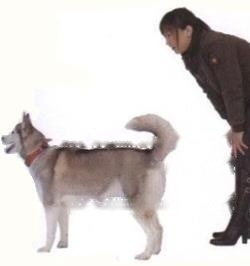
Many dog lovers have this distress: My dog is very disobedient, biting and stealing... Should I hit him? Can I change it? What's wrong with the dog? Will it break the dog... and many other questions. Today, the editor will tell you all about it. Can a dog be beaten if he is not obedient? What should I do if the dog is not obedient?
![src=/static/img/16553/16553_1.jpg]()
First of all, don't hit your dog, it will only make him afraid of alienating you and create obstacles for future training. You'd better train it patiently.
The basic methods of dog training include reward, punishment, inducement and coercion.
1. Rewards are a favorite training method for dogs. Reward measures can strengthen the dog's correct actions, consolidate the developed ability, and adjust the dog's neural activity state. Generally speaking, it is best to use food encouragement as little as possible, because often rewarding dogs with food is easy to cause gluttony and stealing. You can use verbal praise or stroking the back of the ear, the nape of the neck, the top of the head or the lower part of the neck. The effect of mental reward is actually no worse than that of material reward. In addition, it is not appropriate to reward before the action is completed completely. After you are extremely proficient in a certain action, you should examine its comprehensive application ability. You should not give rewards to insignificant links. It is best to wait until the entire action is completed continuously. , that is, the transition from a single reward to a comprehensive reward. This way, the dog will be able to be careful throughout the next series of movements, rather than focusing on just one or two movements.
2. Punishment is an effective means to stop the dog's bad behavior. When using this means, the trainer must be serious, with a high-pitched and sharp tone. Severe punishments include pointing at the dog and scolding the dog and throwing a book at the dog's side. Of course, it's not a real beating. The main purpose is to give the dog a threatening attitude. Make it remember this lesson, not the next one.
3. Induction refers to the use of delicious food, items, trainer's actions, etc. to induce the dog to make a certain action, thereby establishing a means of conditioned reflex. For example, if the dog learns to correctly grasp the password of come, the trainer can tease the dog with a snack in front, and the dog will definitely come to the side obediently. At this time, the dog must not be rewarded with a snack dog, it will misunderstand your come as eat. Repeated this many times, the dog will understand that the so-called come is a process of walking to the owner from far to near. No treats, a few more training sessions, and your dog will be sure to understand your come command without fail.
4. Coercion refers to the use of mechanical stimulation and deterrent passwords to force the dog to successfully complete a certain action. The so-called mechanical stimulation refers to behaviors such as pulling the traction rope, pressing, and tapping. For example, if the trainer lifts the dog's collar with the right hand and presses the dog's waist with the left hand, the dog is bound to sit down. Coercive means are more direct than inducement means, and are less prone to misunderstandings, so that dogs can understand the meaning of passwords when they are forced to obey. This method is a bit simplistic and rude, and does not take into account the voluntary consciousness of the dog. But sometimes, it is generally said that teaching and reprimanding has made dogs feel accustomed and commonplace, and they don't care about the so-called bitter-speaking inducement. At this time, the completion of some actions and the change of dog's behavioral habits must be enforced by means of coercion.
For example, when some dogs bully the small animals in the house, and the loud reprimands are of no use to it, they can give it strong stimulation to force it to make corrections, which is a relatively extreme coercion. And punishment is often one of the effective measures. Generally speaking, the forced intensity should not be out of line, and only give it strong stimulation when necessary. It should not be too intense in the early stage of training, and it should be used with caution for timid dogs.

![[Dog Training 5] The training method of pet dog dining etiquette](/static/img/12192/12192_1.jpg)