Maybe dogs the term gastric torsion is a little unfamiliar to you, but it's not uncommon for dogs. For convenience, many people will feed their dogs first, and then take them out to exercise; or the weather is hot, and the dogs will gulp water immediately after going home after exercising. These behaviors have a high chance of causing gastric torsion in dogs!
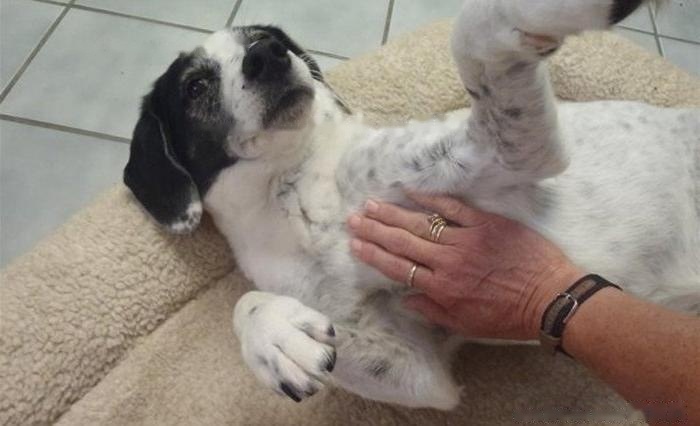
Caused by a strong external impact on the stomach flip. The spleen and stomach are connected by ligaments, so generally the spleen and stomach twist together.
After gastric torsion, the rest of the internal organs will be damaged by ischemia due to the inability of blood to pass through, and necrosis will eventually lead to shock death. Once gastric torsion occurs, the dog's physical condition will deteriorate sharply, life-threatening, and may even die within a few hours. Even in treated dogs, mortality rates are as high as 25-33%, and survivors have a 50% chance of not fully recovering.
Generally, this is related to gastric motility, but breed and genetics are also closely related.
1. When the dog's stomach is empty, it will not shake and turn over. Once the stomach has weight (for example, drink a lot of water after eating, and then pant quickly to cause a lot of air in the stomach), there will be a lot of air in the stomach. The external force to shake the stomach may cause gastric torsion.
2. Huge psychological pressure can also cause gastric torsion, such as: dog competition, mating, giving birth to puppies, boarding, just arriving at a new home, etc.
3. Other factors that are prone to gastric torsion
1) Age. Older dogs are more prone to this, and dogs over 7 years old are twice as likely to develop gastric torsion as dogs 2-4 years old.
2) Gender. Male dogs are more prone to gastric torsion.
3) Body type. Smaller dogs are more prone to gastric torsion.
4) Temperament. Dogs who are more anxious, nervous, and prone to fear are more prone to gastric torsion.
Irritability; retching (keeps trying but can't vomit); whitening of gums in mouth; hard, swollen and painful abdomen; profuse drooling; arched back; swollen spleen Large; shortness of breath or difficulty; shock, etc.
Usually occurs in large and giant deep-chested dogs, less commonly in small dogs and cats. Because large dogs have great strength, the stomach has more room for movement in the abdominal cavity. When there is food or water in the stomach, it is easy to cause the stomach to shake a lot during vigorous exercise.
Among the prone dog breeds, there are Great Dane, German Shepherd, Golden Retriever and so on.
When your dog develops gastric torsion, don't hesitate to seek medical attention immediately.
Gastric torsion is not a chronic disease and has no warning signs. But pay attention to the following points, you can avoid the dog's stomach torsion as much as possible.
1. Feed the dog regularly and quantitatively, and do not let the dog eat too much. Especially for large dogs, don't let them eat after being hungry for a long time. This feeding method is very unhealthy for the dog's stomach and will also increase the probability of the dog's stomach torsion.
2. Avoid letting the dog eat too fast.
3. Give the dog plenty of water, but avoid drinking a lot of water after meals. Drinking water can swell the food, increase the burden on your dog's stomach, and increase the likelihood of gastric torsion.
4. Avoid strenuous exercise one hour before a meal or two hours after a meal, or do something that will make the dog feel nervous.
5. Avoid feeding foods that may produce gas, such as soybeans, peas, etc.
6. If you want to change the type of feed, you can slowly use it for 3-5 days to let the dog get used to it.
7. Don't feed too much food at one time, it is best to divide it into 2-3 meals.
8. Dog breeds that may occur are best eaten alone and in a quiet place.
Finally, to sum up, usually pay attention to the dog's healthy diet and healthy and scientific feeding, the possibility of gastric torsion in dogs is still very low. If unfortunate or accident happens, please go to the hospital as soon as possible.

![[Dog Training 5] The training method of pet dog dining etiquette](/static/img/12192/12192_1.jpg)