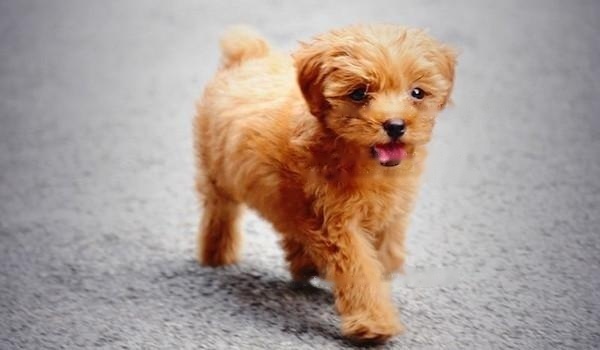
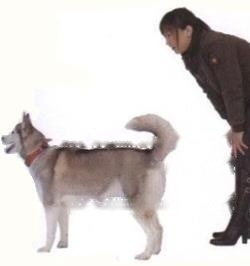
The Samoyed, named after the Siberian herders, the Samoyed, has been used to pull sleds and guard reindeer. Samoyeds are known for their endurance and robust build. European explorers used this dog for expedition work in the North and South Pole. This dog has many coat colors, generally black, black and white, black and tawny, and finally the white coat breed is dominant.
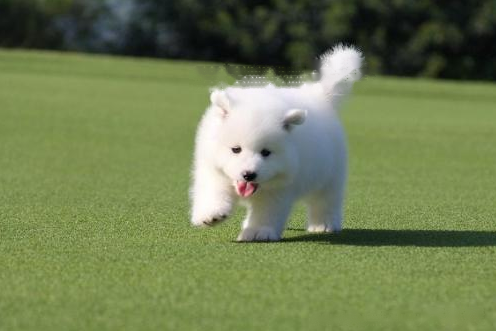
Appearance: Thick coat, with collared hair in males but not in females. The Samoyed's back should not be too long, as it may cause the back to be weak and incapable of doing the job. But at the same time, the body should not be too compact, because it will not work well for pulling the cart. Male dogs are masculine in appearance and behavior, but aggressive behavior is not allowed without permission. The bitch is gentle in temperament, but not weak in body. The back of the female dog may be slightly longer than that of the male dog. The limbs should be relatively long, and the Samoyed with short limbs is inconsistent with the standard. The rear drive should be particularly developed, the knee joints should have four butt, proper angles, any unsound or bull-like knee joint is a serious defect.
Physical structure: Musculoskeletal development, bone is heavier than other dogs of the same height, but not too heavy, otherwise it will hinder speed and agility, which are the least for the Samoyed. important. Bones should be proportional to body size. The weight should not be too heavy, otherwise it will appear bulky, but it should not be too light and should be proportional to the height.
Height: Double coat. The lower layer is short and soft like wool, covering the whole body. The upper coat is thick and long, growing perpendicular to the body, but not curly. Coat-shaped collar on neck and shoulders. The coat of female dogs is slightly shorter and softer than that of male dogs.
Color: Must be pure white, white with buff, cream, or buff. Other Discord Standards.
Step too: walking fast and briskly. The front drive has good reach and the rear drive is powerful.
Hindquarters: The thighs are well developed, and the knee joints form an angle of about 45 degrees with the ground. Viewed from the rear, when the dog is standing naturally, the hind legs are parallel. Straight or bull-like knees do not meet the criteria.
Forequarters: Both forelegs are parallel and straight. Strong forefeet. Because the chest is deeper, the forelegs are longer. The height from the ground to the elbow is about 55% of the height from the ground to the upper edge of the shoulder blade. Limbs that are too short and shallow do not meet the standard. Shoulders should be long and sloping at about a 45-degree angle, with strong shoulders. The distance between the upper edges of the two scapulae is about 2.5 to 3.8 cm.
Feet: Large, long, relatively flat, hare-like, with slightly separated toes; toes arched, thick and hard pads, with protective hair between the toes. Foot abduction, dove-like toes, rounded or cat-like feet, and toes that are too far apart are all faults.
HEAD: COMPOSITION - Skull broad, slightly arched at the top, but not round. The line connecting the base of the two eyes and the center point between the two eyebrow arches is an equilateral triangle. Muzzle - Medium in length and breadth, tapering from the base of the nose to the tip. The snout is proportional to body shape and skull size. The muzzle must have a certain thickness. Beards cannot be cut off. Lips—preferably black, with the corners of the mouth upturned like a smile. The lips at the corners of the mouth should not sag. Ears—Thick, erect, triangular in shape, slightly rounded at the tip; not too large, but not too small. Ear size should be proportional to the dog's height and head size. The ears are far apart, but the heels are within the edge of the head. The ears are well mobile, with hair growing inside the ears, and the hairs in front of the ears are numerous and erect. The length of the ear is equal to the distance from the base of the inner ear to the outer corner of the eye. Eyes - dark colors are the best. The eyes are sunken, wide apart, almond-shaped, with the lower eyelid sloping toward the base of the ear. The edges of the eyes should be darker. Round eyes, blue eyes, and eyes that are too prominent are not up to the standard. Nose - Black is preferred, but brown, liver-brown noses are also acceptable. Teeth - Strong, scissors bite. The upper and lower foreheads should not be too prominent.
Expression: Having a smiling expression is very important. When on alert the ears are pricked up.
Trunk: Neck - Strong, well muscled, with a graceful arch of the neck.
Chest: Deep, extended ribs flat on the sides, allowing freedom of movement of the forelegs and shoulders.
Lower Back: The withers is the highest point of the shoulders. The loin is strong and slightly arched. The back is straight, stroke length, and muscular. The body is approximately square, and its length is approximately 5% longer than its height. Bitches are slightly longer than males. The abdomen should be tightened upwards. The rump is full, slightly sloping, and joins the tail naturally.
Tail: Relatively long, reaching the elbow joint when drooping naturally. The tail is long and thick. When the dog is on alert, the tail is raised higher than the back or on one side, and it hangs down when resting. The tail should not be too high or too bottom, and the tail is flexible. Having two curled tails is a defect. The condition where the tail is raised higher than the back can only occur once during the competition.
Disqualification: Colors other than white, buff, cream: blue eyes. The choice of puppies depends on the characteristics. The issue of pedigree can only look at the pedigree certificate.
![[Dog Training 5] The training method of pet dog dining etiquette](/static/img/12192/12192_1.jpg)