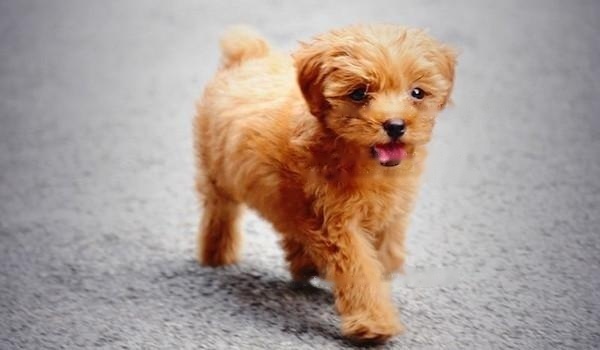
About the quality of puppies To distinguish the quality of each puppies requires long-term breeding experience, which cannot be summarized in a few simple sentences. But for buyers, in simple terms, it mainly depends on bone mass, gross mass and front page.
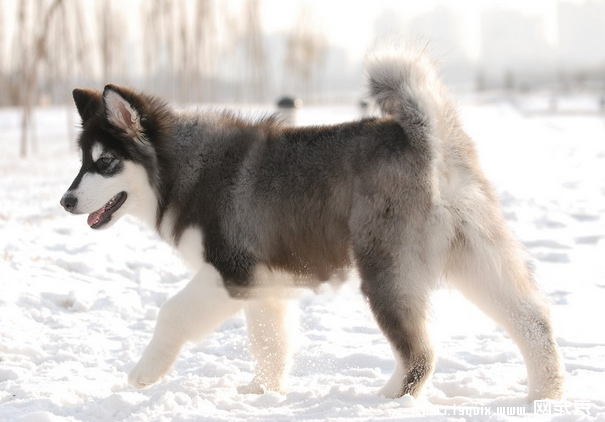
Compared with puppies of the same age, of course, they must be their actual age. They have thick bones, wide chests, more hair, big heads, and short and thick mouths. Usually, they are of better quality. But there are also acquired factors. Breeding methods are very important. If you raise them well, the dog will grow up beautifully. But you can't rely entirely on acquired feeding. Good feeding can only be said to exert its due limit, not to perform exceptionally. To give a simple example, a person who is born short can't grow into Yao Ming no matter how well he grew up. .
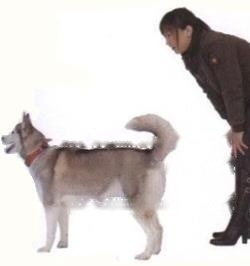
Another point to say is that the photos are not completely reliable, there may be visual impairment, it is best to have a reference object on the photo of the puppy, such as: use a drink bottle to compare on the horizontal line Hold your legs and wait.
About teeth To judge the age of the baby, you can look at the teeth, and the teeth gradually grow unevenly in about 20 days. 30 to 40 days, the nipple incisors are even. In 2 months, all the deciduous teeth are long and homogeneous, tapered and tender white. At 4 months, the first primary incisors were replaced. At 5-6 months, the second and third primary incisors and all primary canines were replaced. After 8 months, all teeth are replaced with permanent teeth. 1 year old, the permanent teeth are uniform, smooth and firm, and the upper incisors have sharp protrusions. At the age of 1.5 years, the first mandibular incisor spikes were obliterated. At 2.5 years old, the second mandibular incisor spikes were obliterated. At 3.5 years old, the peaks of the maxillary first incisors were obliterated. At the age of 4.5 years, the pinnacles of the maxillary second incisors were obliterated. At the age of 5 years, the third mandibular incisors were slightly worn on the peaks, while the first and second mandibular incisors were rectangular in shape. At the age of 6, the third mandibular incisors were obliterated, and the canines were blunt. At the age of 7, the mandibular first incisor was worn to the root of the tooth, and the worn surface was longitudinal oval. At the age of 8, the mandibular first incisor was worn and tilted forward. At the age of 10, the worn surfaces of the second mandibular and the first maxillary incisors were longitudinal oval. At the age of 16, the incisors were lost and the canines were incomplete. At the age of 20, the canine teeth fell out. To judge the age by looking at the teeth, you must have a wealth of experience to see it accurately, and you need to observe more.
About Alaska's Snow Nose and Nose Flowers Dogs with snow noses are Husky, Alaskan, Golden Retriever, Labulle Lado et al, mostly Alaska. The so-called snow nose refers to the vertical pink stripe that appears in the middle of the nose mirror, and the snow nose can appear on the nose mirror of any color Husky or Alaska. The formation of snow nose is directly related to an enzyme in the body. The enzymes responsible for making black/liver pigments on the nose are affected by temperature. These enzymes are active when the temperature is high, that is, appear in winter. For dogs with snow nose, it can be relieved or disappeared in summer, but in winter, this enzyme becomes inactive, so snow nose becomes obvious. For the snow nose, there is no way to completely improve it. Although many friends can use minerals, seaweed powder or other nutrients to change the snow nose in a short time, but stop using these items, the snow nose will appear immediately. For another kind of flower nose (that is, the irregular pink color of the nose mirror), it can be completely improved with nutritional supplements containing minerals and sun exposure. This flower nose and snow nose are completely different. No points are deducted for Huskies and Alaskan snow noses at dog shows around the world, which means that snow noses are not a defect.

![[Dog Training 5] The training method of pet dog dining etiquette](/static/img/12192/12192_1.jpg)