Before buying a Germanshepherd, be sure to look carefully and understand every part of the body before buying a purebred German shepherd dog.
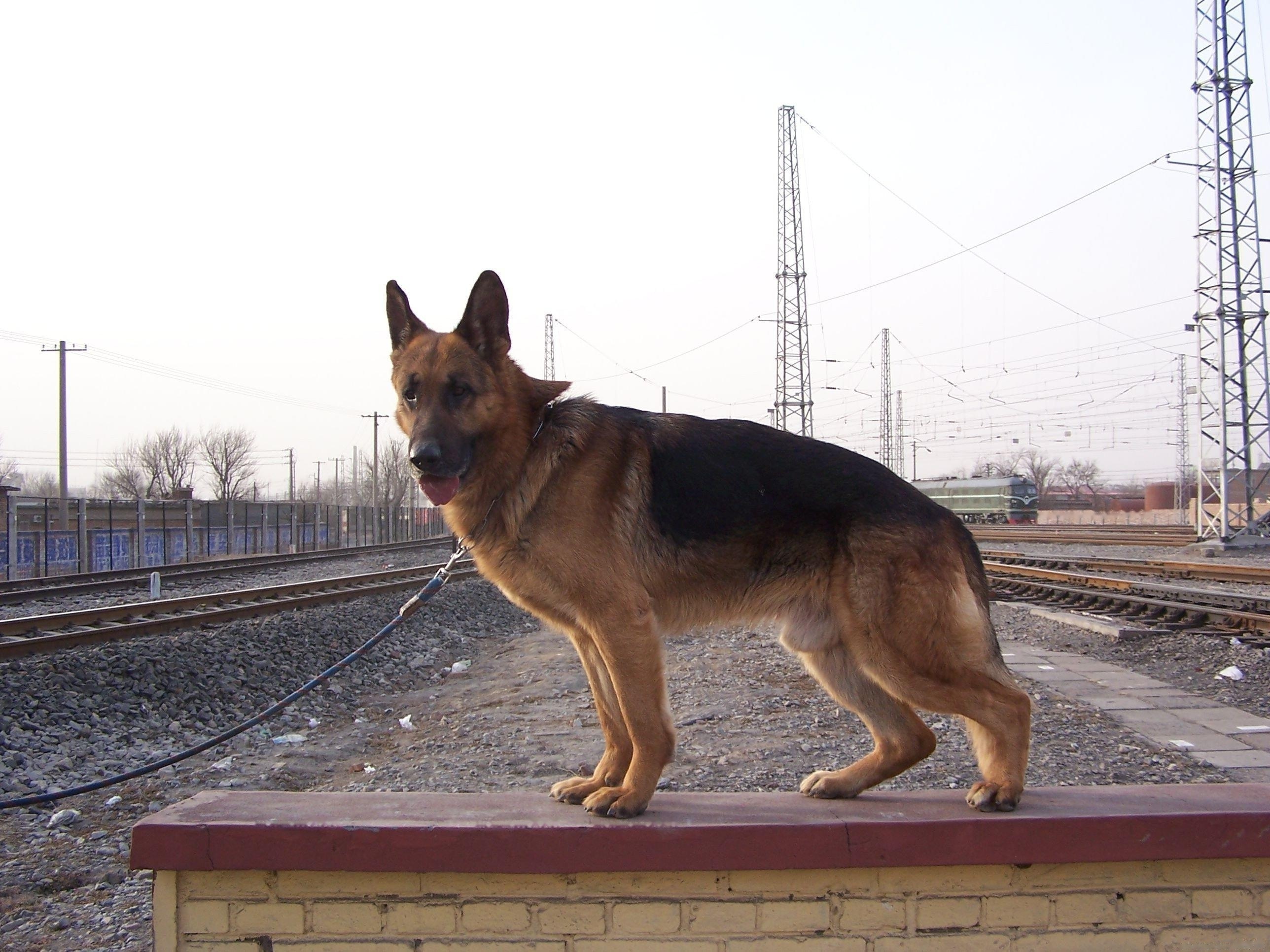
Neck: The German Shepherd's neck is 45 degrees from the horizontal. Understand that when it is excited, its neck will be raised, and when it is running, it will bend its neck. There should be no loose, wrinkled skin on the neck.
Chest: The German Shepherd's chest should be as long and distinct as possible, with the lower chest clearly showing. The length of the chest should reach 45%-48% of the height at the withers.
Forelegs: The German Shepherd's upper arm should be at a 90-degree angle to the shoulder blade. The muscles of the forelegs and shoulders should be strong.
Back: The German Shepherd's back should be straight and strong, not too long between the hips and the shoulders, and the curve of the back should be gentle with no interruptions.
Ribs: The German Shepherd's ribs should not be barrel-shaped or flat and thin. Form the ribcage and ensure free movement of the dog's elbow joint.
Waist: The German Shepherd's waist should be straight and strong. China Shepherd Network understands that the waist muscles are relatively strong; the width of the torso should be slightly retracted; The largest possible extension back, better protect the internal organs.
Hindquarters: The thighs of the German Shepherd's hind legs should be broad, thick, and well muscled. The jumping joints should be strong and strong so that the hind legs can have no effort when jumping forward.
Abdomen: The belly of the strong German Shepherd is inconspicuous. The abdomen should be tucked in, wrapping the lower part of the torso. A round and saggy belly is a sign of poor feeding practices.
Torso: The length of the German Shepherd's torso should be 110% to 117% of the height at the withers.
Tail: The German Shepherd's tail should be at least the length of the jumping joint. The tail rolls up when jumping only when it is excited and moving.
Smell: According to China Shepherd Network: German Shepherds have 300 million olfactory cells while humans have only 5 million, enabling them to see the world through their noses.
Tongue: The main function of the German Shepherd's tongue is to dissipate heat.
Teeth: From the German Shepherd's teeth, it can be seen that its age, breeding quality, and health status play an important role in evaluating the dog.
Vision: This is the weakness of the German Shepherd, whose vision range is limited to 1000 meters.
Hearing: Human hearing can reach 20,000 Hz, while German Shepherd's hearing can reach 70,000 to 100,000 Hz. The erect ears are helpful for judging the location of the sound in advance and accurately.
On September 20, 1899, the Shepherd Dog Membership Meeting held in Frankfort passed the association's articles of association, which also made detailed regulations on the standard of the shepherd dog breed. According to the Chinese Shepherd Dog Network: Since its inception, there has been little change. To this day, this standard is the basic and only standard of the Sheepdog Association as a breeder. The founder and first president of the Sheepdog Association, Max von Stephanie, also made important and prescient suggestions for the development of this standard.

![[Dog Training 5] The training method of pet dog dining etiquette](/static/img/12192/12192_1.jpg)