Dogs Gastrointestinal hemorrhage is an acute gastroenteritis syndrome, the etiology of which is unknown. The disease is characterized by sudden onset, rapid death, vomiting, diarrhea, and peptone-like bloody stools.
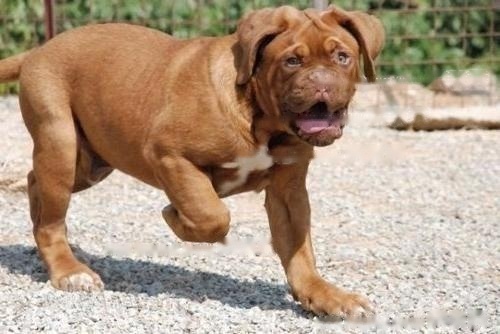
Bordeaux
All ages, all breeds dogs can be affected, and there is no gender difference, but it mostly occurs in small purebred dogs aged 2 to 4 years.
In the absence of any obvious predisposing factors, sudden onset, the sick dog vomits, diarrhea, and loses weight rapidly. A fishy smell
The sick dog is depressed, loses appetite, dehydrates the body, and has thick blood. If it is not treated in time, it is often due to blood circulation disorder and shock, and it will die within 1 to 2 days.
[Diagnosis] According to the medical history and clinical symptoms, a preliminary diagnosis can be made. In acute cases, the hematocrit is significantly increased due to dehydration, thick blood, usually greater than 60%, and even as high as 80%. Diagnostic reference. However, the disease should be distinguished from canine parvovirus disease: (1) the texture of feces is different; (2) canine parvovirus disease is highly contagious; (3) the body temperature of canine infectious enteritis should be raised.
1. For rehydration, use Ringer's solution 50-60ml/kg, and add 50% glucose to make it into a concentration of 5%, intravenous drip, once a day. Oral rehydration salts are administered to sick dogs who have no serious vomiting and desire to drink, and let them drink by themselves. In cases with a high hematocrit value, a low molecular weight dextran solution can be infused intravenously at a dose of 20ml/kg to reduce the hematocrit value.
2. Cardiotonic drugs can be used to protect the heart during the infusion process, such as poison K, 0.125-0.25mg for the first time, add 40ml of glucose liquid for instillation, and repeat after 1-2 hours. Or sodium benzoate caffeine 0.1~0.4g, intramuscular injection, or mixed intramuscular injection with Shengmai needle 1~2ml, VB12 0.5mg
3. VK1 1ml, VK3 2ml mixed intramuscular injection for hemostasis and anti-allergy , In conjunction with the use of Zhixuemin 2ml or Anluoxue 1ml, twice a day, at the same time use Dishammetasone, 5 ~ 10mg per dog, twice a day, intramuscular injection.
4. To control secondary infection, ampicillin 20mg/kg, intramuscular injection, kanamycin, 300,000 to 500,000, intramuscular injection, twice a day, or oral berberine, 4 to 5 times each time Tablets, 3 to 4 times a day, Mideamycin, 1 to 2 tablets each time, 2 to 3 times a day. ;
5. For symptomatic treatment of severe vomiting, intramuscular injection of VB6 2ml, Emerol 0.5~2ml, twice a day, severe diarrhea, 0.3~0.9g tannin protein, VB1 10mg, Vk4 2mg, norfloxacin 20mg/kg, sodium bicarbonate 0.5g, once orally, 3 times a day, can get the desired effect.
(1) Diagnosis: Acute hemorrhagic gastroenteritis is a syndrome of unknown cause in dogs. It is characterized by sudden onset, vomiting, and in severe cases, bloody diarrhea and marked hemoconcentration. Acute hemorrhagic gastroenteritis is not a real inflammatory disease, it lacks the lesions of general inflammation, and is essentially a functional disorder of the intestinal tract with changes in mucosal permeability or secretion. Sick dogs often vomit suddenly, and a few hours later develop severe bloody diarrhea with foul-smelling feces. Depressed spirit, prolonged capillary refill time. Predisposing factors are often not found in the medical history. If not treated in time, often due to circulatory collapse and shock, death within a few hours. If the treatment is timely, the mortality rate is not high. The most diagnostic indicator of the disease is hematocrit. In acute hemorrhagic gastroenteritis, the hematocrit is markedly elevated (usually greater than 60%, and sometimes as high as 80%), and foul-smelling bloody diarrhea occurs.
(2) Treatment: Acute hemorrhagic gastroenteritis should be treated as an emergency. Timely and massive infusion can prevent death. In the early stage, isotonic saline is infused, and in the later stage, 2 parts of isotonic saline plus 1 part of isotonic glucose solution, and 10% low-molecular-weight dextran solution is appropriately added. It is best to use intravenous cannula for infusion. Start with a rapid infusion of 90 ml per kilogram of body weight until the capillary filling returns to normal; when the red blood cells rise to more than 50%, 40 to 60 ml of fluid per kilogram of body weight after 24 hours to maintain the hematocrit Below 50%, corticosteroids may be considered if the patient is in shock and does not respond well to intravenous fluid therapy. Feeding and drinking should be avoided for the first 24 hours, and a small bland diet may be given when vomiting and bloody loose stools stop. If the treatment is still ineffective after 24 hours, it should be considered whether it is caused by other diseases, such as canine parvovirus infection, intussusception, volvulus, etc.

![[Dog Training 5] The training method of pet dog dining etiquette](/static/img/12192/12192_1.jpg)