1. Basic information
1. Chinese name: Yellow-headed temple turtle
2. Latin name: Hieremys annandalei
3. Jie : Animalia
4, Door: Chordate
5, Class: Reptiles
6, Order: Turtles
7. Family: Turtle family
8. Genus: Oriental Turtle
9. Distribution area: Southeast Asia
10. Reproduction method: oviparous
11. Personality: Timid
12. Lifespan: over 100 years old
2. Morphological characteristics
1. Body type: The body length can reach 50-60CM, and the weight can reach 20 kilograms.
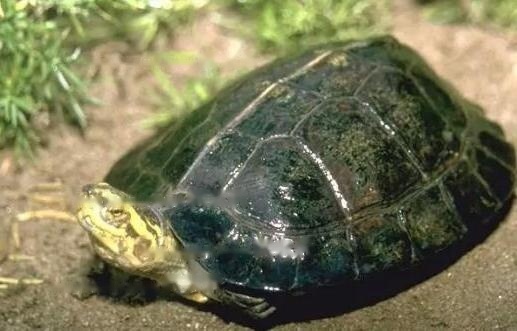
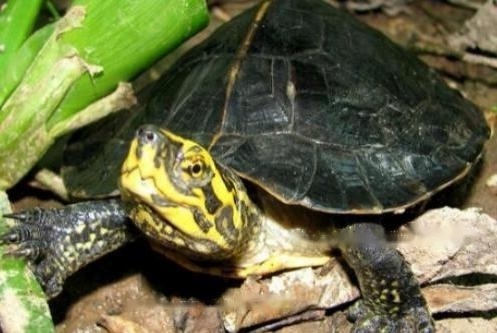
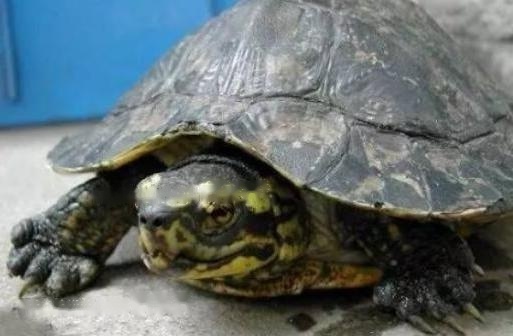
2. Head: The head is small, with a black top and irregular yellow horizontal stripes on the sides and eye sockets. The head is scattered with small yellow mottles, the eye sockets are black with yellow fragments, the center of the upper jaw is W shaped, and has fine serrations. There are no obvious vertical stripes on the side of the head.
3. Carapace: The carapace has a higher uplift, is black, and is oval as a whole. The rear edge of the larvae is slightly serrated, and it gradually becomes blunt and rounded with age.
4. Plastron: The front edge of the plastron is cut flat, the rear edge is notched, the color is black to yellow and black, and some are light yellow.
5. Limbs: The limbs are gray-brown, with webbed between the fingers (toes), and have strong swimming ability.
6. Tail: The tail is flesh-grey with moderate length.
three , Male and female identification
The male plastron of the yellow-headed temple turtle is concave in the center, and the tail is thick and long; the female plastron is flat, the anal opening is closer to the rear edge of the plastron, and the tail is relatively short.
four , Living habits
1. Habitat: The yellow-headed temple turtle cannot adapt to the cold climate, so the habitat environment is close to the tropical climate and the temperature is higher. They generally live in rivers, lakes and streams, and can also live in seawater for a short time, but they also have certain terrestrial habits and belong to semi-aquatic turtles.
2. Diet: The yellow-headed temple turtle is an omnivorous animal, eating fish, shrimp, vegetables, melons and fruits, etc., but prefers plant food.
3. Activity: The yellow-headed temple turtle generally crawls in the evening or at night, less during the day.
4. Hibernation: The yellow-headed temple turtle has a hibernation period every year, but the time is not very long.
About the introduction of the yellow-headed temple turtle, the editor will share it here today. If you want to know more, please continue to pay attention to this site! Finally, a friendly reminder: Many wild animals such as the yellow-headed temple turtle are already in an endangered state. We need to take more care, so as to realize the harmonious coexistence of man and nature~

![[Original] Sharing of popular science knowledge of ringed map turtles](/static/img/11249/11249_1.jpg)