The giant snake-necked turtle is a relatively rare species of turtle. Therefore, they are rarely seen in daily life, but there are still many friends who want to know about them. Let me tell you a little bit about it!
1. Basic information
Chinese name: giant snake-necked turtle
foreign name: macrocephala
Alias: giant snake-necked turtle, giant, Acanthochelys macrocephala
Latin name: Acanthochelys macrocephala
Kingdom: Animalia
Phylum: Chordate
Subphylum: Notochord Animal Subphylum
Class: Reptiles
Subclass: Apocarpus
Order: Turtles
Suborder: Lateral neck Turtles
Family: Snake-necked turtles
II. Appearance characteristics
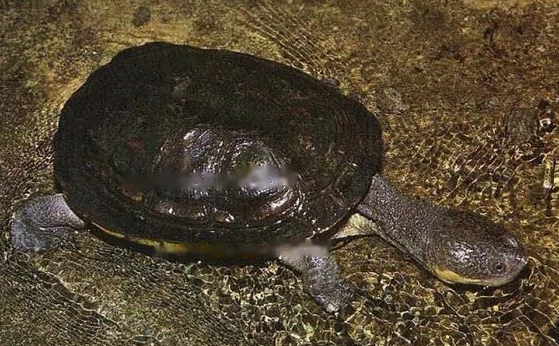
The carapace of giant snake-necked turtles (can be up to 23.5 cm) is gray or dark brown, with many short and round protrusions on the neck, and a large head with some dotted patterns.
III. Distribution range
The giant snake-necked turtle is mainly distributed in central Bolivia (the Mamorie River system) and southwestern Brazil (upper Paraguay River) .
IV. Habitat
The giant snake-necked turtle likes to inhabit swamps, wetlands or small rivers with gentle flow.
V. Living habits
The giant snake-necked turtle is a completely aquatic turtle, hibernating and mating are completed in water. If there is a drought or the river dries up, they burrow into the soil to hibernate and wait for the rainy season to come.
Six. Diet
The giant snake-necked turtle is an omnivorous animal, mainly feeding on small animals such as earthworms and mosquitoes.
7. Breeding methods
The breeding method of giant snake-necked turtles is oviparous. Female giant snake-necked turtles usually lay eggs by the river. It can lay 8-24 eggs, and each egg is white, about 34x22 mm, and the incubation period is about 3-4 months.
The above is all the information about the giant snake-necked turtle, thank you for reading~

![[Original] Sharing of popular science knowledge of ringed map turtles](/static/img/11249/11249_1.jpg)