Today, I would like to introduce to you a turtle species that is not very common in my country and is rare in number - the Eastern Florida Diamondback Turtle. Let's learn about it together!
I. Basic information
Chinese name: Florida East Coast Diamondback Terrapin
English name: Florida East Coast Diamondback Terrapin
Origin: The junction of rivers and seas in the United States
Reproduction: Oviparous
Life: 25-40 years
II. Appearance characteristics
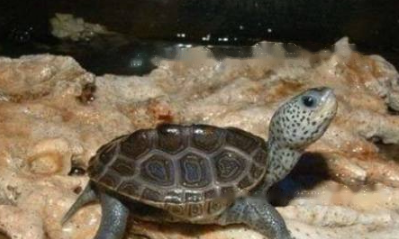
1. The carapace of the eastern Florida diamondback turtle is a relatively single dark color, and has a less obvious concentric circle pattern.
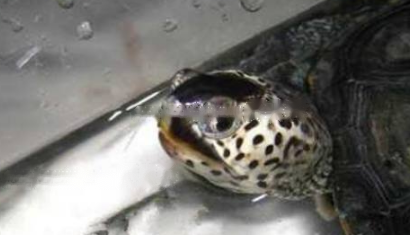
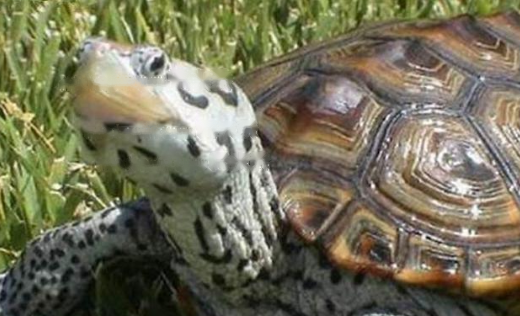
2. Lower dorsal ribs with distinctive beading markings; head (larger and round) white with black spots in dots or stripes; fingers and toes All have webbed.
3. Between the two eyes, there is a dark diamond-shaped diamond pattern with concave and convex, which is not obvious in childhood. As the age increases, the diamond-shaped diamond pattern will become larger and larger.
III. Distribution range
The East Florida diamondback turtle is mainly distributed in the Atlantic coast of Florida.
Four. Habits
East Florida diamondback turtles prefer salt marshes, tidal wetlands, and lagoons behind coastal sandy beaches Activity. In terms of diet, it belongs to carnivorous turtles, mainly feeding on fish, shrimp, crabs, snails and crustaceans.
V. Breeding Habits
The breeding season of Eastern Florida diamondback turtles is from April to June each year. During this period, female turtles will be in swamps or sand dunes. Build nests (10-20 cm deep) in sandy ground. Female turtles can lay 4-18 eggs at a time, each egg is blunt at the end, white (slightly pink), about 32 mm long, and hatches for 9-15 weeks. Also, it takes about 7 years for females to reach sexual maturity, while males come later.
Six. Common Diseases
1. Nail rot: The main symptom of this disease is severe abrasion of the carapace. In severe cases, the Eastern Florida Diamondback will stop eating and keep its head still.
2. Pneumonia: The diseased Eastern Florida diamondback turtle usually manifests as nasal discharge from the nose, loud breathing, and white mucus flowing from the mouth.
3. Red neck disease: This is a first-class infectious disease, mainly manifested as swelling of the throat and neck. In severe cases, they will have symptoms of unresponsiveness and loss of appetite.
4. Stomatitis: The eastern Florida diamondback tortoise with this disease suffers from damage to the oral cavity, which leads to ulceration and white necrosis of the epidermis.
5. Gastroenteritis: This disease causes the feces of eastern Florida diamondback turtles to be soft and yellow, green or dark green. In severe cases, the feces will be watery and blood red .
The above is some popular science information about the eastern Florida diamondback turtle~ Everyone knows it!

![[Original] Sharing of popular science knowledge of ringed map turtles](/static/img/11249/11249_1.jpg)