The Mesoamerican river turtle is the only remaining mud turtle species today (there are many animals with mud turtle in their name that do not belong to the mud turtle family, such as yellow mud turtle, oriental mud turtle, etc.). They are 65 million years old and have long been part of nature, but are now one of the critically endangered species in danger of being eliminated.
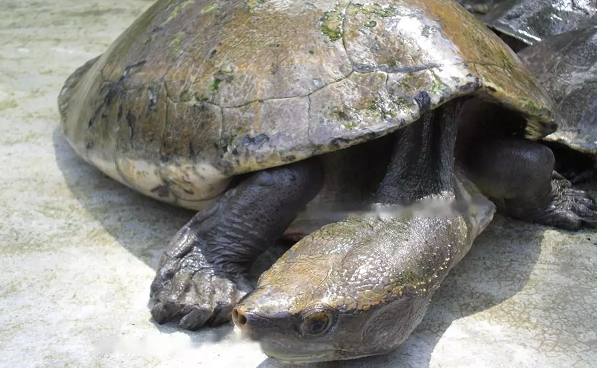
Although the region and country in which its habitat has been placed on the conservation list, the residents there are still poorly enforced and continue to capture the Central American river turtle, so we have no way of knowing its future. While the species is still alive, don't miss this popular science article if you want to know the Central American river turtle~
I. Birth
Central America River turtles are originally amphibians, but because they live in water for a long time, their limbs are degraded, and it is difficult to move flexibly on land, so they gradually use water as their main habitat. Later, the mother turtles will also build their nests by the river, and the eggs will not hatch successfully until the water level drops. When the little turtles first saw the world, they were at the junction of water and land. Maybe they didn't have time to decide where they should go, so they went into the water with their parents.
From this point of view, the first Mesoamerican river turtle almost determined the direction of the race, so why did it choose water instead of land? Haha, this kind of problem can be figured out without three years of cerebral thrombosis? But since I thought of it, let's explore it~
Second, life
The editor believes that the Central American river turtle resolutely rushed to the water, perhaps with them related to living needs.
1. Diet: Even though they have their favorite food on land and water, only some worms and stems and leaves of plants on land meet their tastes, while small fish, shrimp, snails and even Aquatic plants are their favorite food, and it is natural to choose to go to the water.
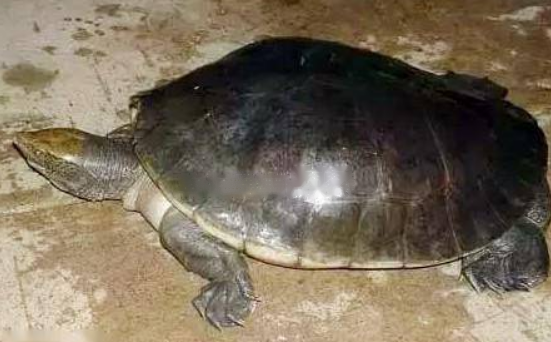
2. Habitat: They were born in the wetlands of Mexico, which are dominated by rivers and lakes. Perhaps the Central American river turtle thinks that since they have no worries about eating and drinking, and life is worry-free, let’s take advantage of the situation~
3. Talent: The pharyngeal membrane on the back of their nasal cavity can directly extract oxygen from the water, so they Can stay in water for a long time. Perhaps the talent determines that they are more inclined to live in the water.
Three. Status
As a critically endangered species, what difficulties are the Central American river turtles facing today?
1. Environment: The constant change of local climate and the shrinking of habitatable waters are one of the main reasons for its decline;
2. Capture: local residents also Has the habit of preying on Central American river turtles, which is the second;
3. Policy: The local protection policy is not strict, and the residents' enforcement power is not strong, so the number of Central American river turtles continues to decrease .
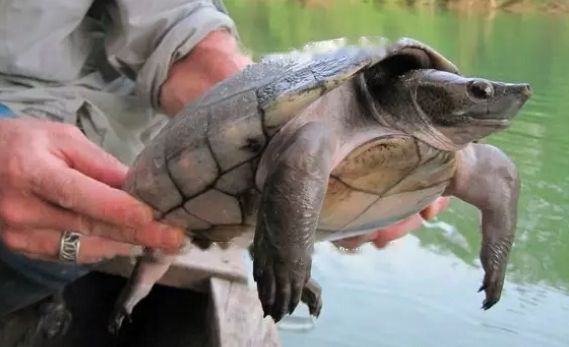
From this point of view, the Central American river turtle is a rare species. I hope the local people can treat and help them~

![[Original] Sharing of popular science knowledge of ringed map turtles](/static/img/11249/11249_1.jpg)