Friends who are interested in giant leatherback turtles, don't miss this popular science article~
I. Morphological characteristics
Because giant leatherback turtles share The three types have different shapes, so they should be discussed separately.
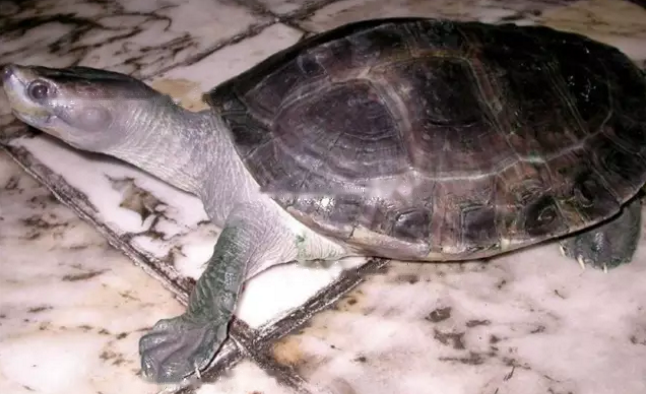
1. Burmese leatherback turtle: There are three black lines on the carapace of adult males, and a longitudinal black line runs through the top of the head from the nose to the back of the head; the adult females have a single color and a whole body. Brown-grey, only the plastron is pale yellow, and the plastron may have light dark spots.
2. Red-crowned Leatherback Turtle: There are several vertical stripes on the back of the adult male glans extending to the neck. These white and red stripes are very conspicuous. In addition, there are some red embellishments on the top of its head. There will be two yellow stripes behind the eyes, and the rest will be blue-green. With golden eyes, looking at the entire turtle world, male red-crowned leatherback turtles are very dazzling presence.
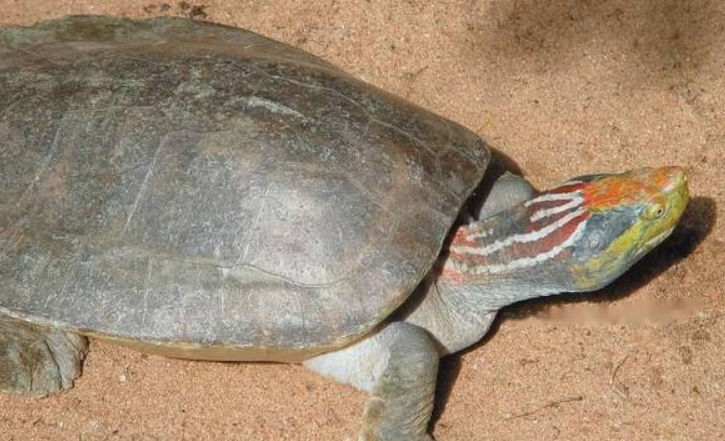
Compared In general, the female turtle has brown eyes and no bright color spots on the head, and the overall appearance is unremarkable.
3. Indian leatherback turtle: also known as the three-line leatherback turtle, the carapace also has three black lines, the pale yellow plastron has no markings, and the head has a yellow line extending from the tip of the nose to the back. Speaking of which, it has some similarities with the first two tortoises. However, male and female Indian leatherback turtles do not differ much in adulthood, and there is no color distinction.
2. Living habits
Although these three giant leatherback turtles have different shapes, their living habits are relatively similar.
1. Habitat: They like to live in fresh water, sometimes go to deep water for food, and sometimes live on the shore, belonging to amphibious turtle species.
2. Diet: Because of their huge appetite, they can eat all kinds of plants, small fish, shrimp and shellfish. But adult giant leatherback turtles prefer to eat plant foods.
III. Population status
In general, the number of giant leatherback turtles is very rare, especially the Burmese leatherback turtle, which was once considered a Extinct. In contrast, the red-crowned leatherback turtle has a small number of artificial breeding cases because of its distinctive shape. And Indian leatherback turtles, there are also many species of captive breeding in the local area.
So just how rare are Burmese leatherback turtles? It is reported that in 2005, only 12 living bodies were known, among which the male is the only one, which is almost related to the fate of the entire population. Fortunately, with the continuous efforts of people, there are now nearly a thousand Burmese leatherback turtles, which is really gratifying!
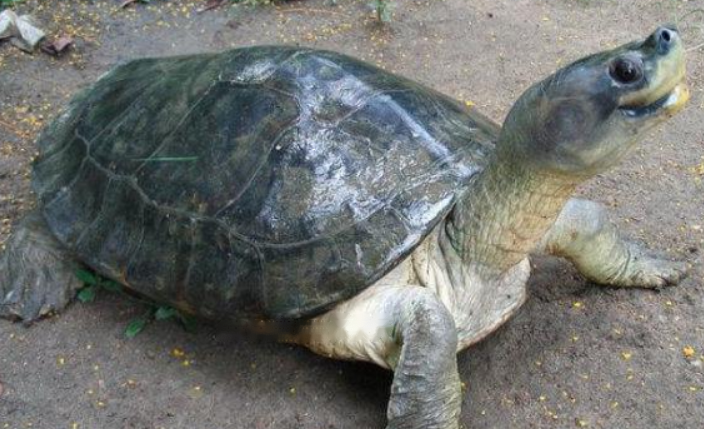
At present, The population of giant leatherback turtles has become more and more stable, and hopefully their future will be even brighter.

![[Original] Sharing of popular science knowledge of ringed map turtles](/static/img/11249/11249_1.jpg)