The Eagle-billed Turtle is a medium-sized turtle species. Recently, many netizens want to know their relevant information, so the editor has organized the relevant content, let's take a look!
I. Basic information
Chinese name: Eagle-mouthed turtle
Alias: large-headed flat-chested turtle, British turtle, dragon-tailed unicorn turtle
Latin name: Platysternon megalorcephalum
Kingdom: Animalia
Class: Reptiles
Order: Turtles
Family: Ratites Family
II. Appearance characteristics
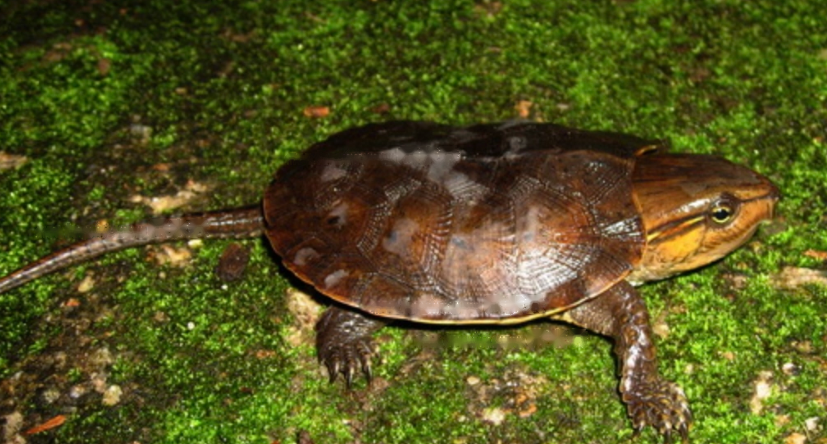
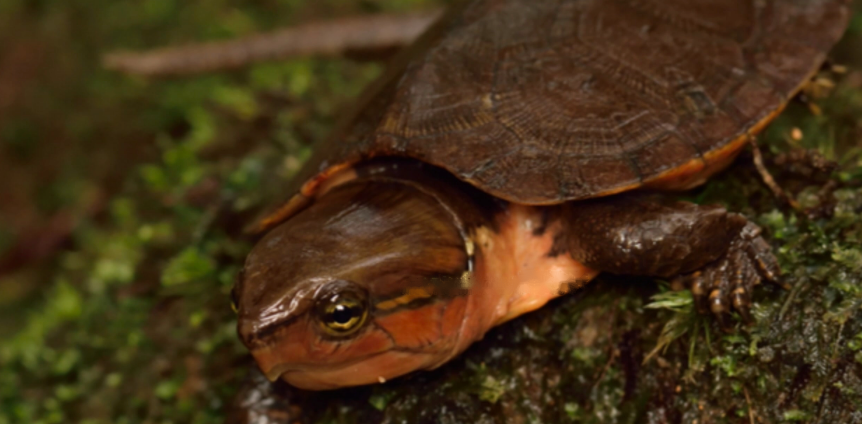
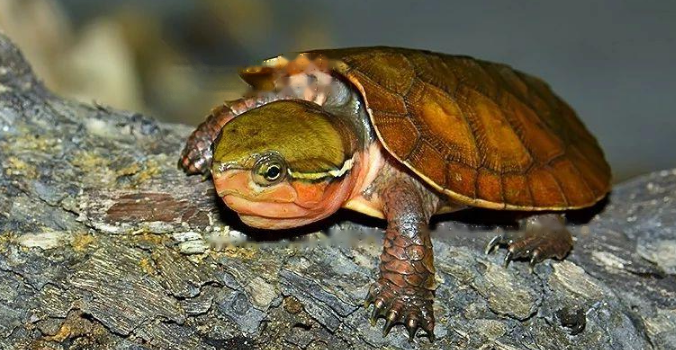
1. Carapace and plastron: The carapace of the Eagle-billed turtle is long oval, about 80.5 mm in length -174 mm; the front edge of the carapace has a slight depression in the middle, and the rear edge is round and slightly missing; the plastron is smaller than the carapace, about 67-113 mm in length, like a rectangle, and the front edge of the plastron is relatively flat , the trailing edge is concave.
2. Limbs: The limbs of the hawk-billed turtle have neatly arranged imbricate scales, 5 claws on the front limbs, 4 claws on the hind limbs, and webbed between the fingers and toes.
3. Body color: The head, carapace, limbs, and tail of the hawk-billed turtle are brown-red, brown-olive or olive-colored; the carapace has insect-etched patterns and light yellow spots The ventral surfaces of the plastron and the marginal shield are yellow-olive, and there are yellow or orange spots on the large scales on the front edges of the limbs.
III. Distribution range
The Eagle-billed turtle is mainly distributed in China, Laos, Myanmar, Thailand and Vietnam; in China, it is mainly distributed in Jiangsu, Zhejiang, Anhui, Fujian, Jiangxi, Hunan, Hong Kong, Guangdong, Hainan, Guangxi, Guizhou and Yunnan provinces.
4. Living habits
1. Eagle-billed turtles like to live in clear streams, and occasionally they will be seen in pools, swamps, and fields.
2. The hawk-billed turtle is a carnivorous turtle. It mainly feeds on snails, small fish, snails, shrimps, frogs and earthworms, and occasionally eats dead fish, shrimps and animals. offal.
3. Around November every year, when the water temperature drops below 10 degrees Celsius, the Eagle-beaked turtle will enter a state of hibernation. By the following year, when the water temperature rises to 15 degrees Celsius, they will wake up.
V. Breeding method
The breeding method of eagle-billed turtles is oviparous, and it takes 5-6 years for them to reach sexual maturity. The mating period, from May to July, is the egg-laying period for female turtles.
The female turtle can lay eggs many times a year, 1-3 eggs each time, each egg is white, the short diameter is about 21 meters, the long diameter is about 41-50 meters, and the heavy About 6-12 grams; eggs hatch for about 2 months at 30 degrees Celsius.
VI. Status of Race
1. IUCN Red List of Threatened Species (IUCN 2000 ver 3.1) - Endangered (EN) .
2. Convention on International Trade in Endangered Species of Wild Fauna and Flora (CITES) - Appendix I.
3. China's Biodiversity Red List - Vertebrate Volume (Reptiles) - Critically Endangered (CR).
4. The List of Terrestrial Wild Animals Protected by the State that is Beneficial or Has Important Economic and Scientific Research Value issued by the State Forestry Administration of China on August 1, 2000.
This article ends here! Friends who like hawksbill turtles can bookmark this article~

![[Original] Sharing of popular science knowledge of ringed map turtles](/static/img/11249/11249_1.jpg)