The Gabonese Viper, also known as the Gabonese Viper, lives mostly in tropical rainforest areas, preferring to stay on the ground and wait for prey to appear. Moreover, it also has one of the longest fangs in the world, and its venom output exceeds that of many snakes. So, what is so special about it that hides the highly poisonous body? Below, the editor will give you a detailed science of the Gabon Viper.
One 、Basic information
【Chinese name】Gaboon viper
【Latin name】Bitis gabonica
【English name】Gaboon viper
【Kingdom】Animal Kingdom
【Domain】Chordates
【Subphylum】Vertebrate Subphylum
【Class】Reptiles
[Order] Squamata
[Suborder] Snake suborder
[Family] Viperidae
[Subfamily] Viperidae
[genus] Viper
[species] Gabon viper
[main distribution] Guinea, Nigeria, Cameroon, Togo, Ghana And the Democratic Republic of Congo, etc.
[Habitat] Sub-Saharan Africa
II. Appearance characteristics
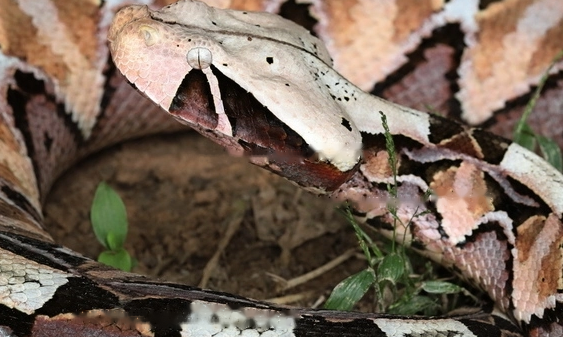
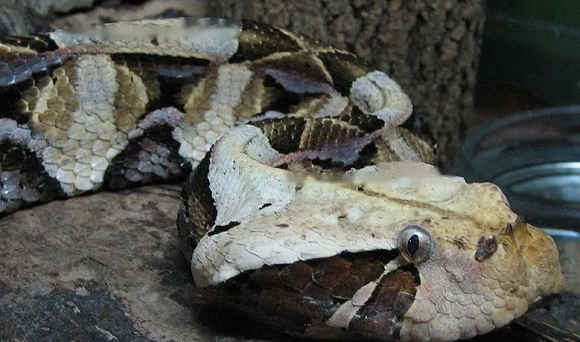
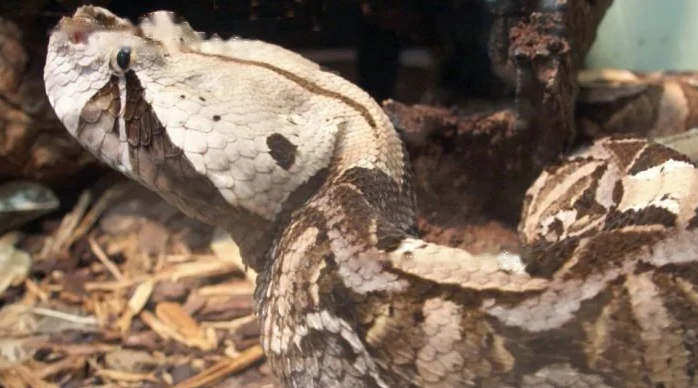
The Gabon viper The body is large and sturdy, with a body length of about 2 meters and a weight of about 8 kilograms; the color of its body is purple, black and pastel colors, and some rectangular and triangular patterns are mixed; the head is broad and triangular. , the color is light yellow-gray; there are two horn-like protrusions at the snout.
In addition, the place where the Gabonese Viper lives is very close to the color of its body, which can hide itself well, so that it can more easily and quickly catch the prey that passes by it.
Three , Habits
1. Dietary Habits
The Gabonese Viper eats a variety of foods, including rodents, birds, and small wild boars and roe deer. But the Gabon viper is different from other venomous snakes. It does not let its venom into the body of its prey, but instead bites the prey tightly until the prey loses its ability to move.
2. Breeding method
The reproductive method of the Gabon viper is ovoviviparous, and the breeding time is from September to December or January every year; female snakes generally breed for 6 months. Produce young snakes, 40-60 can be produced at a time.
3. Defense methods
When the Gabon Viper feels threatened, it will take various measures to protect itself. For example, it will warn the opponent by making a sound and staying still, and may also run away quickly. And if none of the above methods work, it will take action to bite the opponent and inject venom into the opponent's body.
IV. Poisonous
The Gabonese Viper is very poisonous, with fangs up to 5 cm in length. In addition, according to relevant data, it can detoxify up to about 350 mg each time, and the lethal dose of venom to humans is only 60 mg!
Okay, Gabon The introduction of Viper, the editor will stop here! Do you guys understand? If you want to know more about other snakes, please continue to pay attention to this site~

![[Original] Sharing of popular science knowledge of ringed map turtles](/static/img/11249/11249_1.jpg)