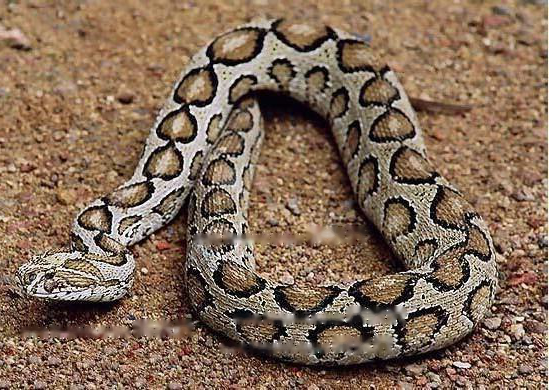
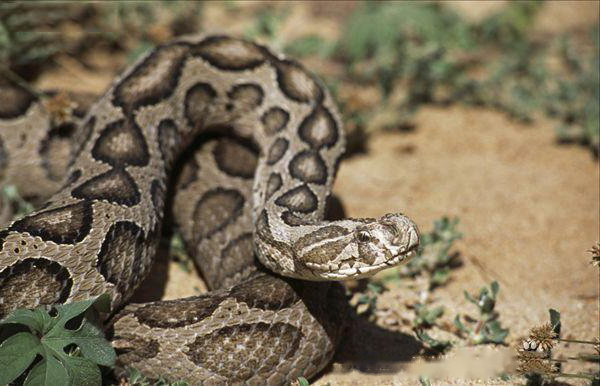
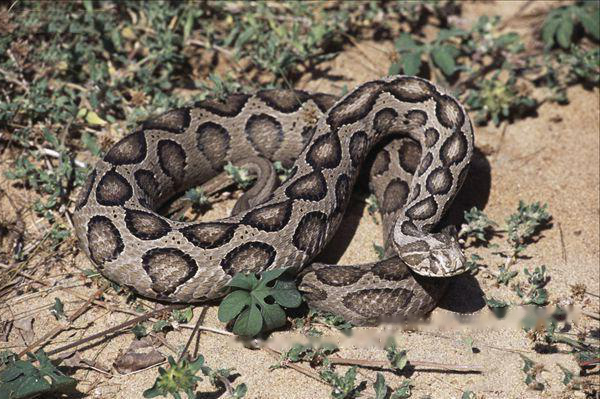
The round-spotted viper has a very special shape, with approximately round brown markings, and is also commonly known as the hundred-step golden leopard in the folk.
I. Basic information
[Chinese name] round-spotted viper
[Latin name] Daboia russelii siamensis
[Another name] One-hundred-step golden leopard, money spot, ancient money window
[Kingdom] Animalia
[Door] Chordate
[Class] Reptiles
[Order] Squamata
[Suborder] Snakes
[Family] Viperidae
[Genus] Viper
[Species] Viper
[Subspecies] Viper
II. Appearance characteristics
1. Body size: The body shape of the round-spotted viper is not prominent, and the adult body length generally does not exceed one meter.
2. Appearance: Like many vipers, the round-spotted viper has a triangular head. Its overall color is gray or dark brown, with approximately circular dark brown markings lining its back.
III. Living habits
1. Habitat environment: The round-spotted viper has a strong ability to adapt to the environment and can survive in mountainous areas, hilly areas or plain areas. They have even been found on mountains with an altitude of more than 2,000 meters.
2. Diet: The round-spotted viper is a carnivorous snake, usually feeding on mice, birds and lizards. They sometimes break into residents' houses to hunt mice.
3. Activity: The round-spotted viper's activity time is not limited, whether it is day or night, they will come out to hunt as long as they need it.
4. Temperament: The round-spotted viper has a very violent and aggressive temperament. Once they have locked on the hunting target, they will never relax until they reach their goal, and they have the energy to do it if they are not convinced.
4. Snake venom
The round-spotted viper has two types of toxins, one is neurotoxin and the other is blood circulation toxin. It is very rare to know that venomous snakes possess both toxins at the same time. After being bitten, the wound will swell, bleed, and cause disseminated intravascular coagulation. If the treatment is not timely, the injured will die due to complications such as anemia, jaundice, and renal failure.
V. Protection level
Included in the List of Beneficial or Important Economic and Scientific Research Terrestrial Wild Animals Protected by the State;
Included in the 2013 IUCN Red List of Threatened Species ver3.1 - Near Threatened (NT).

![[Original] Sharing of popular science knowledge of ringed map turtles](/static/img/11249/11249_1.jpg)