Snake is an animal whose body temperature changes with the temperature. Usually, the temperature is lower than 10 degrees. They will start hibernation. However, there is a snake that can still move when the temperature is as low as 3 degrees. It is the polar viper Snake, let the editor introduce this kind of extreme northern viper, known as the master of cold protection among snakes today!
I. Basic information
[Chinese name]Vipera berus
[Latin name]Vipera berus
[Another name] Dragon Viper, Northern Viper
[Kingdom] Animalia
[Door] Chordate
[Class] Reptile
【Order】Squamata
【Suborder】Snakes
【Family】Viperidae
【Subfamily】Viperidae
[Genus] Viper
[Species] Viper
[Subspecies] 4 species
[Distribution area] Central Asia, North Asia, North and Central Europe, China
[Name and Date] Linnaeus, 1756
II. Morphological Characteristics
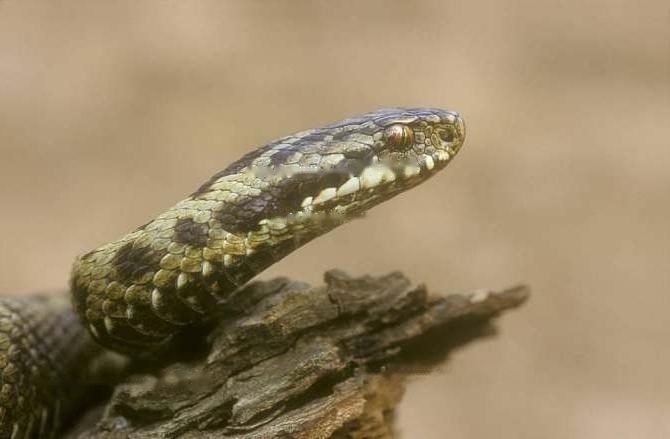
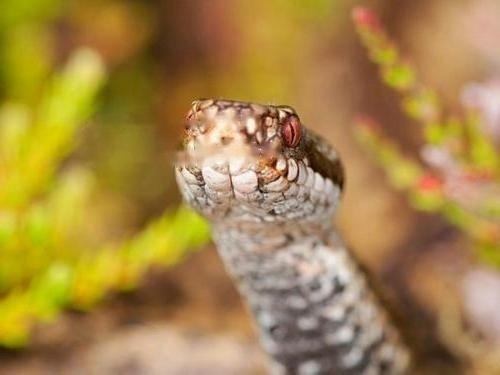
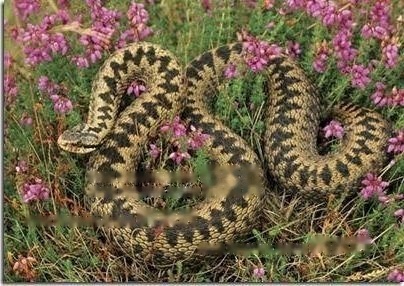
The North Pole Viper is 435 to 560 mm long, with a slightly triangular head that is distinct from its neck. The northern viper has a thicker trunk and a shorter tail. Its back is gray or olive-yellow, and there is a wavy or zigzag light black longitudinal stripe on its back, with a row of spots on each side. Its belly is uniform gray with light-colored spots, and the end of its tail is usually yellow.
III. Geographical distribution
Arctic viper is widely distributed among terrestrial snakes, and its living area is in Scandinavia To central France, to the Pacific coast of Russia, is the only snake to be found within the Arctic Circle. In China, the northern viper is mainly distributed in Jilin and Xinjiang.
IV. Habitat
The polar viper lives mostly in temperate and frigid forests and grassland meadows. They are also found in broad-leaved forests, coniferous forests, mixed forests and swamps. They usually hide in tree root burrows or under rocks, and are distributed vertically up to 2,700 meters in mountainous areas.
V. Living habits
The Arctic Viper is a solitary animal, and it rarely gets together with other individuals except during mating and hibernation. . Their activity time is mainly concentrated at sunset, and from September to October each year, the polar viper will hibernate and wake up in the spring when the snow has not melted. They have a long hibernation period, 6 months in the UK and up to 8 months near the Arctic Circle.
Six. Toxicity and harm
1. Toxicity
After being bitten by a viper, the wound There will be severe pain nearby, and after twenty minutes there will be a more severe reaction, with the victim experiencing symptoms such as swelling, dizziness, and vomiting.
2. Hazards
Although it can be very serious when bitten by a viper, its bite is rarely fatal, so The harm to humans is not great.
VII. Protection level
Humans hunt and kill the polar viper out of fear of them, coupled with agricultural development, deforestation, and Shrub erosion and other reasons, the habitat destruction of the polar viper, these have threatened them. Therefore, the northern viper is listed in the China Biodiversity Red List - Vertebrate Volume - Endangered (EN).
This is the introduction to the northern viper. If you want to know more about snakes, please continue to pay attention to this site~

![[Original] Sharing of popular science knowledge of ringed map turtles](/static/img/11249/11249_1.jpg)