I. Basic information
Chinese name: Texas rat snake
Latin name: Elaphe obsoleta
Aliases: Northern Food Rat Snake, Black Rat Snake, White Snake (Albino)
Kingdom: Animalia
Department: Chordate
Class: Reptiles
Order: Squamata
Family: Viperidae
Genus: Elephantidae
Toxicity: Non-toxic
Distribution area: Canada, the United States
Reproduction: ovoviviparous
2. Morphological characteristics
1. Appearance : The adult Texas rat snake is very large, its length can reach more than two meters, and the longest record is 2.6 meters. They are the largest snake in North America and the longest snake in North America.
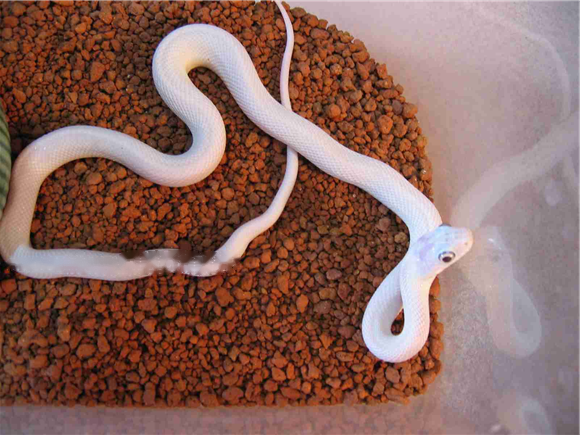
2. Color: The body of the Texas rat snake is mainly yellow or brown-black with irregular dark or olive-colored blocky spots on it. Now there is another white variant of the Texas rat snake. It has a snow-white body, no spots, and dark red eyes. It is commonly known as Bai Niangniang or Bai Niangzi. It is a popular pet snake.
3. Personality: Although the Texas rat snake looks very big, its personality is very docile.
III. Living habits
1. Habitat: The Texas rat snake likes to inhabit forests, farmland, jungles and suburban wilderness, and is good at climbing trees.
2. Diet: The Texas rat snake feeds on a variety of small and medium mammals, mainly rodents, but also preys on other snakes, chipmunks, squirrels, birds, and occasionally Will steal bird eggs.
3. Distribution: The Texas rat snake is mainly distributed in Canada in North America, as well as Texas, Arkansas, Louisiana, Arizona and the Mississippi watershed in the western United States.
Four. Reproduction
The Texas rat snake is an oviparous snake. Female Texas rat snakes can lay 12 to 20 snake eggs each time and hatch The period is about 65 to 70 days.
The above is some basic knowledge about the Texas rat snake. I hope this article can be helpful to everyone.

![[Original] Sharing of popular science knowledge of ringed map turtles](/static/img/11249/11249_1.jpg)