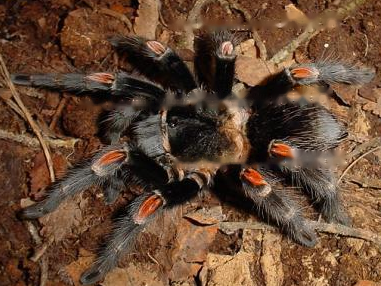
I have introduced many conventional pets to you before, and today I am going to introduce some different pets to you. This time we will introduce a bird-catching spider that is very suitable for newcomers to start - Mexican fire knee. Many people also love to call it Fire 7.
I. Introduction
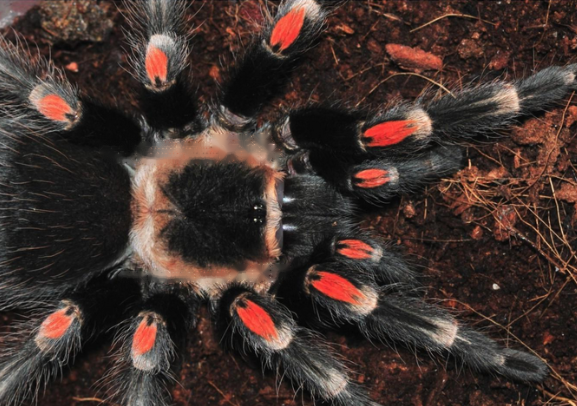
Mexican fire-knee spider is a species native to the dry desert of Mexico. It is a classic pet tarantula species and is sought after by many enthusiasts. This Mexican Fire Knee also has a relative called the Mexican Red Knee. Their names differ by only one word, but they are very similar in appearance. The main difference is that the red area at the knee is more vivid than the latter, so it is described as fire.
II. Identity characteristics
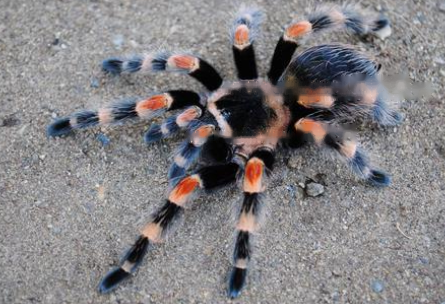
The adult body length of Mexican fire knee is about 15-16CM. A long time ago, they were considered to be a variant or subspecies of Mexican red knee. own international status. Mexican fire knee was not identified as a separate species until 1992.
III. Living habits
The most suitable temperature for Huo 7 life is about 28-30 degrees Celsius and the humidity is 65%. It is recommended that you use dry peat and coconut bricks as the substrate when raising . Mexican fire knees should be fed independently in a covered feeding box. The substrate can be laid with cactus mud, or mixed with a small amount of sand with coconut bricks and bark, and laid three to five inches thick and compacted. Place tree holes or small flower trays as their hiding places, and water dishes for water supply. Electric felt can be used for heating in winter, and no insulation equipment is required in summer. Mexican fire knees are average eaters, and if they are fed too much at one time, they may stop eating for a period of time.
The growth cycle of this little guy is relatively slow. It usually takes more than a year to grow from a gray-white juvenile to a beautiful adult, so the owners who want to raise it must have enough patience!

Subscribe to Newsletter
Professional platform for pets, dogs and cats.
![[Original] Sharing of popular science knowledge of ringed map turtles](/static/img/11249/11249_1.jpg)