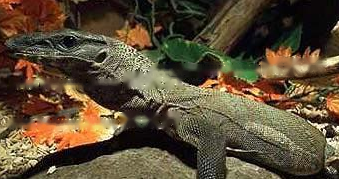
The thick-necked monitor lizard is a species of lizard with a total length of up to 146 cm. I believe many of my friends don't know much about the thick-necked monitor lizard, so let me tell you about the popular science~
One 、Basic information
Chinese name: Roughneck monitor lizard
Foreign name: Varanus rudicollis
Alias: Roughneck monitor
II. Appearance characteristics
The juvenile thick-necked monitor lizards are mainly gray in color, with obvious dark bands and yellow spots; when the larvae grow up, The body color will gradually change to a dark color, and even some areas of the individual will turn black all over the body, and there are large squamos on the scales from the back of the head to the neck.
Three. Distribution range
The thick-necked monitor lizard is mainly distributed in southern Thailand, Myanmar, Malay Peninsula, Leo Islands, Borneo, Sumatra and Bangka Island.
IV. Habits
The thick-necked monitor lizard usually inhabits tropical rain forests and mangroves; If it is abnormal, it will immediately climb up the tree and hide in the tree hole. Once caught, they play dead to fool their enemies.
The thick-necked monitor lizards usually feed on arthropods such as spiders, scorpions and crabs, and occasionally they also eat frogs or frog eggs.
The reproductive mode of the ruff-necked monitor lizard is oviparous. The female ruff-necked monitor lizard usually lays eggs in the rainy season from June to July. It can lay 15-30 eggs each time. The hatching period of each egg is About 40-60 days.
V. Status of Conservation
Because of its strange whereabouts in the wild, the current number of wild-necked monitor lizards is not clear, but they are still listed as Species in Appendix II of the Washington Convention.
The above is all the content of today~ Thank you for reading, if there is anything you don't understand, please leave a message in the comment area below!

![[Original] Sharing of popular science knowledge of ringed map turtles](/static/img/11249/11249_1.jpg)