Wild populations of Siamese crocodiles are mainly distributed in Southeast Asia such as Borneo, Indonesia, Malaysia, Thailand and Vietnam. However, because the leather of Siamese crocodiles is very popular internationally, there are traders who breed Siamese crocodiles in many countries and regions. The following is a brief introduction to the popular science knowledge of Siamese crocodile for everyone!
1. Basic information
[Chinese name] Siamese crocodile
[Another name] Thai crocodile, Siamese freshwater crocodile, Singapore small crocodile
【English name】Siamese Crocodile
【Latin name】Crocodylus siamensis
【Kingdom】Animal Kingdom
【Domain】Chordates Phylum
【Subphylum】Vertebrate Subphylum
【Class】Reptiles
【Subclass】Diporia
【Order】 ] Crocodiles
[Family] Crocodiidae
[Subfamily] Crocodiaceae
[Genus] Crocodile
[Species] ]Siamese crocodile
2. Morphological characteristics
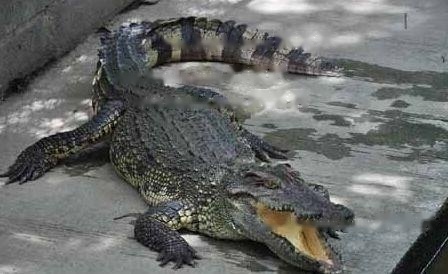
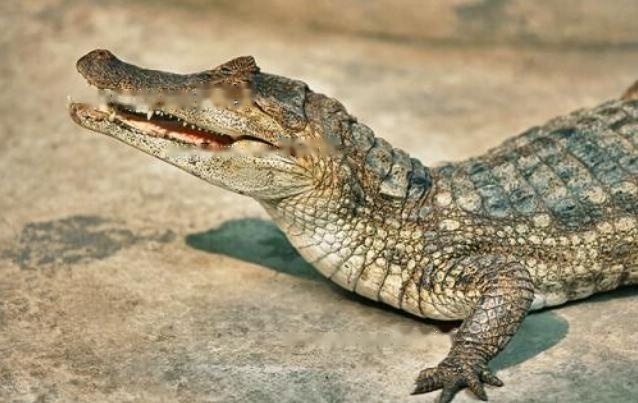
1. Body size: Siamese crocodile is a medium-sized crocodile, the adult can reach up to 400 cm in length, and adults are common It is 250-300 cm long, and the hatched crocodile grows to 25 cm. Body length 3-4 meters. The adult snout is broad, and the scales on the throat are horizontally arranged. There are 4 premaxillary teeth, 13-14 maxillary teeth, 15 maxillary teeth, and the total number of teeth is 64-66.
2. Body color: The upper body of Siamese crocodile is dark olive green or light brown-green with black spots, the tail and back have dark horizontal spots, and the abdomen is white or yellowish-white. Juveniles are golden brown with black stripes on the tail.
III. Living habits
1. Distribution: The wild populations of Siamese crocodiles are mainly distributed in Borneo, Indonesia, Malaysia, Thailand and Vietnam in Southeast Asia. Swamps in tropical and subtropical regions, slow-flowing areas of protected rivers, freshwater waters such as lakes, and brackish waters are the favorite habitats of Siamese crocodiles.
2. Diet: Siamese crocodiles have a physiological structure adapted to high salinity water quality, and are located at the highest level of the wetland food chain. The larvae mainly prey on insects, amphibians, crustaceans, young reptiles and fish, and the adults will prey on larger animals, but mainly feed on fish, and also eat amphibians, reptiles and small mammals.
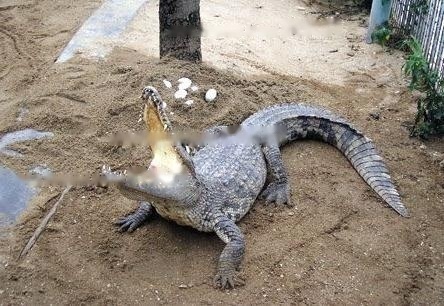
Female Siamese crocodiles use piles of rotting grass as nests, laying 20-50 eggs in the nest, and the incubation period is about 80 days. The crocodile with a rough and thick skin is actually very fine. When the young crocodile is struggling to hatch, the female crocodile picks up the egg and gently rolls it between the teeth, and the force should be just right, not only to break the egg shell. Come on, you can't hurt the little crocodile.
V. Status of Conservation
Siamese crocodile was recognized as extinct by the international community in 1992, but since then experts have conducted some investigations and found that Some Siamese crocodiles have survived in Thailand, Cambodia, Laos and other countries. Siamese crocodile has now been included in the World Conservation Union (IUCN) 2012 Red List of Threatened Species ver 3.1 - Critically Endangered (CR).
The above is some small knowledge of Siamese crocodile. Welcome to leave a message below for discussion. If you want to know more, you can continue to pay attention to this site~

![[Original] Sharing of popular science knowledge of ringed map turtles](/static/img/11249/11249_1.jpg)