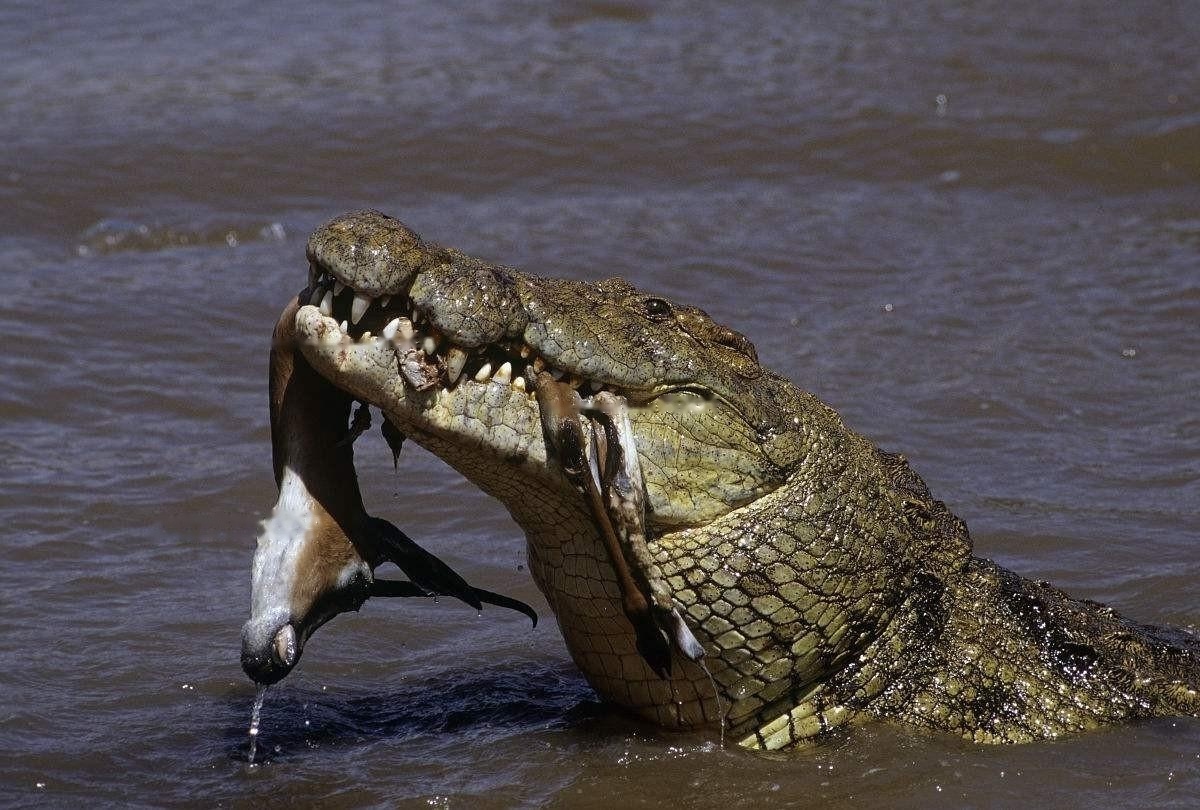
The Nile crocodile is the largest crocodile and largest reptile in Africa, and is the most studied crocodile of all crocodiles. They are mainly distributed in the Nile River basin and southeastern regions of Africa, and also in Madagascar. The following is a brief introduction to the popular science knowledge of the Nile crocodile for everyone!
I. Basic information
[Chinese name]Nile crocodile
[Another name 】African crocodile
【Latin name】Crocodylus niloticus
【Kingdom】Animal Kingdom
【Domain】Chordate
【Subfamily】 Door: Vertebrate subphylum
[Class] Reptiles
[Subclass] Biporia
[Order] Crocodiles
[Family] Crocodile
[Subfamily] Crocodiaceae
[Genus] Crocodile
[Species] Nile Crocodile
II. Morphological characteristics
1. Body size: The Nile crocodile is very large, with a body length of 2-6 meters, and the average body length of the largest subspecies is 3.7 meters. Nile crocodiles are very strong and have a strong tail that helps them swim. An adult Nile crocodile weighs 225-1000 kg. The back of the trunk of the Nile crocodile has 6-8 columns of sturdy thick scales; the outer sides of the limbs have serrations and webs between the fingers.
2. Body color: The entire body of the Nile crocodile is olive green to brown, with black spots and mesh patterns. The juvenile Nile crocodile is dark yellow-brown, with obvious horizontal stripes on the body and tail. The color of the horizontal stripes fades in adulthood.
III. Living habits
1. Distribution: Nile crocodiles are basically distributed in all African countries, and people have also found them in Madagascar The presence of the Nile crocodile.
2. Diet: Juvenile Nile crocodiles often feed on small aquatic invertebrates, insects, etc., and eat small vertebrates such as fish, amphibians and reptiles. Adults can prey on large vertebrates including antelope, buffalo, hippo larvae, etc. Adult Nile crocodiles also swallow rocks for use as ballast, which is intended to help Nile crocodiles maintain their balance at the bottom of the water.
3. Habits
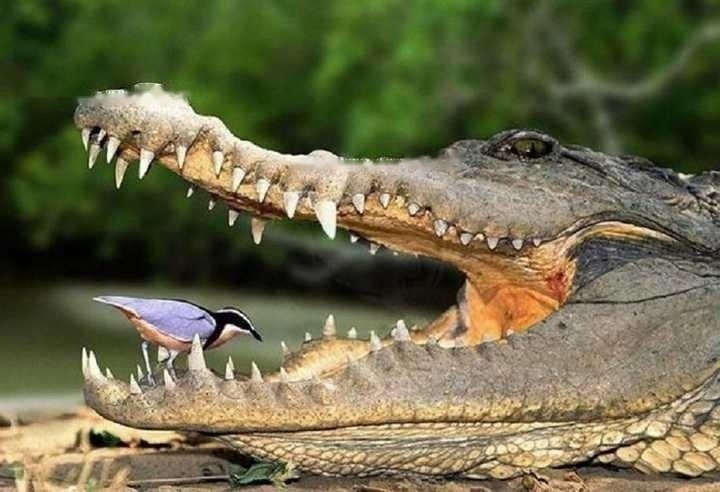
Nile crocodiles are very ferocious, but they are very friendly to a small bird called the toothpick bird. The bird often hunts for bugs on and in the mouth of Nile crocodiles, which never harm them. Toothpick birds have very keen senses, as long as they hear a little movement, they will flap their wings in a hurry and make a loud noise. Hearing the reminder of the toothpick bird, the Nile crocodile will immediately sink to the bottom of the water to avoid accidental attacks.
4. Breeding status
Most crocodiles only breed once a year, but if the Nile crocodile has two dry seasons a year in its habitat, They can reproduce twice, and their mating and spawning period is closely related to the beginning of the dry season. The female crocodile's nest-guarding behavior is obvious. The female Nile crocodile will dig a hole on the sandy river bank to build a nest, which can lay 25-80 eggs at a time. The incubation period is about 3 months, and the newly hatched young crocodile is about 30 cm long. Sexual maturity 12-15 years old. The Nile crocodile has a lifespan of 70-100 years.
V. Conservation Status
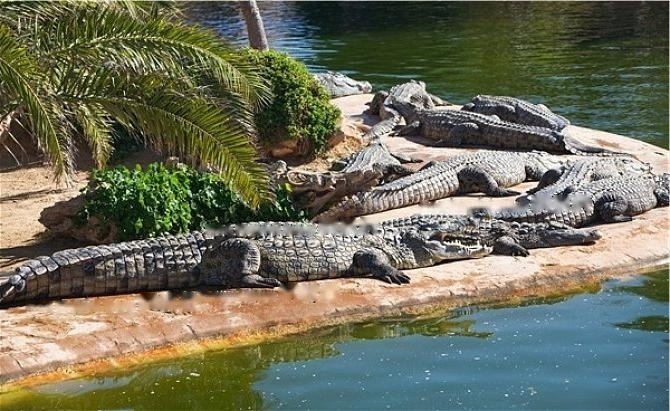
Since the 9th century AD, the Nile crocodile has become the target of human hunting. The wild Nile crocodile is a low-risk species, and some areas may already be endangered, so it has been included in the IUCN Red List of Threatened Species.
The above is some little knowledge of the Nile crocodile. You are welcome to leave a message and discuss below. If you want to know more, you can continue to pay attention to this site~

![[Original] Sharing of popular science knowledge of ringed map turtles](/static/img/11249/11249_1.jpg)