【Chinese name】Brown Lemur
【Another name】Brown Lemur
【English name】 Brown Lemur, Common Brown Lemur, Fulvous Lemur
[Latin name] Eulemur fulvus
[Kingdom] Animalia
[Gate] Chordate
【Subphylum】Vertebrate Subphylum
【Class】Mammalia
【Subclass】Zeuthera
【Order】Primates
[Suborder] Prosimian, Inferior Lemur
[Family] Lemuridae
[Genus] Lemurs
【Species】Brown Lemur
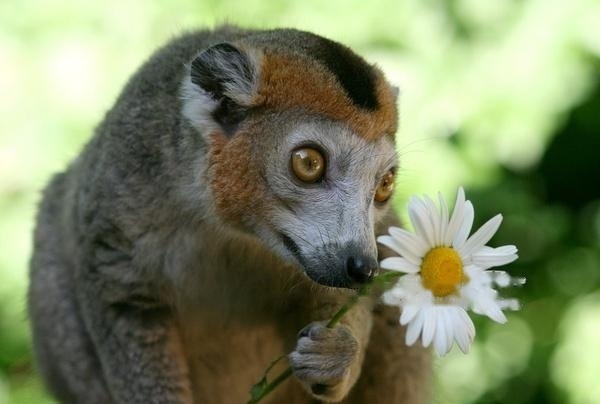
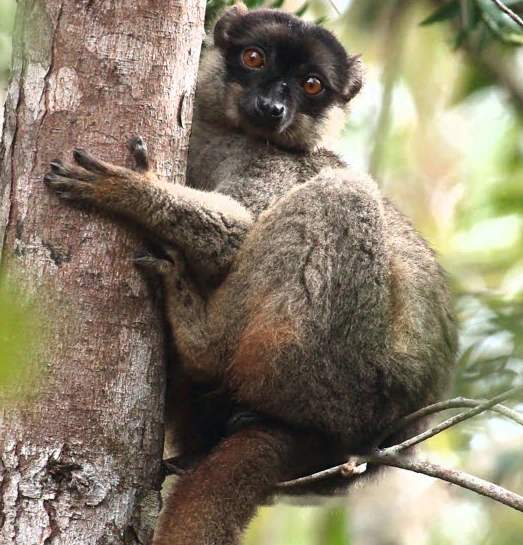
1. Body size: The brown lemur is a medium-sized lemur. The head and body are 43-50 cm long, the tail is 41.5-51 cm long, and the weight is 2-3 kg.
2. Body color: The color of the upper body of the brown lemur ranges from brown to yellow or black, the coat color on the back is brown-gray, the ventral side is gray-white, the color of the tail is darker, and the face is slightly darker. Black, the muzzle and crown are usually dark, ranging from dull gray to black, with light spots above the eyes and whiskers around the face. The underparts are slightly grey. Pale grey-brown fur around the ears, cheeks and under the chin. The tail is densely furred and arched on the back when moving on the ground or branches. The eyes are rich orange-red.
1. Distribution: The distribution area of the brown lemur has an obvious discontinuous distribution. It is found in the western part of the Bezibka River in northern Madagascar, and in the plateau. The forests are also scattered and north of the Mangoro River in eastern Madagascar. It was also introduced to Comoros, Mayotte.
2. Habitat: The brown lemur likes to inhabit tropical rain forests, humid montane forests and dry deciduous forests. They are arboreal and spend most of their time in the upper layers of the tree canopy.
3. Diet: The brown lemur is an omnivorous animal. Its main food is fruits, plants and gums. It also eats bread, biscuits, monkey feed, bananas, apples, guava, tomatoes, and monkey rice. Cake, papaya, courgette, carrot, etc. In some areas, they also eat insects, centipedes, and horses.
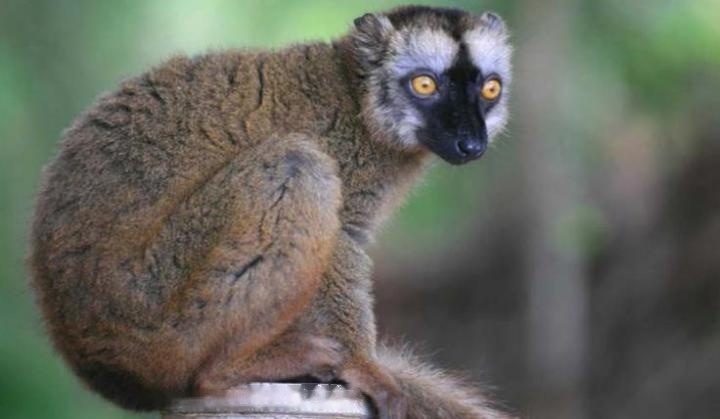
The breeding of brown lemurs is seasonal, and mating usually occurs in May-June. The gestation period is approximately 120 days, and the cubs are born between September and October before the onset of the rainy season. Generally, only one offspring is produced per litter, and there are also reports of twins. Brown lemurs reach sexual maturity in 1-3 years and live 20 to 25 years in the wild.
V. Conservation Status
The brown lemur has a limited distribution range and is thought to have a moderate trend of decreasing numbers, which is due to human destruction In the natural environment, the habitat loss of brown lemurs is serious, and they have been included in the 2013 Red List of Threatened Species of the International Union for Conservation of Nature (IUCN) ver 3.1 - Near Threatened (NT).
The above is some little knowledge about brown lemurs. Friends who want to learn more about animals can continue to pay attention to this site!

![[Original] Sharing of popular science knowledge of ringed map turtles](/static/img/11249/11249_1.jpg)