I. Basic information
Chinese name: Japanese bush monkey
Latin name: Galagoides demidovii
Alternative name: Arthro-tailed lemur
Kingdom: Animalia
Department: Chordate
Subphylum: Vertebrate subphylum
Class: Mammalia
Order: Primates
Family: Monkey family
Genus: Monkey genus
Species: Cymbidium
Named by and date: G. Fischer, 1806
II. Morphological characteristics
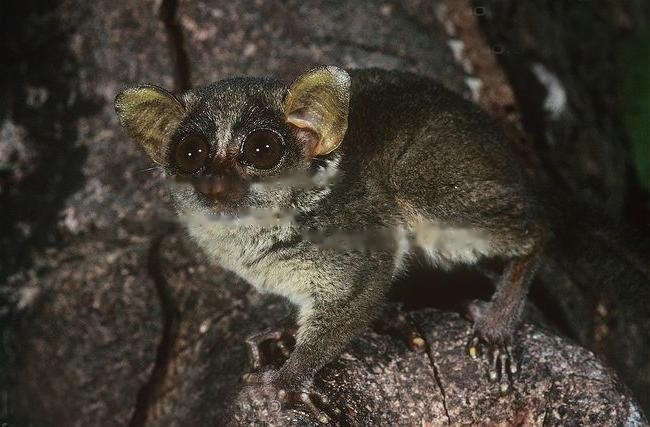
Adult bonsai monkeys weigh only about 60 grams and are nearly 20 cm, tail length 30 cm. They are the smallest species of the monkey family, and the smallest members of the primate order along with lemurs and tamarins.
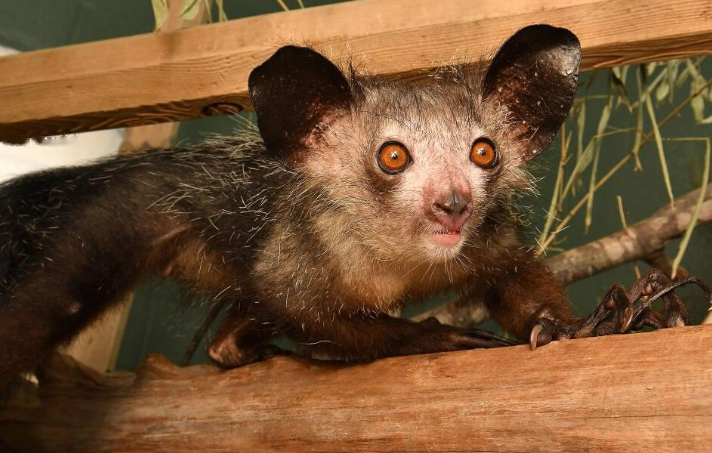
The Japanese bush monkey has a long snout, fox-like eyes, and a tail with a link, so it is also called a segment-tailed lemur.
III. Living habits
The Japanese bush monkey is an omnivorous animal, mainly eating insects and fruits. They live in a variety of environments, ranging from dense tropical forests to open savannahs.
IV. Scope of distribution
The bonsai monkey is distributed in Benin, Burkina Faso, Burundi, Cameroon, Central African Republic, Republic of Congo, Congo, Democratic Republic of Congo, C?te d'Ivoire, Equatorial Guinea, Gabon, Ghana, Liberia, Mali, Nigeria; Rwanda, Senegal, Sierra Leone, United Republic of Tanzania, Togo, Uganda.
In the 2008 Red List of Primates, the bonsai monkeys are listed as low-risk status, I really hope they can expand their population and hop freely in the forest!

![[Original] Sharing of popular science knowledge of ringed map turtles](/static/img/11249/11249_1.jpg)