Canis termite locust rodent
I. Basic information
Chinese name: South African fox
Latin name: Vulpes chama
Alternative names: silver-backed fox, Cape Fox, Cape Fox
Kingdom: Animalia
phylum: Chordate
Subphylum: Chordate
Class : Mammalia
Subclass: Eutheria
Order: Carnivora
Suborder: Schizopoda
family : Canidae
Subfamily: Fox subfamily
Genus: Foxgenus
Species: South African fox
II. Morphological characteristics
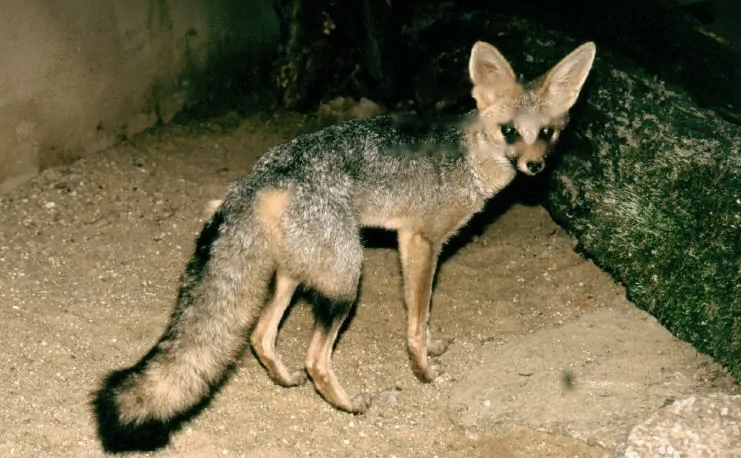
The South African fox is a small fox, light and agile. The head is 45-61 cm long, the shoulder height is 28-33 cm, and the weight is 3.6-5 kg. There are a pair of particularly large reddish-brown ears, reaching 13 cm in length, small teeth, reddish fur on the head and forelimbs, and tawny, black or silver-gray body hair.
III. Living habits
The South African fox is mainly nocturnal, foraging alone or in pairs. In addition, the South African fox is not very territorial, the range of activities often overlaps, and sometimes the nests are in a community state.
The gestation period of the South African fox is 51-52 days. Most of the foxes have one litter per year, with 3 to 5 cubs per litter. The cubs are usually born in September-November from late spring to early summer. Male foxes provide food to females during the first and second weeks after their cubs are born, and both parents are caring for the cubs. Pups start foraging at 4 months and become independent after 5 months. Sexual maturity at 9 months.
The intelligence of the South African fox is sometimes unbelievable. It is said that well-trained South African foxes even know the rhythm. What~

Subscribe to Newsletter
Professional platform for pets, dogs and cats.
![[Original] Sharing of popular science knowledge of ringed map turtles](/static/img/11249/11249_1.jpg)