The gray fox is a canid gray fox distributed in southern North America to central and northern South America. Because most of their fur is gray, they are called gray foxes. Let us learn about them today. Let's get down to the little knowledge of the gray fox!
I. Basic information
[Chinese name]Grey Fox
[Another name] Diana Longtail Monkey, Diana Vervet
【English name】Grey Fox, Gray Fox, Tree Fox
【Latin name】Urocyon cinereoargenteus
【Kingdom】Animal Kingdom
【phylum】Chordates
【Subphylum】Vertebrate subphylum
【Class】Mammalia
【Subphylum Class: Subclass of Eustoma
[Order] Carnivora
[Family] Canidae
[Genus] Grey Fox
【Species】Grey Fox
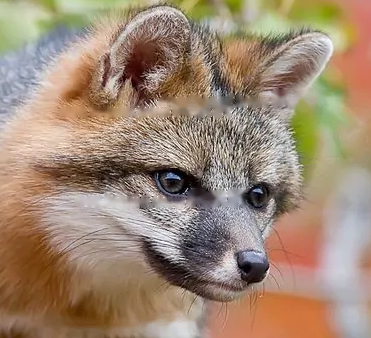
2. Morphological characteristics
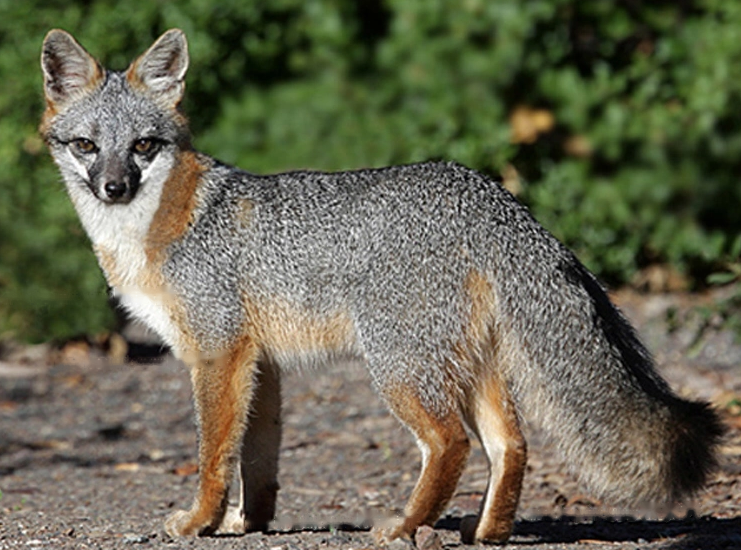
1. Body size: The gray fox is a kind of fox with a furry tail. Small dogs, with a body length of 76-112.5 cm, a shoulder height of about 38 cm, and a tail length of 27.5 to 44.3 cm; males weigh 3600-7000 grams, females 3400-5400 grams, and larger gray foxes can weigh up to 9000 grams.
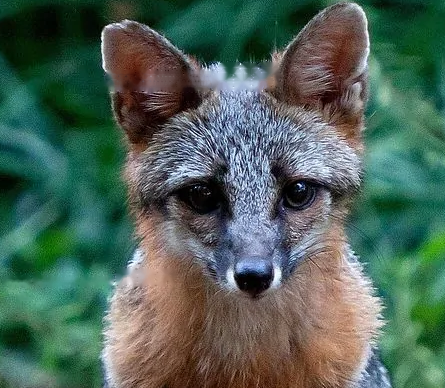
2. Body color: The gray fox has black stripes from the eyes to the neck, short snout, short limbs, large toe pads, curved claws, and rough body hair. The upper part of the body is light gray, the lower part is dark brown, the sides of the lower body and the chest are reddish brown, there are obvious black ridges on the back, and the throat and abdomen are white; the tail hair is thick, the back has black stripes, and the tip is black.
3. Features: Grey foxes have very strong short legs and claws, these legs and strong claws give them great balance and climbing ability, allowing them to grip tree trunks and branches. The color of the fur also facilitates concealment from predators.
III. Distribution and Habits
1. Distribution: Grey foxes are distributed in Belize, Canada, Colombia, Costa Rica, El Salvador, Guatemala, Honduras, Mexico, Nicaragua, Panama, United States and Venezuela.
2. Habitat: Grey foxes live in temperate forests and rainforests, temperate grasslands and jungles, forests, swamps, and like woodlands, bushes and thickets.
3. Diet: The grey fox is an omnivorous animal, its food includes invertebrates, squirrels, rodents, squirrels, hares, birds, etc., and sometimes a small amount of snakes, fish, insects, fruits and plant.
Four. Breeding status
Grey foxes are monogamous and have different breeding seasons. The peak breeding season in Massachusetts occurs in February, and the gestation period lasts about 53 days, with 1-7 litters per litter, with an average of 4 litters. The newborn calf weighs 100 grams, the calf opens its eyes after 10 days, and is weaned after 12 weeks, during which time the father provides food to the entire family. After 3 months, young foxes can grow the same fur as their parents. At 4 months old, they have developed permanent teeth and hunted on their own, at which point they can easily hunt their prey. Families live together until fall, but begin to separate in winter, and grey foxes usually live alone in winter. After 1 year, the little gray fox reaches sexual maturity, and when the young gray fox reaches sexual maturity, it will leave the family to survive on its own.
The above is some little knowledge about the gray fox. If you have any curious questions, you can leave a message below to discuss!

![[Original] Sharing of popular science knowledge of ringed map turtles](/static/img/11249/11249_1.jpg)