Mink generally refers to the American water ferret, a semi-aquatic mustelidae species native to the United States and Canada. However, due to the deliberate introduction of humans, mink has multiplied in South America, Europe and even many countries in Asia. Let us learn about the popular science knowledge of mink today!
I. Basic information
【Chinese name】Mink
【Another name】American ferret
【 English name] American Mink
[Latin name] Neovison vison
[Kingdom] Animalia
[Door] Chordate
【Subclass】Vertebrate subphylum
【Class】Mammalia
【Subclass】Zeuthera
【Order】Carnivora
[Family] Mustelidae
[Subfamily] Mustelidae
[Genus] Ferret
[Species] Ferret
2. Morphological characteristics
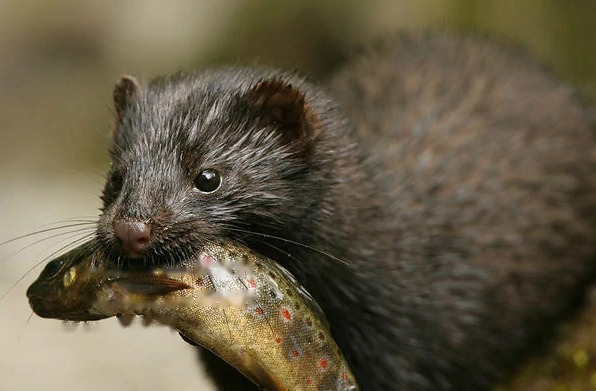
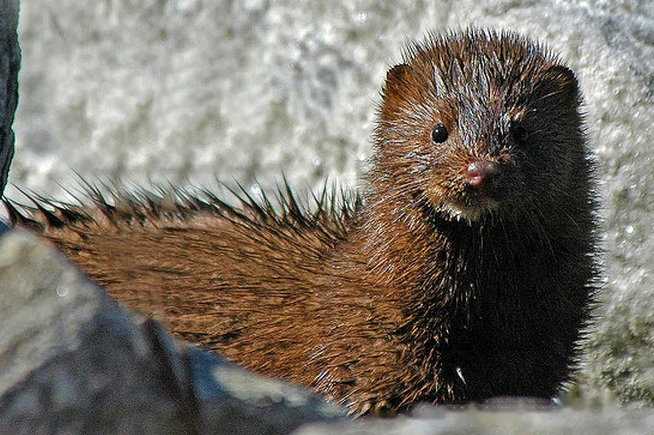
1. Body size: Mink is a medium-sized semi-aquatic ferret, with a male head length of 33-43 cm and a tail length of 15.8- 23 cm, weight 681-2310 grams; female 30-40 cm, tail length 12.8-20 cm, weight 790-1089 grams, slender and flexible body, tail less than half the length of the head body, short and round ears, slightly higher than body hair . They have slender bodies, short limbs, long and narrow heads, and have a keen sense of smell and hearing. The tail is hairy and the palms are webbed. The hair is sparse in summer; the hair in winter is denser and darker, which is very suitable for low temperature environments.
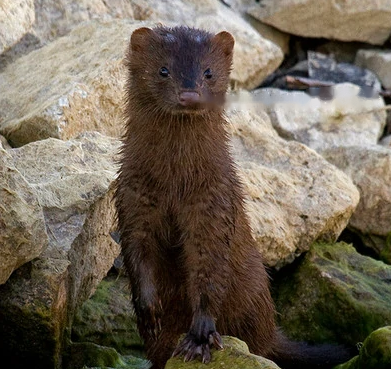
2. Body Color: Mink fur is usually dark brown to black, with a large white spot on the chin and sometimes on the chest and abdomen. However, this ferret has been selectively bred in captivity, and many varieties of different colors have been bred. These ferrets with different coat colors escape the farm and become wild individuals, so individuals from white to gray, tan or black can also be seen in the wild.
III. Distribution and Habits
1. Distribution: Mink is distributed in North America, from Alaska and Canada to The United States, except Arizona and the dry regions of California, Nevada, Utah, New Mexico and western Texas. American mink were intentionally introduced to Russia and other parts of Europe as fur animals. The species has now become naturalized in many parts of Europe after a meteoric rise in some countries due to escape and intentional release. Wild populations of American mink also occur in Japan and South America, in southern Argentina and Chile.
2. Habitat: Mink live in areas near fresh water. They will live within 4 km of a river bank or embankment and will use scent to set their territory. They like areas with dense vegetation. Forage under rocks or roots of trees, or in self-dug burrows.
3. Diet: Minks are carnivores and voracious predators. The composition of food depends on location and season, including small mammals, fish, amphibians, birds, crayfish, crabs, Insects and worms. May also opportunistically hunt rabbits, squirrels, reptiles, bats and snails, and sometimes eat carrion. This species is also a major predator of waterfowl and eggs. The ferret often kills more of its prey and stores it for use when food is scarce.
four 、Reproductive status
Minks usually mate in spring, between February and April, and give birth from April to June. Female minks produce 2-10 pups per litter, usually 4-5. The young are born in dens lined with fur, feathers and dry plant material, blind and hairless. Eyes open at 4-5 weeks and weaning at 5-6 weeks. Leaving the nest at about 8 weeks of age, but still lives with adult females for some time until independence in the fall.
The above is some little knowledge about mink. If you have any curious questions, you can leave a message below to discuss!

![[Original] Sharing of popular science knowledge of ringed map turtles](/static/img/11249/11249_1.jpg)