On the occasion of the Chinese Sturgeon Protection Day, the Nantong Underwater World Aquatic Animal Protection Science Special Zone is open to the public. The reporter learned that in recent years, with the continuous increase in the protection of aquatic animals, some first- and second-level aquatic animals are protected from danger every year with the help of relevant departments, aquariums and enthusiastic citizens.
On March 28, 2021, the 2020 annual work conference of the Chinese Sturgeon Conservation Alliance was held in Jingzhou, Hubei Province. At the meeting, the Jingzhou Chinese Sturgeon Permanent Protection Base Project Tripartite Agreement and Aquarium Chinese Sturgeon Conservation Promotion Agreement were signed, and it was decided to set March 28 as Chinese Sturgeon Protection Day.
These babies in the underwater world
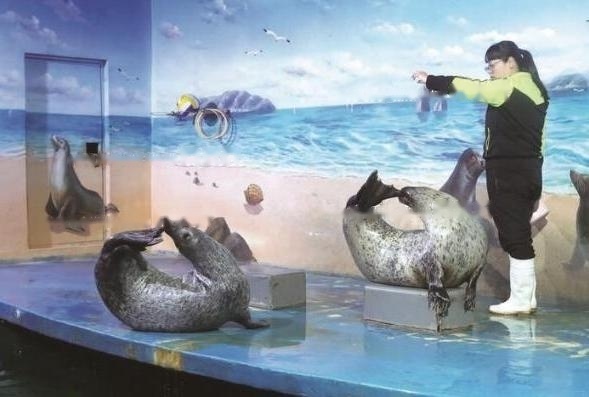
Citizens who have been to the underwater world may know that the seals Lele and Tao Tao are a pair of performers in this aquarium, and they have become Nantong for many times. news media coverage. do you know? This pair of meritorious actors are still national first-class aquatic protected animals. At present, Nantong Underwater World is home to 2 categories, 4 sub-categories, first-level and dozens of second-level aquatic protected animals.
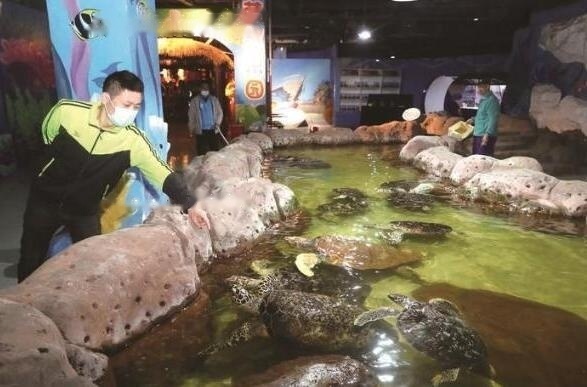
“The two major categories include Western Pacific spotted seals and sea turtles, of which sea turtles are divided into three sub-categories: loggerhead sea turtles, green sea turtles and hawksbill sea turtles.” said Kang Pan, manager of the aquatic department of Nantong Underwater World. During the interview, Kang Pan took the reporter to the turtle exhibition area, where dozens of turtles lived in the exhibition tank of more than 100 square meters.
Look, the one with the hawk-like beak is the hawksbill. This is a loggerhead turtle and that is a green turtle. The difference between the two types of turtles mainly depends on the number of carapaces, the carapace of green sea turtles. More. Kang Pan enthusiastically introduced their Treasure of the Town Hall. The reporter found a problem at this time: the shell of the green turtle is not green. It's muscles are green, so it's called a green turtle. Both green turtles and loggerhead turtles eat one meal a day. Green turtles' food is mainly seaweed, while loggerhead turtles' food is mainly fish and cabbage. Tang Pan's explanation made the reporter Moss opened.
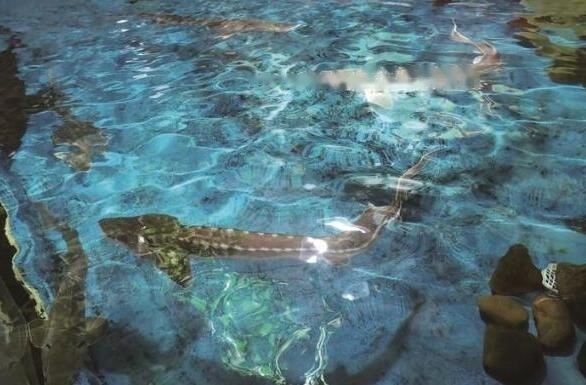
Nantong Underwater World is home to a close relative of the Chinese sturgeon, a hybrid sturgeon, which is a national second-class aquatic protected animal. Chinese sturgeon is a type of sturgeon that lives in the Yangtze River Basin. Kang Pan told reporters that hybrid sturgeons were the first residents of Nantong Underwater World, and they also had one meal a day. feed and nutritional supplements. After introduction and field assistance, the number of hybrid sturgeons raised in Nantong Underwater World has increased to 14.
From Popular Science Corner to Popular Science Special Area
Nantong Underwater World Aquatic Animal Protection Science Specialized Area covers an area of more than 500 square meters, and the special area displays some pictures of marine and freshwater animals Documentary materials and simulated specimens to present the diversity of animals in the global village.
November 2012, Nantong Underwater World successfully rescued an injured finless porpoise, which attracted widespread attention. Later, Nantong Underwater World assisted relevant departments to successfully rescue first- and second-class protected animals such as finless porpoises, sea turtles, salamanders, etc., reflecting the social responsibility of this aquarium, and was recognized by the Municipal Agriculture and Rural Bureau as the 'Nantong City Aquatic Wildlife Protection and Rescue' Station'. said Chen Du, head of the Yangtze River Fishery Administration Brigade of the Bureau's Agricultural Comprehensive Administration and Law Enforcement Detachment.
The rescue of the finless porpoise made me and my colleagues realize that the function of the aquarium is not only for display, but also for rescue, so we set up an aquatic animal rescue hotline 0513-81586000. Gao Jinfeng, head of Nantong Underwater World Say. A few years ago, Nantong Underwater World expanded its functions by opening an aquatic animal science corner in the foyer of the aquarium, and placing simulated specimens such as whales in the square outside the gate to enhance citizens' awareness of aquatic animal protection. Nantong Underwater World has rescued aquatic animals many times over the years. My colleagues and I realized that in order to restore a good living environment for aquatic animals, no matter how many rescues are made, it is passive. We must put publicity and education work in the front, so that everyone loves aquatic animals. A good atmosphere. said Shi Youxia, Marketing Manager of Nantong Underwater World.
At the beginning of this year, Nantong Underwater World, with the support of the Municipal Bureau of Agriculture and Rural Affairs, upgraded the Science Corner to a special science area. The first is to expand the graphic exhibition materials and aquatic animal simulation specimens, the second is to increase the knowledge of whale simulation skeletons, China's water conservancy, and the Yangtze River Basin, and the third is to set up a punch-in area. I believe that the popular science area can attract more tourists. Through this publicity and education platform, the public's awareness of love and protection of aquatic animals will be enhanced. Gao Jinfeng said.
Citizens' awareness of protection is getting stronger and stronger
At present, there are nearly 10 first-class protected aquatic animals such as Chinese sturgeon and finless porpoise living and rearing in waters, aquariums, and scientific research institutions in Nantong. Dozens of second-class protected aquatic animals, such as water turtles, giant salamanders, rouge fish, flower eels, and yellow-margined box turtles, reflect the diversity of land animals in the river and sea, said Yang Surong, a staff member of the Municipal Agriculture and Rural Affairs Bureau.
However, some citizens violated relevant laws and regulations without knowing it, such as raising parrots in their own homes, slaughtering Chinese sturgeons, etc. In March last year, someone caught a Chinese sturgeon in the Qidong section of the Yangtze River. When he contacted to sell it but no one dared to buy it, he actually cut the Chinese sturgeon into several pieces for consumption, and was later sentenced to 1 year and 4 months in prison and fined. 20,000 yuan in gold. This incident has made my colleagues and I more aware of the importance of publicity and education. In October in recent years, our city's Agriculture and Rural Bureau will hold a publicity month for aquatic wildlife protection. Chang Li Tingjin said.
Li Tingjin is gratified that more and more citizens are actively participating in the protection of aquatic animals. In recent years, we have received nearly 10 hotline reporting calls (9688995) from public security departments or citizens every year. With the help of enthusiastic people, some injured and stranded finless porpoises, giant salamanders, salamanders and other aquatic protected animals have received timely Rescue and return to the embrace of the Yangtze River. Chen Du said.
Li Tingjin told reporters that this year he plans to invite deputies to the National People's Congress, members of the Chinese People's Political Consultative Conference and representatives of citizens to participate in the publicity month activities, listen to their opinions, and use their resources to push our city's aquatic animal protection work to a new level . I hope that more citizens and people from all walks of life will care and love aquatic animals, so that these babies around us will be healthier and happier.

![[Original] Sharing of popular science knowledge of ringed map turtles](/static/img/11249/11249_1.jpg)