Professional treatment has been given to this injured bustard, and its physical indicators are recovering... On April 4, a herdsman in Baiyinnaoer Gacha, Uegeqi Sumu, Zalut Banner, Tongliao City Gao Jinshan learned from the police that the big bird he had rescued had been treated, and his hanging heart was finally relieved.
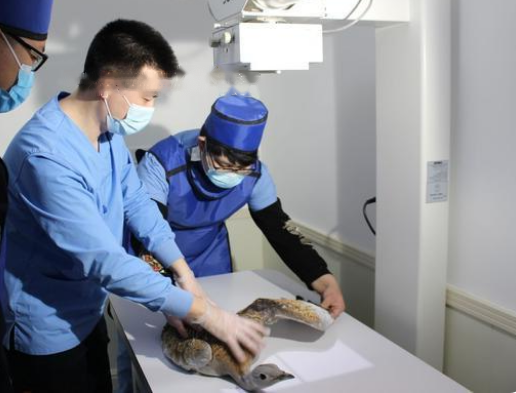
Professional treatment
On April 1, Gao Jinshan found a huge bird near his ranch, with a gray head, brown neck and lower body The tail is white, with big eyes, very beautiful, but one wing is drooping, unable to fly, and looks seriously injured. Upon seeing this, Gao Jinshan immediately found food and water, and promptly called the police for help. After receiving the report, the ecological environment, food and drug crime investigation team of the Zarut Banner Public Security Bureau immediately rushed to Baiyinnur Gacha. The police judged through observation and previous rescue experience that this is the young bird of the national first-class protected animal Great Bustard. The bustard may have hit a power line or a branch and had an open wound on its wing, preventing it from flying normally. The police then sent the injured bustard to the Lubei Town Rescue Station for a comprehensive inspection and professional treatment such as wound treatment. At present, the treated bustard is in a good state of mind. Next, the public security organ will send it to the Tongliao Wildlife Rescue Station for resettlement. After it has the ability to fly, it will be released into nature.
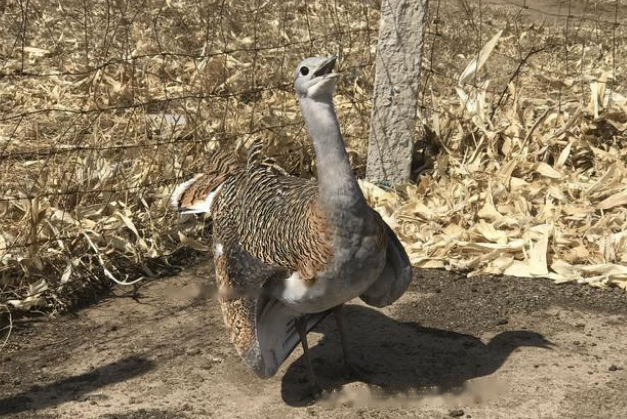
The number of Great Bustards in my country is less than 1,000 at present
It is understood that Great Bustards are large ground-dwelling birds in the family Bustardidae of the order Crateriformes. They inhabit vast grasslands, semi-desert areas and farmland grasslands. One of the largest living flying birds in the world. As a critically endangered bird, the Great Bustard has been included in the Red Book of Endangered Birds in the World by the International Committee for the Protection of Birds.
In recent years, Zarut Banner has implemented a series of ecological projects such as ecological relocation, returning farmland to forests, prohibiting grazing and resting grazing, so that 18.28 million mu of grass pastures in the entire banner have been fully recuperated, and 11.818 million mu of natural secondary forests and artificial forests. be reasonably protected. The continuous improvement of the ecological environment has provided a good living environment and abundant food sources for wild animals. According to preliminary statistics, from November to April every year, about 102 Great Bustards, a national first-class protected animal, spend the winter in Zalute Banner.

![[Original] Sharing of popular science knowledge of ringed map turtles](/static/img/11249/11249_1.jpg)