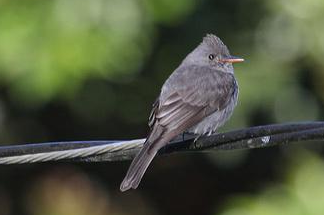
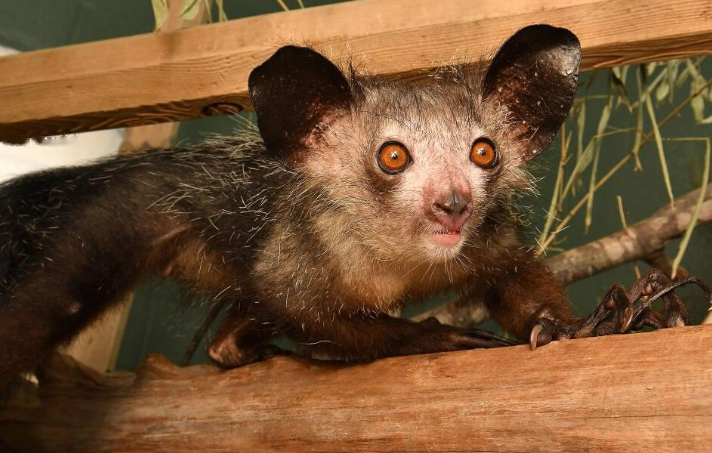
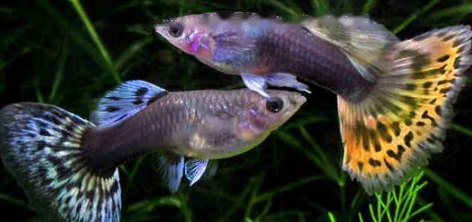
In recent years, with the continuous expansion of the pet market, the pet funeral industry has rapidly emerged. For example, Xi'an Dada Pet Life Memorial Museum was founded in 2016, and so far, thousands of farewell ceremonies have been held for deceased pets. During the Qingming Festival this year, some pet owners who deposited their pet ashes in the Dada Pet Life Memorial Museum went to pay their respects to their loved pets one after another.
According to the White Paper on China's Pet Consumption Trends in 2021 released by iResearch, the size of my country's pet market in 2020 is close to 300 billion yuan. It is expected that the pet industry will continue to grow in the next three years, and the industry scale will reach 445.6 billion yuan. As the last link of the pet economy, the pet funeral industry has been in the ascendant in recent years. According to the National Industrial and Commercial Registration Inquiry System, there are currently about 9,000 companies in the country that can carry out harmless treatment of animals, and more than 1,400 companies whose business scope includes pet funeral services.
In the past, there were three main ways to deal with pet remains: abandonment, burial, and cremation. Among them, abandonment violates the Animal Epidemic Prevention Law that any unit or individual shall not buy, sell, process or arbitrarily discard dead animals and diseased animal products. The relevant regulations have special requirements for digging and burying animal carcasses, including burial depth, disinfection treatment, etc., which is difficult for many pet owners to do.
In contrast, the emergence of the pet funeral industry has greatly solved the pet owners' troubles in properly taking care of their pet's behind events and sending away family members decently. On the one hand, cremation treatment can avoid the pollution of soil and water sources caused by the decay of pet corpses. On the other hand, the pet ashes are processed into pendants, rings, or their hairs are made into handicrafts, which is also convenient for the owner to miss and mourn.
However, as a new thing, pet funeral is still in the blind area of law and supervision, and has been walking in the gray area. Pet funeral services involve civil affairs, agriculture, forestry, animal husbandry, environmental protection, market supervision and other departments. At present, there are no clear policies and regulations in China to regulate them, and there is no clear competent department to supervise them.
The Funeral Management Regulations are mainly aimed at human bodies and do not apply to pets. The Animal Epidemic Prevention Law and other relevant laws and regulations only provide for the harmless disposal of animal carcasses, and do not mention animal burial. According to regulations, pet funerals involve centralized and harmless treatment of animals, and it is necessary to apply for a certificate of animal epidemic prevention conditions. However, at present, the approval threshold is high and the process is cumbersome. For the pet funeral industry, whether it is a self-made cremator or a privately purchased cremator, it is difficult to meet the requirements. In real life, most institutions in the industry have not gone through the relevant approval procedures, which are unlicensed operations.
At the same time, the lack of industry standards has led to confusion in the pet funeral industry. At present, pet morticians are not listed as official occupations by the national human resources and social services department, and there is a lack of unified qualification training and certification. Some people just follow the trend and do not have the corresponding service ability. In addition, pet funeral services vary widely in price and level. Similarly, pet ashes are used to make spar, and the price varies several times between different institutions. Privately discarding pet remains at will, changing the one-to-one cremation without authorization to centralized processing, and giving the ashes of other people's pets to pet owners.
There are no rules, no circle, the relevant departments should pay attention to the pet funeral industry, and clarify the laws and standards as soon as possible to regulate them. First, introduce relevant policies and regulations for the pet funeral industry, give the pet funeral industry a legal identity, and bring it into the legal supervision track. Secondly, formulate industry standards, standardize prices and services, and actively promote green burial methods such as tree burials, grass burials, and flower burials, so as to meet the emotional needs of pet owners while minimizing environmental damage.

![[Original] Sharing of popular science knowledge of ringed map turtles](/static/img/11249/11249_1.jpg)