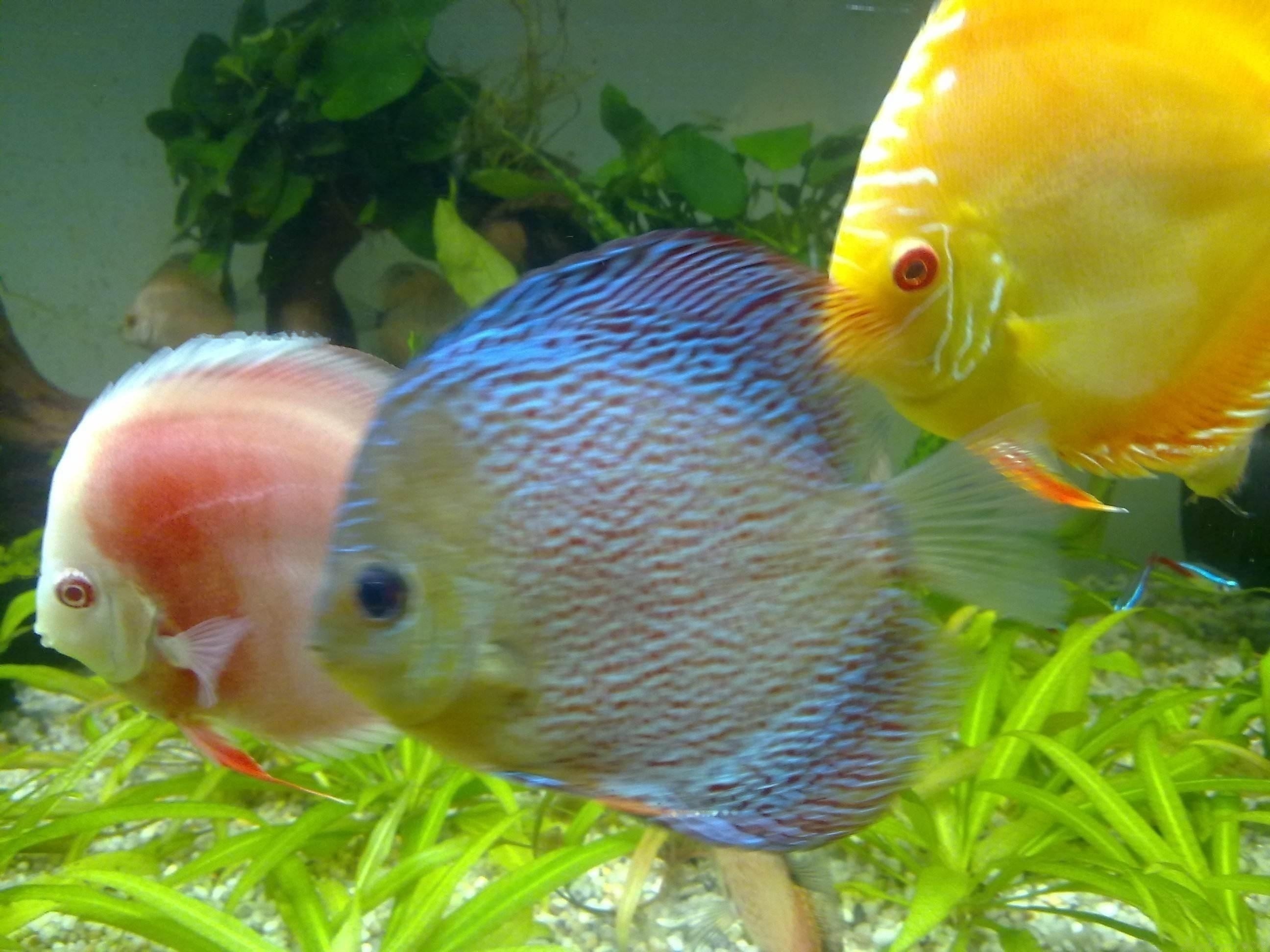
Colorful angelfish fish pays the most attention to daily management among all ornamental fish, so to raise colorful angelfish well, it is necessary to establish good concepts and habits in order to The beauty of the colorful angelfish is brought to the extreme. Today, let the pet editor share with you how to choose a healthy colorful angelfish.
1. Understanding of the colorful angelfish
1. Angelfish variant
The colorful angelfish was originally a variant of the colorful angelfish, and there were very few wild species. After continuous breeding and hybridization, many new cultivars have been mutated from the original ones. Now there are red, green, blue-green, and blue points on the body color.
2. Origin of Angelfish
The colorful angelfish, also known as Discus, originates in the Amazon River Basin, the largest river in the world. In the Amazon River, the rivers with the Guyana Highlands as their water source produce Hegel species, and in the lower reaches of the mainstream of the Amazon River, blue, brown, and green colors are produced. The colorful angelfish is also known as the queen of tropical fish, with its charming beauty, rich colors, graceful posture and elegant swimming posture.
2. Purchase of colorful angelfish
1. Size when purchasing
It is best to buy 2-inch to 4-inch colorful angelfish Small fish, because fish at this stage are cheaper and easier to raise in the future.
2. Is it healthy or normal?
Choose an aquarium store with a good reputation and good credit to buy it. After choosing your favorite species, carefully observe whether the fish are swimming around healthily and lively, whether they will show an active bait-like behavior, and whether the ratio of eyes to body is normal. Keep an eye out for the first few fish in the group as they are often the best purchase targets.
3. The best appearance of angelfish
1. Healthy angelfish
There are no white spots on the fish or the whole body is dark, rubbing in the aquarium The abnormal behavior of the object and other precursors of the disease, the fish can habitually and lively swim around and actively seek bait.
2. The body shape of the fish
The vertical stripes on the side of the body are symmetrical and uniform in thickness. The body shape is plump and not too thin.
3. Whether the eyes are bright or not
The eyes are bright. The eye sockets of the juveniles do not have to be red. The smaller the eyes, the better. Be careful not to make the eye mask white or asymmetrical. Clear red eyes indicate a younger fish.
4. The fins are not damaged
The fins should be stretched freely and there is no sign of damage, the dorsal fins should be high, the pelvic fins should be in the shape of eight, and the scales must be smooth without reverse scales, The abdomen is not sunken.

![[Dog Training 5] The training method of pet dog dining etiquette](/static/img/12192/12192_1.jpg)