Chinese name: Ten meritorious achievements
Latin name: Mahonia fortunei (Lindl. )Fedde
Aliases: rat thorn, cat thorn leaf, yellow thorn, Phellodendron chinensis
Distribution area: native to China, distributed in Sichuan, Hubei and Zhejiang provinces. Central and northern America
Medicinal parts: roots, stems, leaves
1. Morphology of the 1, 1, 1, and 1,
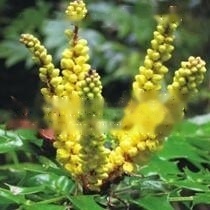
1, 1, 1, 1, 1, 1, 1, 1, 1, 1 .5 to 4 meters, the leaves are obovate to ovate-lanceolate, 10 to 28 cm in length, 8 to 18 cm in width, and have two to five pairs of leaflets, the bottom pair of which is similar in shape. The previous pair are similar in appearance, two to nine centimeters from the base of the petiole, dark green to dark green above, with indistinct veins, pale yellow on the back, and occasionally pale in the slightest part of the leaf. The inflorescence is a racemose flower with four to ten clusters, three to seven centimeters in length, the bud scales are lanceolate to triangular-ovate, five to ten millimeters long, three to five millimeters wide, and the length of the pedicel is 2mm to 2.5mm. The bracts are ovate, the tip is relatively acute, and the length is 1.5 mm to 2.5 mm. The flowers are yellow, the outer sepals are ovate or triangular-ovate, and the middle sepals are oblong-oval.
2. The effect of the top ten credits
The top ten credits are cool in nature and sweet in taste. Roots and stems are cold in nature and bitter in taste. Contains berberine, jatrorrhizine, magnolia, etc. It has the effect of clearing away heat and detoxifying, relieving cough and resolving phlegm. It has inhibitory effect on Staphylococcus aureus, Shigella, and Escherichia coli. Indications for bacillary dysentery, gastroenteritis, infectious hepatitis, bronchitis, sore throat, conjunctivitis, burns, scalds and other diseases. In late autumn, the fruit is picked, the roots are dug, the leaves are picked throughout the year, and dried in the sun or dried for later use. Great contribution to the peculiar leaf shape, elegant and beautiful, potted plants can be used for indoor display, because of its good shade tolerance, it can be cultivated in indoor scattered light conditions for a long time. In the courtyard, it can also be planted on the side of the rockery or in the stone crevices, but it is best to have a big tree for shade.
3. Cultivation of the top ten credits
The cultivation of the top ten credits can be carried out by seed sowing. When the fruit matures in May, the oval berries are picked and stacked slightly. Then, mix with fine sand and rub, or soak the seeds with warm water, rinse off the peel, pulp and hollow seeds, then remove the full seeds, dry them in the shade, put them in a cloth bag, hang them in a cool and ventilated dry place for storage, put them in After winter, store the seeds in low temperature sand until the next spring, sow them in March, cover with soil 1-2cm after sowing, put them in a semi-shade place after soaking, and germinate in about 1 month. It can also be sown directly after the seed treatment is completed, sown in a semi-shady environment, drilled in the seedbed, and covered with soil 3~5cm. The optimum temperature for seed germination is 15-25°C, and seedlings can germinate in about 50 days. The seedbed should be leveled, the soil particles should be finely crushed, and the ditch should be ditched for sowing. The height of the seedlings in that year is generally up to 8~10cm. During the winter, it is necessary to protect it from the cold, and the beds are kept for another year, and the transplanting can only be carried out in the second year. Seedlings are usually cultivated for 4-5 years before flowering and fruiting.
Guess you like it
Calendula | Five-color plum | Onion orchid | Morning glory | | Heather | Cyclamen | Rose |
Daisy | Chrysanthemum | Pear | Wisteria | Calla Lily | Rose | Cymbidium | Rosemary | | white palm | kapok |
apricot flower | bark lotus | oleander | rose flower | mimosa | |
Saffron | Forget Me Not | Sunflower | Lily of the Valley | Gardenia | Poppy | Poppy |

![[Dog Training 5] The training method of pet dog dining etiquette](/static/img/12192/12192_1.jpg)