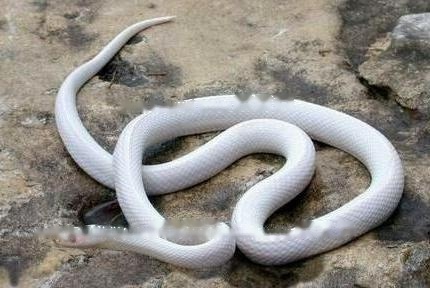
Corn snake generally inhabits forests, swamps, and farmland environments, especially cornfields, because there are many prey such as voles and birds here, so the name corn snake comes from . In real life, a few friends will also raise it. If you want to raise it better, what are the conditions for raising corn snakes? What should you pay attention to? If you want to know more clearly, you might as well follow the editor. Get up and find out!
Essential tools for raising corn snakes: Before a corn snake enters your home, you need to do everything For the preparation work, you need to prepare a snake box, heating equipment, drinking water, and a suitable size of suckling mice as food. Don't wait until you buy a snake to consider these.
Feeding conditions for corn snakes:
1. About the substrate
The advantage of newspaper is that it is easy to find excrement and clean it up quickly. Although it is not the best in terms of visual effects, the newspapers should not be put in the box just after reading them. Just unfold it and put it in the sun. Do not use fine sand. Fine sand is easily inhaled into the respiratory tract and lungs. Do not use fir bark, it is poisonous.
2. About lighting
Some pet shops will tell you that snakes need UV light to synthesize vitamins. But as far as I know, unlike lizards, which often bask in the sun, snakes are animals that like to be active before dawn and after dusk. In their natural environment, they will not be exposed to UV light. There's no such thing as a life-sustaining need. They can get all the nutrients they need from food.
3. Corn snake rearing environment
The rearing equipment can use a relatively simple, tall and wide, ventilated but sturdy rearing box, of course, it must be equipped with a solid lock top Cover to prevent them from coming out. Some dead branches can be arranged in the breeding box for them to climb, and it can also help to shake off the old skin when molting. The substrate can be reptile sand or pika wood chips, or even artificial Sod or newspaper, as long as it can be kept clean and easy to clean. Kimo uses sawdust for pika, laying 1-2cm thick, which can prepare a cave for hiding, but it will hinder its taming in the future. Set up a sturdy water pocket in the tank for drinking and bathing. Also prepare a low-wattage red light bulb for night use. In addition to watching at night, it can also be used for normal thermal insulation purposes. In winter, electric felt can also be used for thermal insulation. It is kept at 24-30 degrees Celsius during the day and about 19-23 degrees Celsius at night, but after feeding, the temperature should be raised to help it digest food, and the humidity should be kept dry as long as it is.
4. Note about the mixed breeding of corn snakes:
Snakes are relatively independent animals. Under normal circumstances, they are all stomach-moving, and only find each other mates during the mating season . If multiple snakes are mixed at the same time, it is easy to cause the problem of snakes eating snakes. Putting different species of snakes in the same box should definitely be avoided! Juvenile corn snakes won't mind living in a small area, 40x20x50cm is enough. The key is to have your own world and not have companions who often disturb it.
Precautions for raising corn snakes:
1. You can only feed mice, but it is best to feed some frogs and other small animals often.
2. Corn snakes of different sizes have different breeding boxes. The area of the breeding box should be equivalent to 3/4 of the snake's body length squared. Of course, it can be as large as possible, so that the snake has only advantages and no disadvantages. It is also best to choose a breeding box with a net on the top and sides to maintain ventilation. Make sure the brood box is free of tiny ones. The gap will allow the snake to escape and the door will lock properly.
3. Corn snakes tend to be nocturnal, so reptile lights are not necessary, but you can use lights to simulate the alternation of day and night.
4, 20 degrees is also possible, the suitable temperature for corn snakes is 21-32 ℃, and the relative humidity is 75-80%.
5. During the corn snake molting period, the mood will be particularly tense, so it is best to avoid harassing them during this period. In addition, the breeding environment should be kept as dry as possible, because improper humidity may cause them to descale. Of course, the feeding environment is often disturbed, making them nervous, and they will also appear descaled and refused to eat.
Have you all mastered the corn snake feeding conditions? If you want to raise it better, you can refer to the above information provided by the editor.

![[Dog Training 5] The training method of pet dog dining etiquette](/static/img/12192/12192_1.jpg)