Every dog mother hopes that their dog can be more obedient, sensible, and obedient, especially when they see other people's dogs, they can be obedient and obey the owner's instructions, but good It is the nature of every dog to be active, naughty, and hee hee, so how do you train your dog better? There are actually skills and methods!
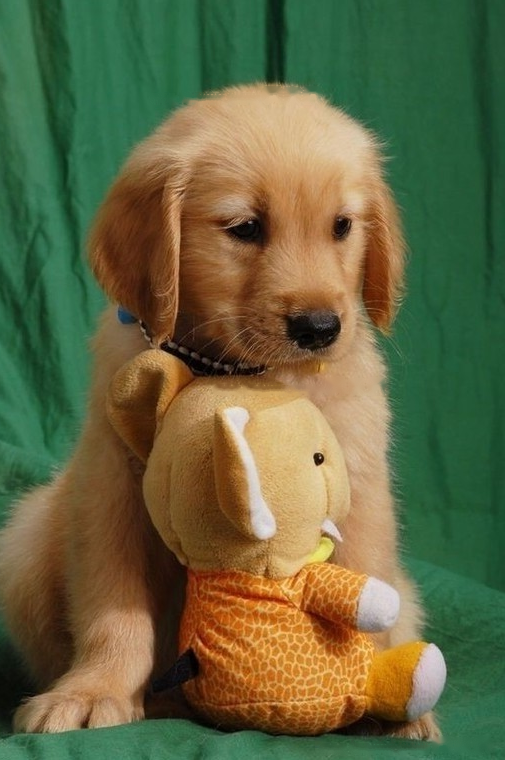
1. Play with the children
Step 1: When the child throws the retrieval toy, the dog will become very alert. A well-trained dog will only do it when told to. Game training for object retrieval is best done by adults. Involve children only if the dog knows exactly what to do.
Step 2: Children receive toys retrieved by dogs under adult supervision. All activities with a dog should be under adult supervision until the child has mastered it, until he can understand how to play with and control the dog.
Step 3: When the child is holding the toy, he can reward the dog with food. By playing the game, your dog will learn that in the human group he lives in, children have rights too. It will also learn to be fun when playing with kids.
2. Don't chase and bite other animals
The first step: The method of training is that unless your dog has been living with other animals since childhood, you should estimate it Problems with livestock. The dog stared at the sheep first, but was kept under the control of the owner on a leash. Don't let your dog run off the leash on the farm (or any other area with animals) unless you're sure he won't be chasing other animals. You should take similar precautions when your dog encounters other animals for the first time.
Step 2: The purpose of this exercise is to convert the dog's chase instinct into a controlled movement. Experiment with different toys to find out which toy is your dog's favorite. Teasing your dog with toys.
The third step: The training place should be quiet, so that it is not easy to be distracted. It is best to use a long rope to control the dog outdoors, throw out the toys he likes, but put the other ones he likes. A toy by your side. It will instinctively chase the thrown toy.
Step 4: Before the dog touches the toy, call his name and command him to come here. Be exaggerated when recalling your dog, and sway the second toy to lure him back. Then play with your dog and reward him.
Step 5: Go to the toy, pick it up, and pull it back with the leash. Your dog will know that the toy he is chasing is yours. Repeat steps three through five in a more stimulating environment.
3. Don't provoke other dogs
The first step: The method of training is to make eye contact. When your dog makes eye contact with the opponent, you should interfere. Tail cocking and glaring at each other will herald a fight that is about to break out.
Step 2: Intense challenge, a dog with aggression due to monarchy is difficult to handle. In most cases, the fight is often preceded by aggressive body gestures and yelling. Unless one of the dogs backs down, a fight is inevitable. During a fight, the dog may bite the intervening person—including the dog owner.
Step 3: Between you and other dogs, many dogs protect their owners by aggressive behavior. A dog standing between you and other dogs, pulling on the leash, will intensify his aggression. Dogs may eventually associate a taut feeling on the leash with aggression, however the aggressive behavior may not occur if the leash is disconnected.
Step 4: Leash Syndrome Although when your dog is aggressive you may instinctively shorten his leash, this will generally exacerbate the behavior. Pulling it back forcibly will increase its desire to attack. You should turn his head away so he can't make eye contact with other dogs.
Step 5: Distraction. When you encounter a potential aggressive behavior, you should attract its attention with a toy that the dog likes, and then command it to sit. When your dog is doing well, you should reward him.
Step 6: Perform recall training. Perform this recall training in a quiet, undisturbed environment, preferably outdoors. Retrain your dog to come back to you on a long leash or leash while coaxing him with a toy he likes.
Fourth, behavior correction of timid puppy
The first step: desensitization training is to reduce the sensitivity of dogs to the things they are afraid of. Here is an example of the dog's fearful sound to propose a training method. Dog owners can use this principle to train their dogs on anything they fear. The training method is: ask the dog owner to use a tape recorder to record the sound that makes the dog scared.
Step 2: Play it when the dog is eating. At the beginning, it is mainly based on a low voice and a distance from the dog. The distance and volume are adjusted according to the principle that the dog can tolerate and eat (the dog Not eating means too much stimulation).
Step 3: Slowly close the distance and increase the volume, but still take the principle that the dog can eat.

![[Dog Training 5] The training method of pet dog dining etiquette](/static/img/12192/12192_1.jpg)