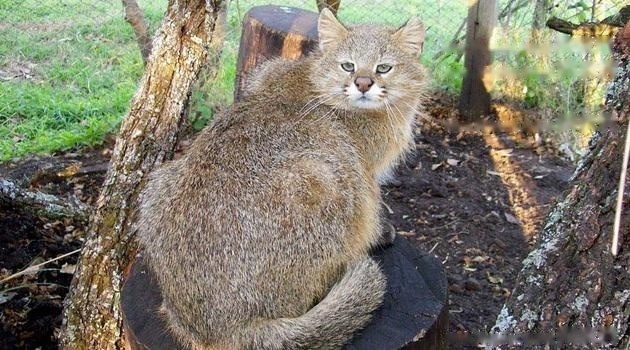
The lynx is also known as: South American lynx, Andean lynx, this cat is small in size, uniform in body, medium-length limbs, and toe-like. The head is large and round, the snout is short, and the senses of sight, hearing and smell are well developed. The canines and cleft teeth are extremely developed; the upper cleft teeth have three cusps, and the lower cleft teeth have two cusps; the molars are relatively degenerated, and the crown diameter is smaller than the height of the lateral incisors. The fur is soft and distinctly patterned. It has a well-developed tail, is good at climbing and jumping, likes to live alone, and is carnivorous, and often hunts other warm-blooded animals in ambush. Lives in the Andes Mountains of South America and has no subspecies. The number is estimated to be less than 2500.
1. Introduction to the mountain cat
The mountain cat likes to grow in a mountainous environment. Its distribution is limited by many factors, with a total effective population size of less than 2,500 individuals, and the number tends to decline due to factors such as loss of prey, habitat, or being hunted. The mountain cat is very rare in the native area, learn more about only two specimens from the museum. Their genetic diversity is low in their range, so conservation efforts can only be done in a limited space when the entire race is at a premium. Since they live only on high mountains, the valleys inhabited by humans act as barriers, separating their groups. Their numbers are sparse, even more sparse than the prairie cats that also live at high altitudes.
2. Characteristics of Mountain Cats
Body size: total length 74-85cm, body length 57-64cm, tail length 35-48cm, shoulder height 36cm, weight 4kg.
Head: round head with well-developed split teeth. The back of the round ears is dark grey and the nose is black.
Body: The lynx is medium in size, with long, thick fur on the upper base of the tail, which appears to form a perfect circle with 6 to 9 strips and a black tip. The long tail may have been used for warmth and to wrap the body while it slept.
Coat: Dark grey behind round ears, black nose. The coat is predominantly grey in appearance, with vertical lines on the sides of the body, continuous stripes showing tan spots. The silver-grey plush on the back fur is extremely thick, very fine and soft, up to 5 cm.
Tail: The long tail may have been used for warmth and to wrap around the body while it slept.
3. Distribution of the lynx cat
The lynx cat is one of the least known and rarest cat families. observations and some specimens. Undomesticated and sometimes called Andean highland cats, they live in the Andes Mountains of South America, mainly in southwestern Bolivia, southern Peru, northwestern Argentina, and northern Chile.
4. Breeding mode and living habits of lynx cats
The breeding season of lynx cats is between July and August. Some experts believe the breeding season may last longer. Pups are usually born in spring or summer, with 1-2 litter per litter. Shanyuan cats have keen eyesight and hearing, are good at jumping and running between steep rock walls, and feed on rodents, birds, and reptiles. Feeds on rodents, lizards, insects, birds, etc. They may be more opportunistic than other cats, eating what they can catch.
V. Habitat environment of lynx cat
The lynx cat inhabits rocky, arid, sparsely vegetated areas above the tree line of the Andes, and is limited to Over 4000 meters above sea level, the climate here is cold and windy throughout the year, with snow or sleet storms at any time. Almost all precipitation is in the form of snow, with little vegetation, no trees, and only sparse short shrubs.
6. How much is a mountain cat
The mountain cat is a very rare cat species, and its number is very small. According to statistics, the number is less than 2500 Only. The price is naturally very expensive. This cat is not suitable for domestication. His living environment is often in high mountains and rocky places.

![[Dog Training 5] The training method of pet dog dining etiquette](/static/img/12192/12192_1.jpg)