Many animals have a certain economic value, so many people hunt and kill them, resulting in a decline in the number of animals, and they are on the verge of extinction. Although the red-footed tortoise is not listed as endangered by the country, if the hunting rate and habitat loss continue to remain at the current level level, which may become a reality in the near future. Conservation efforts include the establishment and protection of wildlife reserves and national parks where red-footed tortoises and other animals are protected from hunting (Walker, 1989). So now more and more people are raising red-footed tortoises in captivity, and it is very easy to raise. So how do we feed them in captivity?
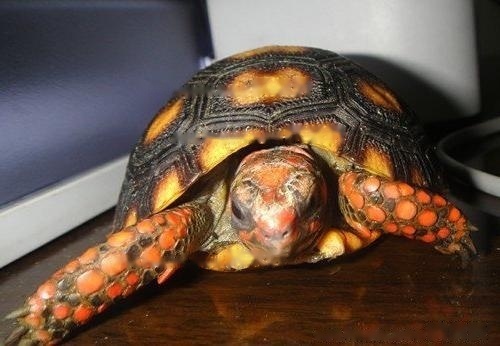
Red-legged tortoise
Captive breeding
Park
Although red-footed tortoises are medium in size, they require A larger area or fenced area for walking. 3 square yards (2.7 square meters) per turtle is recommended (Rundquist, 1994). Red-footed tortoises appear to be fine when housed in outdoor grounds with moderate to high humidity and nighttime temperatures no lower than 50 degrees Fahrenheit (10 degrees Celsius). If kept outdoors, the turtle must be provided with a sheltered area that provides shade. Red-footed tortoises prefer to spend most of their time under bushes and long grass (be sure these plants are non-toxic). These turtles must be provided with a shallow pool of clear water for them to drink, as red-footed tortoises are not aquatic and do not require deep pools for rearing.
If red-footed tortoises are housed indoors in groups of 5, they must be housed in a housing area of at least 15 square yards (13.5 square meters). Indoor breeding facilities can be constructed from a variety of materials, but the bottom material should always be waterproof. Concrete floors are not recommended because they tend to become very cold and have been reported to cause male red-legged tortoises to prolapse (Rendquist, 1994). The enclosure should be at least 3 feet (0.9 m) or higher on all sides to prevent these tortoises from crawling out. As for bedding, a mix of peat moss and playground sand works well. Hideout and wet areas should be provided for this tortoise. An easy way to do this is to bury a large plastic trash can at ground level so that it can hold a tortoise. Wet the bedding in the hideout to increase humidity. The cold end of the breeding facility should be 70-75 degrees F (21-24 degrees C) and the hot end should be 85-88 degrees F (29-31 degrees C). Be sure to provide several heat zones so the tortoises don't have to fight each other for basking spots. Temperatures can drop to 55-60 degrees Fahrenheit (13-16 degrees Celsius) at night, with some supplemental heat spots set at 80 degrees Fahrenheit (27 degrees Celsius). Full-spectrum lighting that emits UVB should be hung above the facility to promote the synthesis of vitamin D3, which is necessary for calcium absorption. Either way, if the weather is good, it is best to expose the tortoises to unfiltered, natural sunlight. Many owners keep their tortoises outdoors in the spring and summer and indoors during inclement weather or in the fall and winter. The red-footed tortoise does not hibernate, so it cannot tolerate prolonged low temperatures. A large shallow water basin should be provided at all times.
Feed
a variety of fruits (eg: plum, peach, strawberry, apple with skin, kiwi, star fruit, papaya, mangoes, tomatoes, etc.), carrots, mushrooms, beans, peas, grasses, vegetables, flowers, dark green leafy plants (e.g. dandelions, mustard greens, kale, rutabagas, kale), box turtle and tortoise food , tortoise food
Red-footed tortoises are mainly herbivorous, eating a variety of grasses, fruits, flowers and small plants. Red-footed tortoises have been reported to eat small amounts of animal food such as carrion in the wild. In captivity, red-footed tortoises should be fed a mixture of calcium-rich greens, fruits, vegetables, and flowers, and a small amount of animal-based protein. Suitable high-calcium greens include: kale, mustard greens, and dandelions. Also mix in other greens for variety such as endive, watercress, lettuce, kale and thatch. Spinach should be fed sparingly because the oxalates it contains bind to calcium in the food, making it unabsorbable. Good fruits and vegetables to offer include: squash, winter squash, shredded carrots, curved neck squash, zucchini, papaya, mango, kiwi peaches, melon, cantaloupe, frozen mixed vegetables (thawed), and cacti fruit. Feed cruciferous vegetables such as broccoli, cauliflower, and Brussels sprouts in small amounts. These vegetables contain iodine-binding substances, and if fed in too much, they can lead to an inadequate diet. Kale, rapeseed, cauliflower, cabbage, lettuce, cabbage, white radish, etc. help prevent cancer, but contain chemicals that inhibit thyroid function, which will hinder the utilization of iodine and promote goiter. Therefore, people with insufficient iodine nutrition and Those with hypothyroidism should control the intake of such foods. It should also be noted that eating cruciferous vegetables and fruits rich in plant pigments such as oranges, pears, apples, and grapes will strengthen the effect of inhibiting the thyroid, thereby inducing I have a big neck disease, so these two types of vegetables and fruits should not be eaten together. Maybe turtles are similar to humans on this issue ^_^). Edible flowers include: hibiscus flowers, nasturtium flowers, prickly pear flowers and dandelions. Small amounts of animal protein should be provided every other feeding, and high-quality canned dog food and suckling mice can be used. Young turtles should be fed daily, and a pinch of a high-quality reptile calcium supplement should be sprinkled on their food every other day. After one year, red-footed tortoises can be fed every other day and calcium twice a week. Two-year-old turtles and adults should be fed twice a week with a small pinch of calcium at each feeding.
Although red-footed tortoises are noted for their seasonal activity, they may lay eggs at any time of the year. In Kansas, a donated red-footed tortoise was kept outdoors in warm weather and indoors in colder months, and for 7 years lay eggs only between October and April (Renquist, 1994). Red-footed tortoises may lay eggs at any time, so it is advisable to provide females with a nesting room filled with damp peat moss and sand at all times. The nesting room can be made from a large box with an open top, with a slope so that the turtles can climb in and out at will. Nesting chambers should be 4x4x2 (LxWxHft) (1.2x1.2x0.6 m) and filled with damp nesting material, at least 20 inches (50 cm) thick. It is important that there must be more than one male tortoise in a rearing group, and fighting between males is very important to induce breeding in red-footed tortoises.
The fight between males begins with a series of head bobs in relation to the males, and then progresses into an intense contest as the males try to overturn each other. The winning male (usually the largest) then tries to mate with the female. The ritualized head movements displayed by male red-footed tortoises are thought to be a method of species identification. Other tortoise species, particularly the closely related and sometimes overlapping yellow-legged tortoise (Geochelone denticulata), have different head provocations. In contrast to the red-legged tortoise's head provocation as a series of rapid lateral twists and turns, the yellow-legged tortoise uses a prolonged lateral swing (Auffenberg, 1965). Male red-footed tortoises crawled and watched the females carefully (seemingly uninterested) until they managed to lure them into a suitable place to mate. The unique body shape of male red-footed tortoises helps them maintain balance as the female crawls back and forth during mating, facilitating mating, while the female crawling under low-hanging vegetation appears to try to drive the male away (Moskovits, 1988) .
Pregnant females can become restless before laying eggs and will wander around the feeding grounds in search of a suitable nesting site. A few days before laying eggs, female turtles will begin digging on their chosen nesting site. After the eggs are laid, the female turtle will bury the eggs in the subsoil. Be sure to pay attention to where the females dig so the eggs can be found and hatched artificially. The number of eggs laid per litter varies from 1 to 8, but some large broods may reach 15 eggs. Red-footed tortoises can lay several eggs a year. After the eggs have been removed, half-bury them in a container of slightly damp vermiculite (1:1 vermiculite to water weight ratio) and place them in the brooder. There is some debate among tortoise breeders about whether eggs should be left in the same orientation they were in the nest during captivity. Some breeders are careful to mark the tops of the eggs so they don't change their orientation when they are moved to the incubator. Others see this step as redundant and don't think changing the orientation of the eggs in the incubator will affect hatchability. According to Marchellini and Davis (1982), eggs of red-footed tortoises were turned over from their original positions with reduced hatchability, low survival, and increased incidence of juvenile deformities. Different breeders have different results, but being careful not to flip the eggs from their original position doesn't take much effort and may improve hatchability and hatchling survival. Do not hatch eggs in airtight containers, which can allow carbon dioxide to build up, which can be harmful to developing eggs. Humidity in the brooder should be maintained at 80-100%, and the brooder should be opened at least once a week, or more, to allow the eggs to get fresh oxygen. Eggs of red-footed tortoises are sexed by temperature, with incubation temperatures above 88°F (31°C) resulting in females and below 82°F (28°C) resulting in males (Renquist, 1994) . However, high temperatures can cause low hatchability and high deformity rates in hatchlings. The ideal incubation temperature is 84 degrees Fahrenheit (29 degrees Celsius) if you wish to obtain a mixed sex of hatchlings. The incubation period ranges from 105 to 202 days, with an average of 150 days (Paull, 1995). After breaking the shell, baby turtles often stay in the shell for a few more days to absorb the yolk. Usually hatchlings will still have some yolk sac left, clean the yolk sac with a mild disinfectant such as betadine and place the hatchling in moist subsoil on until the yolk is absorbed (Renquist, 1994). Juveniles can be kept indoors in aquariums with peat moss and sand substrates at the same temperature and lighting as adults. Be sure to provide high humidity grounds and a shallow water tray at all times, as hatchlings of red-footed tortoises are very susceptible to dehydration.

![[Dog Training 5] The training method of pet dog dining etiquette](/static/img/12192/12192_1.jpg)