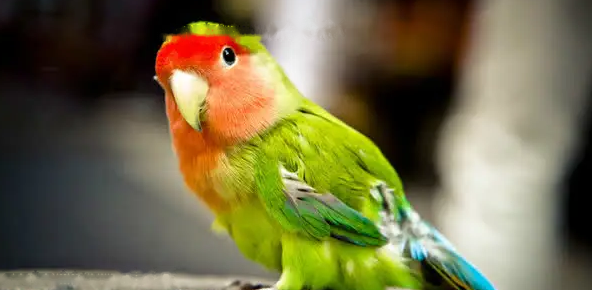
The budgerigar is lively and easy to tame, and is one of the most common pet birds in China. It belongs to the national second-class protected animal. It has its own living habits and habitat habits.

Budgies
Widespread in Australia The land area, but the eastern, southwestern, coastal areas of the North Province, Cape York Peninsula, and Tasmania are sparse in numbers. They have been introduced (including escaped caged birds) to many countries, but most of them have not been successful. Survival and reproduction, including the United Kingdom, Japan, the United States, Puerto Rico, Brazil, Switzerland, Colombia, the Society Islands, New Zealand, Oman and other countries, but the ethnic group in Florida, the United States was introduced in 1950, but successfully survived and reproduced offspring.
His flocks, often form groups of 20 hundreds of individuals to go out for food, and sometimes even gather 20,000 or more in groups. Budgerigars can survive in a variety of ecological environments in their native places, such as bushes, forests, grasslands, farm pastoral and so on. Budgerigars have a behavior similar to migration. In Australia, they occupy the north every winter (June-September) and gather in the south in summer (September-January). Wild budgerigars generally feed on the seeds, berries, buds and leaves of various plants, and fly to the fields in autumn to peck at grains.
Budgerigars primarily inhabit open grassland areas, dry Marley vegetation, Mulaga scrubland and open dense forest areas, plain areas full of eucalyptus and acacia, and agricultural areas ; Usually not too far from the river bank or water source. They are flocking species of birds, usually gathering 20 or even hundreds of them, and there has been a record of 25,000 birds gathering; if disturbed, the whole flock will fly, circle in the air and often fly in a random direction. , and then landed on a tree near a safe distance; they are quite gregarious birds, usually each bird has its own place in the group, there is no class distinction, and occasionally quarrels occur; at dawn, they will go to the water source first Drink water, and then go to forage. When it is hot at noon, they will find a rest under the shade of dense trees. When it is cooler in the afternoon, they will continue to forage. At dusk, the whole group will start to return to the nest to rest overnight; during the day, they like to forage on the ground. , Because the plumage of the body is integrated with the surrounding environment, it is quite difficult to detect; they are very friendly and not afraid of people, and can be observed at close range; most of them go to the troughs, ponds, rivers, and water on the ground where cattle and sheep drink. Active in pits, usually the whole group will drink water quickly to avoid being preyed by predators; they usually do not have a fixed route for food, but search around in a nomadic way; prefer to go to North Australia in the colder season and regions, travel to South Australia during the hot season.

![[Dog Training 5] The training method of pet dog dining etiquette](/static/img/12192/12192_1.jpg)