While hibernating in their dens, their body temperature drops to 6 degrees, making hedgehogs the coldest animals in the world under these conditions. Breathe 1-10 breaths/min. Dead branches and fallen leaves are a favorite hibernation place for hedgehogs. At this time, if people burn the fallen leaves, it will be a disaster for the hedgehog. Hibernating hedgehogs will occasionally wake up, but not eat, and fall back to sleep soon after. Hibernating hedgehogs will starve to death if they wake up too early. How to feed hedgehogs in winter hibernation?
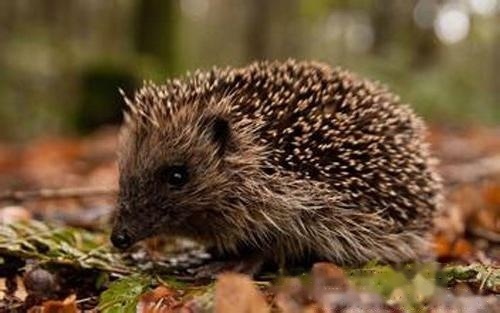
Category: Hedgehog alias thorn group, hedgehog, melon-stealing badger, burr, etc., belong to insectivorous in zoology Hedgehogs are heterothermic, because they cannot stably regulate their body temperature to keep it at the same level, so hedgehogs hibernate in winter.
The hedgehog has a long body except for the stomach It has thorns, when it is in danger it will circle into a ball of thorns, its shape and docile personality are very cute, some breeds are only slightly larger than the palm of the hand, so people in Australia Keep it as a pet.
Hedgehogs have very long noses, and their senses of touch and smell are well developed. Its favorite food is ants and termites, and when it smells food underground, it digs out a hole with its claws, then sticks its long sticky tongue inside the hole for a turn to get a hearty meal.
Hedgehogs live in bushes, can swim, and are afraid of heat. Hedgehogs hibernate in late fall and don't wake up until the following spring, when the temperature is warm enough.
Hibernation is a form of dormancy. It is an adaptation of animals to unfavorable external environmental conditions in winter (such as cold and insufficient food). The main manifestations are inactivity, slow heartbeat, hypothermia, and falling into a lethargic state. Common in invertebrates, amphibians, reptiles and many mammals (such as bats, hedgehog marmots, chinchillas, jerboa) in temperate and boreal regions.
The hibernation process can be divided into three stages: falling asleep, deep sleep and falling asleep.
It takes about one to several days for the body temperature of the sleeping animal to begin to decrease to a steady temperature close to the ambient temperature. The main external stimulus to sleep is temperature. The upper limit of ambient temperature for various animals to sleep varies greatly: bats are 24-28°C, hedgehogs are around 27°C, chinchillas are 20-22°C, and hamsters are 9-10°C. The availability of light, food, and water also affects sleep. The main internal factor for falling asleep is body weight. It is generally believed that the rapid increase in body weight until it remains at a relatively high level indicates that the animal has the internal conditions for sleep. Otherwise, although the ambient temperature is low, the animal still does not sleep. After the body temperature is adjusted to close to the ambient temperature, it will go into deep sleep.
This stage of deep sleep can vary in length, typically up to several months. At this time, the physiological state has undergone great changes. Respiration is significantly reduced, such as the respiration of hedgehogs, from 6 to 18 times per minute at room temperature to 1 to 3 times per minute (28 to 18°C). A type of intermittent (paroxysmal) breathing is also sometimes present at this stage, that is, a longer pause followed by a short period of rapid continuous breathing. Unlike warm-blooded animals, intermittent breathing in hibernating animals is a normal physiological state. At the same time, the circulatory system also changed significantly, and the heart rate was extremely slow. The heart rate of hibernating bats dropped from the normal 330 to 920 beats per minute to 30 beats per minute, and the hummingbirds dropped from 480 to 1200 beats per minute to 48 beats per minute. , the chinchilla dropped from 300 times per minute to 4 to 7 times per minute. At the same time, blood pressure was also extremely low. The blood pressure of hamsters and woodchucks dropped from 100 mmHg to 50 mmHg in normal temperature, and from 113 mmHg to 35 mmHg in hedgehogs. At this time, the peripheral blood vessels are extensively constricted, and only the most important thoracic organs and the brain maintain a low level of blood circulation. In this way, energy is saved to the greatest extent, and the continuation of life activities is guaranteed. When the ambient temperature rises to a certain height, the deep-sleeping animals wake up quickly, the body temperature rises, and the functions of various systems return to a normal state (sleep).
The sleeping temperature of the hypnotize hedgehog is about 6~9℃(2~15℃), and the dauer chinchilla is about 10℃. In addition to this spontaneous arousal, other external causes such as electrical, mechanical, cold or heat, chemical stimulation, and injection of drugs or hormones can arouse hibernating animals. At the beginning of arousal, breathing changes from rhythmic to intermittent. After several paroxysmal breathing, it becomes rhythmic breathing again, and the frequency is getting faster and faster. For example, the hedgehog can reach 60 times per minute. After waking up, it tends to be calm and becomes 36 to 40 times per minute. The heart rate also gradually increased to an above-normal level, and then returned to calm, and this hyperactivity of breathing and heart rate was associated with shivering heat production at the onset of arousal. At the same time, the blood vessels in the front of the body dilate to strengthen the blood circulation of the heart, lungs and brain. After the front of the body is rewarmed, the blood vessels in the back of the body begin to dilate and rewarm quickly. Due to such active rewarming, the whole process only takes 1.5 to 2.5 hours to raise the body temperature by more than 30 degrees and fully wake up.
During hibernation, animals are in a state of hibernation that alternates between active (normal temperature) and paralysis (low temperature). The active period is about a few hours to a few days. Some species of animals excrete or eat during this period. Most species of animals do not eat, but undergo some adjustment of physiological balance.
Hibernating animals maintain life without eating or drinking during the hibernation season of more than 100 days, because they have sufficient energy reserves, and their metabolism is reduced to the lowest level, which is 1~ 2%. Its respiratory quotient is close to 0.7, mainly relying on oxidized fat to supply energy and water. Hibernating animals store fat equivalent to 30-50% of their body weight during the fattening period. The brown fat of the hibernating animals was more than that of the non-hibernating animals, and after hibernation, the brown fat was reduced the most. It was once thought to be an endocrine gland related to hibernation, and it is called hibernation gland. It is now known that it is closely related to the awakening of hibernating animals.
The observation found that when the temperature dropped to 12 degrees Celsius, hedgehogs refused to hibernate. In order to expel the severe cold, they still depended on eating more to maintain their body temperature. When the temperature dropped to 7 degrees Celsius, the hedgehogs entered Hibernation state. Hedgehogs hibernate for up to six or seven months. After entering hibernation, their body temperature drops and other physiological functions also weaken. For example, a awake hedgehog breathes about 50 times per minute, and at most during hibernation Taking eight breaths, sometimes only one breath, or even not breathing for several minutes, a awake hedgehog beats 200 beats per minute, which is reduced to 20 beats during hibernation.
(1)After half a month No response, Sleep really sweet;
(2) Pee and eat once after three weeks;
(3) Pee and eat once every three weeks, This is the case all winter, until the next March, when the temperature rises to about 10 degrees, it wakes up and returns to the wild.
Please remember that the hedgehog is known as one of the eight earth fairies. Just like foxes and weasels, so don't mess with them when you have nothing to do! Don't want to play when you look cute, it's actually not good!
(4) Don't scare him.

![[Dog Training 5] The training method of pet dog dining etiquette](/static/img/12192/12192_1.jpg)