Scientists have discovered an infectious cancer cell in dogs that has survived for nearly 11,000 years, making it the longest-lived cancer cell so far. Puppies like to smell and lick around, but they can easily get sick. One of the most common and highly contagious are genital tract tumors, which are spread through mating and licking dogs.
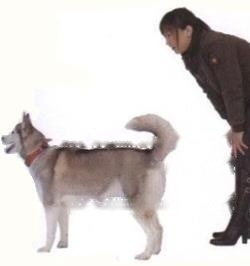
When did this contagious cancer begin to spread among dogs, scientists learned from two infected puppies Looking for the answer, they took their cancer cells to genetically sequence, traced back to the source, and found that the cancer cells in the two dogs had been alive for more than 11,000 years. It is believed to have come from a Mesolithic, sled dog-like dog, and it is estimated that it was the first dog with a genital tract tumor.
Unlike common cancers, the cancer cells in this dog did not disappear with the death of the host, but spread to other dogs through dog mating, and then from one group of dogs to another group of dogs , One pass ten, ten pass one hundred. During the period, it experienced nearly 2 million genetic mutations, which originally spread in a single dog, and began to infect dogs all over the world nearly 500 years ago.
To this day, it can be found in two puppies living in Brazil and Australia, making it the most ancient cancer cell found so far.
Scientists can even sequence the cancer cells of these two dogs to infer that the first generation of infected dogs, from inbreeding dogs, had gray-brown or black straight short hair, but Its gender could not be determined.
Reproductive tract tumors also occur in dogs' lymph nodes and eyes, and are one of the two known contagious cancers. Another is an Australian devil's facial tumor, which is transmitted through bite wounds.
Although there are not many cancers that can be transmitted, experts warn that cancer cells in humans or other animals have the opportunity to change. This research is helping to understand the relationship between cancer cell mutations and infectivity.

![[Dog Training 5] The training method of pet dog dining etiquette](/static/img/12192/12192_1.jpg)