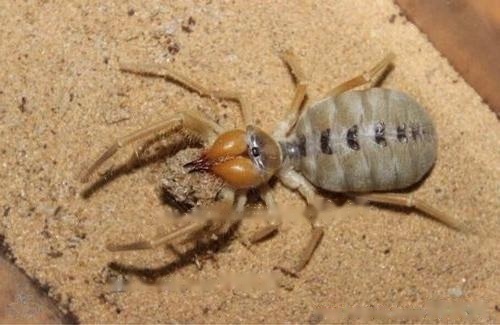
Sunspider, also known as Sunspider, Sunscorpion, Windscorpion, CamelSpider. Also translated as Japanese spider. Living in hot and dry areas, most species are golden yellow and inactive during the day, hence its common name. Spiders all prey, so do you know how the sunshade spiders prey?
The sun-avoiding spider
With its massive claws, almost voracious appetite and runner-like speed, the aggressive desert dweller is a natural killer. In the rising sun in the desert of Israel, a strange little creature stared at me and slid back into its cave. Round eyes, hairy limbs, protruding arms like giant claws, it all seems like a scene from a nightmare. I approached it very cautiously - although sun spiders are not venomous, they can be extremely painful to bite into and fatal to their prey. This avid carnivore will attack some insects, rodents, lizards, snakes, and small birds, capturing them with giant claws that can be as long as a third of their body. In terms of body proportions, this big mouth is one of the best in the animal kingdom. They wield pincer-blade-like claws, chewing their prey to pieces like a saw, and then secrete an enzyme that dissolves them into a liquid that is sucked into their stomachs.
The sun-hiding spider was called the official spider during the Iraq War. One soldier described it as the most peculiar-looking creature, and legends have spread around it. For example, some say the creatures can run at speeds of up to 40 kilometers per hour and cry like a baby; they crawl into the stomach of a camel and eat until the camel's stomach bursts. None of these rumors are true. In fact, the sunshade can only run about 16 kilometers per hour without making any sound, and eat small desert creatures such as insects and lizards. Its terrifying appearance has long surprised armies in the region: during the First World War, soldiers stationed in Egypt held a sun-avoidant contest they caught and wagered on the outcome.

Subscribe to Newsletter
Professional platform for pets, dogs and cats.
![[Dog Training 5] The training method of pet dog dining etiquette](/static/img/12192/12192_1.jpg)