While dogs barking due to aggression may look similar to aggression, this type of attack bites for a different reason and requires a different remedy. Dogs who bark in fear are more sensitive than aggressive animals and prefer to curl up behind their owners' laps. This problem is often caused by insufficient social interaction among animals, but it can also be genetic.

Suitable for age: 2 months-5 months
Training goals: Dogs who are prone to fear and barking have learned from their own experience to distrust humans. Let the dog learn to trust humans so that they don't bark and bite when they are afraid.
Applicable dog breeds: all breeds
Equipment: long leash|collar|toys|snacks
Affiliated level: elementary school (beginner)-corrective training
Training period: 10 minutes * 7 times
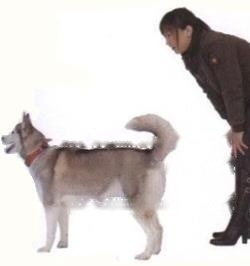
Step 1: Dogs barking in fear can be complicated . It may curl up close to its owner, wagging its tail submissively, but may suddenly dash forward when startled. Dogs with this problem tend to have low self-confidence. Strengthening your authority while training will only cause your dog to lose confidence more and more.
Step 2: The training method is: you can ask your friends to help, of course, a professional dog trainer is better, and the training should be carried out slowly and carefully. Do not feed it before each practice, and attach a long leash to it. Your friend should walk away with food.
Step 3: Have your friend or trainer hold the food in the palm of your hand and let the dog walk over. Ask your friend not to talk to him, but to get down on his knees with his back to the dog and avoid making eye contact with him.
Step 4: Repeat steps 2 and 3 a few times, then ask your friend to turn his body slightly and repeat a few more times while still holding his palms. There should be food. At this point, your friend still won't be able to make eye contact with the dog.
Step 5: After a few days of successful training, you can move on to the next training phase. Repeat steps 2 and 3 with your friend still on his knees, but this time facing the dog to feed him.

![[Dog Training 5] The training method of pet dog dining etiquette](/static/img/12192/12192_1.jpg)