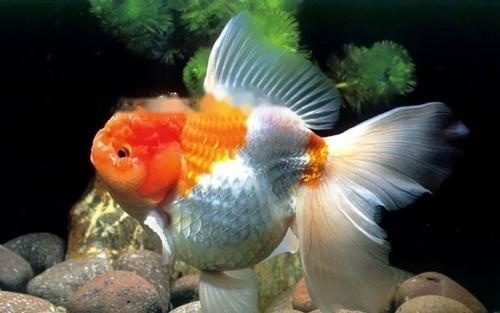
Having a fish tank at home to keep a few ornamental fish has become very common in many households. However, domestic fish tanks require filtration. Therefore, how to filter has become a very headache for fish lovers. Now let's discuss the problem of fish tank filtration, so that aquarists can get out of the filtration misunderstanding and make fish farming easy and happy.
1. Why do fish tanks need to be filtered?
Fish will excrete feces, and feeding fish will leave The remaining substances in the water will increase the impurity content in the water, causing the water quality to deteriorate and causing damage to the fish. Therefore, in order to keep the water clean and maintain the ecological environment required by the fish, the fish tank needs to be filtered.
2. Filtration principles for fish in aquariums
1. Thoroughly remove fish excrement and impurities to keep the water clean and pure;
2. Create a water ecological environment to meet the survival needs of fish.
3. Filtration methods for fish in aquariums
Generally, two methods of physical filtration and biochemical filtration are adopted.
Physical filtration is to remove impurity particles in the water to keep the water clean and pure, to avoid harmful pollution caused by impurities and damage to the health of fish; biochemical filtration is to use beneficial microorganisms (mainly nitrifying bacteria) to dissolve the residues left by physical filtration. It converts harmful substances (such as ammonia) into beneficial substances, and through the ecological cycle, makes the water body suitable for fish survival and healthy growth.
Fourth, the difference between physical filtration and biochemical filtration
There is no essential difference between physical filtration and biochemical filtration, only the functional difference.
The two filtration methods are a complementary relationship, both in order to maintain the water quality in line with the survival needs of fish. Physical filtration does the rough work, and takes the first step of filtration to remove impurities and particles in the water as its own responsibility. Biochemical filtration does fine work, and does the work that cannot be done by physical filtration.
5. The relationship between physical filtration and biochemical filtration
The better the effect of physical filtration, the less impurities remaining after filtration, and the task of biochemical filtration is The easier it is, the less biofilter material is needed; conversely, the more biofilter material is needed. Just imagine, if there is no filter cotton to filter out the impurities, it will be very difficult or even impossible for the nitrifying bacteria to decompose all the harmful substances produced by the increasing fish stool and other impurities. If there is no harmful pollution caused by impurities in the water body, what else do nitrifying bacteria need to do?
6. How to effectively realize the functions of physical filtration and biochemical filtration?
Use silk fiber blocks (commonly known as filter cotton), activated carbon, etc. to hold the first pass of filtration to filter out impurities in the water. (Of course, it needs to be removed manually). The thicker the filter cotton, the better the effect; , glass ring and other materials provide the nitrifying bacteria with a living and attaching environment, so that the nitrifying bacteria can carry out the nitrification and decomposition process of the residual harmful substances in the water body. The more nitrifying bacteria, the more thorough the nitrification, and the better the filtering effect. 7. How to choose and configure biochemical filter material?
The principle of selection is to preserve as many nitrifying bacteria as possible to participate in the filtration. The reason why biochemical cotton is firstly applied is to carry out secondary physical filtration to the water body while preserving nitrifying bacteria to prevent the passage of impurity particles missed by the filter cotton; meet the filtering needs. There is no compatibility between the ceramic ring and the glass ring. If one is used, it is not necessary to use the other. Their functions are to preserve nitrifying bacteria. That's it. Filtration with other materials such as coral sand also provides a breeding ground for nitrifying bacteria. What material to choose for biochemical filtration can be customized according to your own preferences, supply and economic conditions, and there are no special requirements.
8. How to use the filter material reasonably?
1. Get out of the misunderstanding of re-biochemical filtration and light physical filtration. Some friends don't pay much attention to physical filtration and use a large number of biochemical filter materials. They actually use ceramic rings or glass rings for tens of thousands of pounds, and some even do not get the best filtration effect. If the physical filtration effect of the first pass is complete, do you still need so many biochemical filter materials? Of course, it is reasonable to use more biochemical filter materials for the filtration of grass tanks, because the physical filtration of grass tanks is often difficult to achieve completely, and it is necessary to A large number of nitrifying bacteria do the work.
2. Determination of the amount of physical filtration and biochemical filtration media. The general principle of the amount of physical filter media is as long as it can effectively isolate all the impurity particles contained in the water flow entering the filter tank, including the density, thickness and placement effect of the filter media, and there should be no overflow around the filter cotton block. Otherwise, the impurity particles will be lost, which will increase the burden of biochemical filtration. If a short thin stocking is placed on the inlet pipe of the filter tank to wrap the impurities, an effective filter is actually added, and the filter cotton becomes a second filter, and the effect will be much better. In this way, there are basically three layers of filter cotton. For the determination of the amount of biochemical filter media, we do not need to do cumbersome mathematical calculations, we can put as much as possible according to the capacity of our filter bucket, tank or box. As for those large filter boxes that you DIY, you can put hundreds of pounds, and only 20 to 30 pounds is enough. In my 1.2-meter tank for fish farming, there are only three pieces of biochemical cotton, four small bags of commercial activated carbon, and two kilograms of ceramic rings in the outer filter barrel, plus two pieces of biochemical cotton to filter, can create a stable biochemical environment, and the water quality is clear and translucent , the fish are lively and lively, the key lies in the thorough physical filtration, as long as the fish is produced in the tank, the impurities are removed immediately, and the water ecological environment can be effectively maintained without allowing time to produce pollution factors.

![[Dog Training 5] The training method of pet dog dining etiquette](/static/img/12192/12192_1.jpg)