Colombian red-legged tortoises have lighter rot skin, small wounds and not deep wounds. Use a cotton swab to gently wipe off the moisture from the lesion, then use a cotton swab to dip 5% povidone iodine and apply it for disinfection (from the inside out), dry it for 1 to 2 hours after application, then put it back into the water, and wipe it 3 to 4 times a day That's it. During dry feeding, water can be added to the isolated water tank, and then the grid plate is used to raise it, so that the Columbia Red-legged tortoise can urinate and leak without getting on the damaged skin. After the dry feeding, remove the net directly. Just the grid.
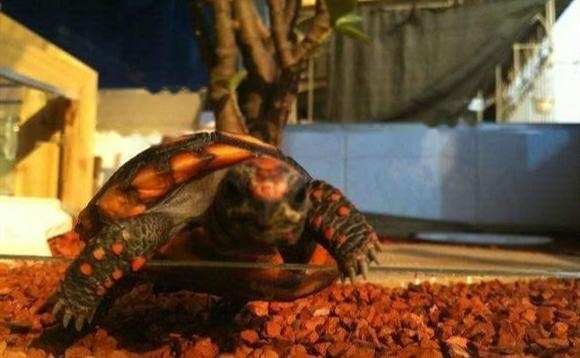
If the wound on the rotten skin of the Columbian red-legged tortoise is slightly If it is aggravated, after disinfection with povidone-iodine, erythromycin or chlortetracycline can be added to cover the wound surface, and dry maintenance is the same as above. When entering the water, you can directly put it in the water. If you feel that too much erythromycin will cause an oily film on the water surface, you can wipe off part of it with a cotton swab. It is not necessary to clean it too cleanly. The oily erythromycin has a certain waterproof effect and can protect the wound.
Colombian red-legged tortoises have severely rotten skins, with a large area and a deep depth, and even some bones can be seen. If left untreated it could lead to death. Similarly, disinfect with povidone-iodine. If the wound is deep, use a sterile cotton ball to take a suitable size, apply erythromycin and insert it into the wound, and apply the outer layer to seal it. The dry maintenance method is the same as above. Also use amoxicillin medicated bath.

Subscribe to Newsletter
Professional platform for pets, dogs and cats.
![[Original] Sharing of popular science knowledge of ringed map turtles](/static/img/11249/11249_1.jpg)