When mentioning the tortoise with a raised plastron, many people may think of the king of tortoises the Angloka tortoise. In fact, the tortoise has similar characteristics. Therefore, I would like to give you some popular information about the chest turtle today, please read down~First, the basic information of the chest turtle
[Chinese name] chest turtle
【Latin name】Chersina angulata
【English name】South African bowsprit tortoise
【two names】C. angulata
【other name】 South African Turtle
[Kingdom] Animalia
[Domain] Chordate
【Class】Reptilian
【Order】 ] Turtles
[Suborder] Turtles
[Family] Tortoise
[Genus] Turtles
[Species] Turtles
[Distribution area] South Africa, Republic of Namibia
II. Appearance characteristics of Turtles
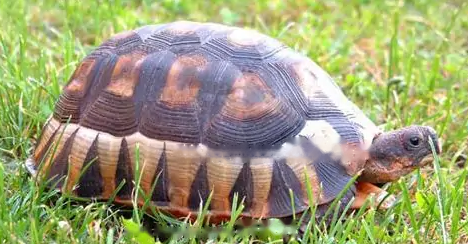
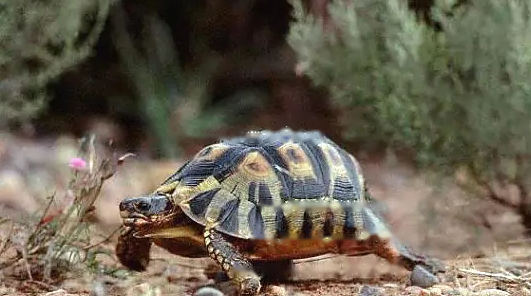
The tortoise is small and medium-sized among tortoises. The length of the carapace is about 13-20 cm. The color of the carapace is rich and bright. The breastplate (plastron) is unique in structure, and the throat shield is not divided into left and right The part is elongated and protrudes forward.
PS: Male tortoises have prominent breastplates, which are used as weapons when competing with other males for females during breeding.
Three , Habits of the tortoise
1. Living habits
The tortoise mainly lives in coastal deserts and likes a warm and dry environment. Except for the rainy season, its The humidity of the living environment generally does not exceed 60%. The temperature suitable for living is around 25-32 degrees Celsius, when the temperature is below 20 degrees Celsius, they will reduce their activity and appear lethargic. They also use dormancy to survive hot summers (January-April) and cold winters (May-September).
2. Diet
The tortoise is vegetarian and eats mainly annuals (plants that sprout, grow, bloom, and then die during the year) and succulents , and occasionally eat some fruits, etc.
4. Breeding method of the tortoise with breasts
The reproduction method of the tortoise is oviparous. Celsius), they will start mating in estrus, and the mating location may be in the water or on land. Female turtles generally mate and lay eggs every other year. May-October each year is the egg-laying season. The number of eggs laid each time is about 1-2, and the shape of the eggs is spherical or oblong. After laying eggs, the female turtle will use her hind limbs to scrape soil into the hole until the eggs are covered, and then use her plastron to compact the soil, and finally choose to leave. Eggs generally hatch naturally, and the time is about 3-8 months.
5. Identification of male and female tortoises
1. Body size: Under normal circumstances, female tortoises are larger in size than males at the same age big.
2. Tail: The tail of the male turtle is thick and long, while the tail of the female turtle is shorter and thinner.
3. Breastplate: The breastplate of male turtles is generally larger than that of female turtles.
Six, the specialties of the tortoise It will stop to retract itself into its shell, but instead rush towards shelter among the rocks.
2. Don't get lost: Turtles often don't get lost when looking for shelter, and can quickly find their own shelter even in unfamiliar places.
Okay, yes The introduction of the chest turtle, the editor will stop here! If you want to know more about the little friends of the chest turtle, you may wish to continue to pay attention to this site.

![[Original] Sharing of popular science knowledge of ringed map turtles](/static/img/11249/11249_1.jpg)