The Cape Berger tortoise is a relatively small species of tortoise. They are rarely seen in daily life, but there are still many friends who want to know about them, so the next step is to see them. Let me tell you a little about it!
I. Basic information
Chinese name: Berg's Cape Tortoise
Latin name: Homopus bergeri
Kingdom: Animalia
Department: Chordate
Subphylum: Chordate
Class: Reptile
Order : Turtles
Family: Turtle
Genus: Tortoise
II. Morphological characteristics
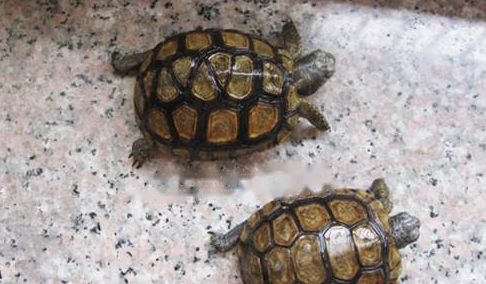
The back shell of the Cape Berger tortoise is high arched, the skin surface is dry, the front legs are thick, blunt and round, and the hind legs are like elephant legs, with short toes and no webs between the toes.
The carapace of the Cape Burger tortoise is brown with black markings, and the back and abdomen are decked.
III. Distribution range
Berg's Cape tortoises are mainly distributed along the west coast of Namibia and South Africa.
Four. Habits
1. Burger's Cape tortoises like to inhabit rocky areas. In summer, they hide in the crevices of rocks inside.
2. Cape Berger's tortoises are generally active in the warmer mornings, when they gather to bask in the sun, and when the temperature continues to rise, they actively explore the entire active area and feed.
3. After eating, the sun will become hotter in the afternoon. At this time, the Cape Berger tortoise will slowly quiet down and hide under the short bushes.
V. Diet
Berg's Cape tortoise is an omnivorous animal, mainly feeding on cucumbers, papayas, grapes, figs and mosaics.
Six. Breeding method
The breeding method of the Cape Berger tortoise is oviparous, and the breeding time is about January to October every year. Berg's Cape tortoises usually lay their eggs under slate.
Berg's Cape tortoises only lay eggs once a year, 1 egg at a time. When the temperature is between 28-30 degrees, the hatching time of the eggs will be about 115 days, and the length of the newly hatched hatchlings will be about 3 cm.
VII. Racial status
Due to the destruction of the environment and human hunting, the living space of the Cape Berger tortoise is getting smaller and smaller, and the number of tortoises is getting smaller and smaller. Then it became rare.
VIII. Common Diseases
1. Stomatitis: This is caused by the accidental ingestion of sharp foreign objects by Berger's Cape tortoises, resulting in damage or ulceration of the oral epidermis. Purulent discharge. In severe cases, Cape Burger tortoises will stop eating and recoil.
2. Pneumonia: This is caused by a sudden drop in temperature, which causes inflammation in the lungs of the Cape Berger Tortoise, a large amount of nasal discharge, and white mucus around the mouth. In severe cases, Cape Berger tortoises may experience shortness of breath.
3. Internal parasites: Cape Burger tortoises with this disease will experience weight loss, poor appetite, and a small amount of parasites in their feces. The tortoise's internal organs can fail, possibly resulting in death.
4. Saprolegnia: The Cape Burger tortoise with this disease will have white cotton wool-like hyphae, and the Cape Burger tortoise will have decreased appetite, weight loss and weakness In severe cases, the limbs and neck of the Cape Berger tortoise will be covered with water mold, some wounds will be congested and fester, and sometimes they will even die.
The above is all the information about the Cape Berger tortoise~ Everyone knows it!

![[Original] Sharing of popular science knowledge of ringed map turtles](/static/img/11249/11249_1.jpg)