However, in order to avoid the worries of rearing, you must master the relevant skills when selecting, otherwise it is easy to be deceived by untrustworthy traders and buy problematic yellow belly red ears turtle. Below, the editor has carefully compiled a simple and practical selection technique, hoping to help you in need.
1. Observation of morphological characteristics
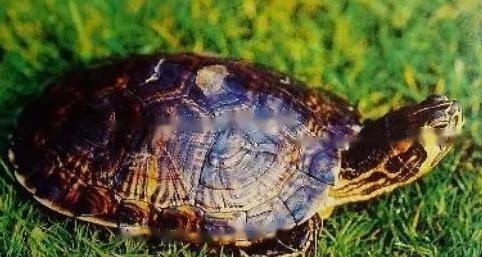
1. Juveniles: juveniles of yellow-bellied red-eared turtles are light green, and some slightly darker patterns can be seen, 1~2 At age, the carapace looks brighter, and as it grows, the carapace will become darker and darker.
2. Adult: The adult carapace of the yellow-bellied red-eared turtle can be as long as 29 cm, with yellow stripes on the back shell shield, and ear-shaped yellow patches on the head and behind the eyes. In addition, it should be noted that the appearance characteristics of males and females are also different. The lower edge of the female adult turtle carapace and plastron are chrysanthemum yellow, and there are 1 to 6 pairs of light brown-gray spots on each shield of the abdomen. Dark grey annular plaques. Male adult turtles are mostly gray-black with smaller macula behind the eyes. The forelimbs have thin yellow stripes.
Ps: The above is a description of the morphological characteristics of the yellow-bellied red-eared turtle. When choosing, you must observe carefully. If there is any discrepancy, it is recommended not to be selected.
Second, observe the health status
In order to avoid subsequent feeding troubles, it is very important to choose a healthy yellow-bellied red-eared turtle, and see the following aspects for details :
1. Eyes: Observe the eyes of the yellow-bellied red-eared turtle. Eyes that are full of energy, open and close freely, without redness and swelling, and without mucus-like secretions are healthy and can be chosen.
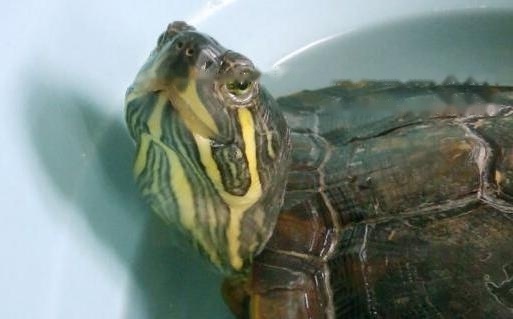
2. Mouth and nose: Observe whether there is mucus or bubble-like secretions in the mouth and nose of the yellow-bellied red-eared turtle. If there is, it may be a respiratory infection and should not be purchased. In addition, don't buy turtles that breathe with their mouths open. Nine times out of ten, they are sick turtles.
3. Tortoise shell: Observe whether the shell of the yellow-bellied red-eared turtle is cracked, ulcerated, or red or white spots, and turtles without these symptoms should be selected. In addition, you can also lightly press the tortoise shell with your hands, especially the plastron. Only turtles that have not softened or deformed can be purchased.
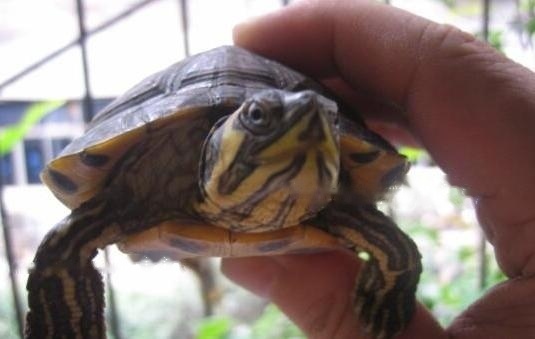
4. Crawling situation: observe the speed of the yellow-bellied red-eared turtle crawling, whether the neck and head are flexible, whether the limbs can support the body, and whether the plastron crawls off the ground (this is very important). Also, when a healthy yellow-bellied red-eared tortoise crawls, its body should be parallel to the ground and not tilted or upturned at one end. In places with slopes, the turtle in good condition can support the body and continue to climb up, otherwise it will slide down and be unable to crawl.
5. Eating situation: Observe the eating situation of the yellow-bellied red-eared turtle. Generally, turtles that eat actively are recommended because they are healthier.
Okay, the above is the sharing of the editor. Those of you who want to buy yellow-bellied red-eared turtles can collect them and refer to them when purchasing. In addition, a friendly reminder: you must carefully observe and compare when buying yellow-bellied red-eared turtles, so as not to be fooled.

![[Original] Sharing of popular science knowledge of ringed map turtles](/static/img/11249/11249_1.jpg)