The yellow-spotted map turtle is a relatively good-looking map turtle species, and many people want to know about them! Then let me give you a detailed introduction~
1. Basic information
Chinese name: Yellow-blotched Sawback
Latin name: Yellow-blotched Sawback
English scientific name: Yellow Blotched Map Turtle
Body length: 12-21cm
II. Appearance characteristics
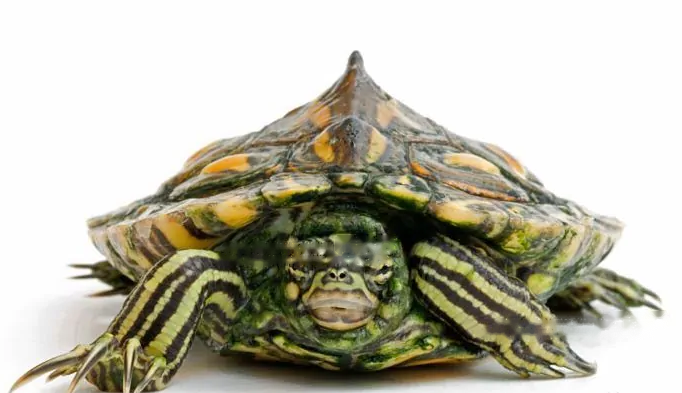
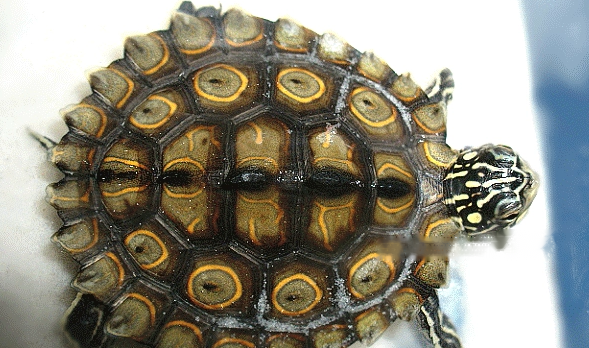
The back of the yellow-spotted map turtle The carapace is olive to brown, with prominent black spikes on the dorsal ridges, the plastron is cream-colored, and the seam between the carapace and plastron has a black pattern.
Ps: The pattern on the head of the macular map turtle is very similar to that of the ringed map turtle.
III. Distribution range
The macular map turtle is mainly distributed in the Pascagoula River and most of its tributaries in Mississippi.
IV. Habitat
The yellow-spotted map turtle prefers sandy, rocky bottoms and slow-moving rivers, as well as stretches littered with debris and tangled trees.
V. Habits
The macular map turtle can withstand low temperatures of 7-12 degrees Celsius, and they do not have the habit of hibernating in winter, but they will find suitable The waters spend the winter in the waters, and sometimes, the native temperature drops to 4 degrees Celsius, and they can still be seen sunning their backs on the wood by the river.
Six. Diet
The yellow-spotted map turtle is an omnivorous and carnivorous turtle. They mainly feed on fish, insects, and crustaceans. and mollusks for food.
Seven, reproduction method
The breeding method of the yellow-spotted map turtle is oviparous, and their spawning season is from May to August every year. During this period, the female yellow-spotted map turtle will dig a nest of about 16cm for laying eggs by herself. It can lay 3-9 eggs at a time.
VIII. Racial status
On October 9, 2018, China listed the yellow-spotted map turtle as a second-class protected aquatic wild animal.
The above is the introduction to the yellow-spotted map turtle, do you understand?

![[Original] Sharing of popular science knowledge of ringed map turtles](/static/img/11249/11249_1.jpg)