The leatherback turtle is a very rare species of turtle. As of 2010, the number of leatherback turtles in the world has been less than 6,000, so many countries in the world have listed it as a key protected animal. In the Law of the People's Republic of my country on the Protection of Wildlife promulgated in 1988, leatherback turtles were designated as China's national class II key protected wild animals.
More than 30 years have passed, the number of leatherback turtles has not increased, but has shown a significant downward trend. Therefore, in the National Key Protected Wildlife List issued this year, the protection level of leatherback turtles It has been upgraded to Class I key protected wild animals. Below, the editor will take you to learn about the leatherback turtle, and I hope you and the editor can join the team to protect the leatherback turtle.
First, basic information
Chinese name: Leatherback Turtle
Foreign name: Leatherback Turtle
Alias: Leatherback Turtle, Starfruit Turtle, Root Turtle, Sampan Turtle, Swallow Turtle, seven leatherback turtle
Subspecies: Atlantic leatherback turtle (named subspecies), Pacific leatherback turtle
Second, appearance characteristics
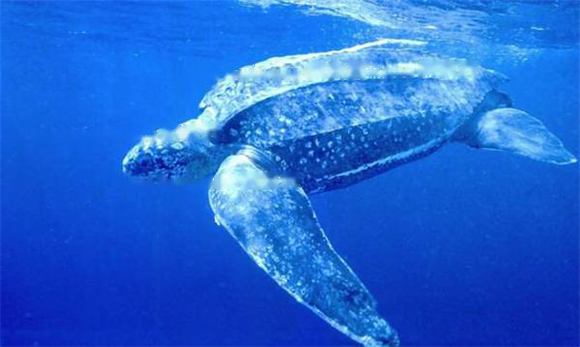
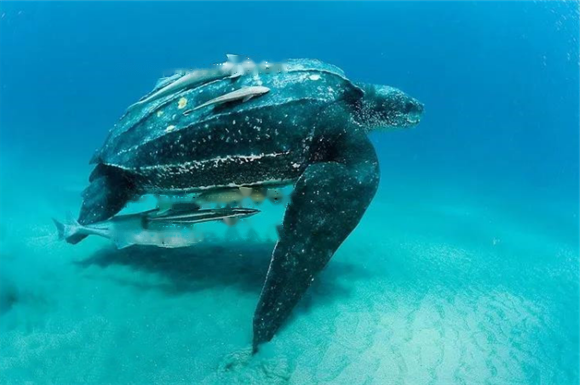
The leatherback turtle is very large, reaching a length of 1-1.5 meters, ranking in the top ten of all turtle species in the world. In addition, it has a large head and a short neck, and two large triangular odontoids at the front of the upper jaw, with a notch in the middle, which can withstand the powerful beak of the lower jaw. Its head, body, and limbs are covered with leathery skin without horny scutellum. Because the body has 7 rows of longitudinal ribs on the back and 5 rows of longitudinal ribs on the abdomen, it is called the leatherback turtle. In addition, its forelimbs are well developed, twice as long as the hindlimbs, and the tail is short and connected with the hindlimbs by a membrane.
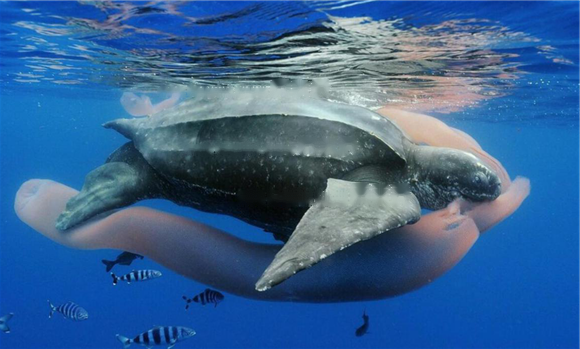
However, the above are all adult turtles. Young turtles are different. Before the leatherback turtle reaches adulthood, it has many small scales on its body and limbs. These small scales are polygonal and irregular, but in adulthood, these scales disappear and are replaced by leathery skin. In addition, the back of the juvenile turtle is gray-black, which is different from the dark brown or black of the adult ghost.
Three. Habitat
Leatherback turtles are mainly distributed in the Atlantic and Pacific waters, covering hundreds of regions in dozens of countries, including Guangdong, Fujian, Zhejiang, Jiangsu, Shandong and other coastal areas in my country. Inside, although there are many places, they rarely go ashore, so not many people are seen.
IV. Predatory habits
Leatherback turtles are omnivorous animals, and their food range is also very wide, including fish, shrimp, crab, jellyfish, squid, snail, clams, Starfish, sea cucumbers, jellyfish and seaweed, etc. However, due to the wanton destruction of the marine environment by humans, leatherback turtles sometimes eat garbage bags floating on the sea as jellyfish, causing intestinal blockage, resulting in a large number of leatherback turtles dying every year.
It is everyone's responsibility to protect wild animals. I hope everyone can start from me to prevent these rare animals from going down the road of extinction.

![[Original] Sharing of popular science knowledge of ringed map turtles](/static/img/11249/11249_1.jpg)