Having said that, aren't you curious about its special neck structure? Anyway, the editor has long been unable to restrain his curiosity, so I have compiled the following information about the snake-necked turtle in South America, and interested friends should not miss it.
1. Neck features
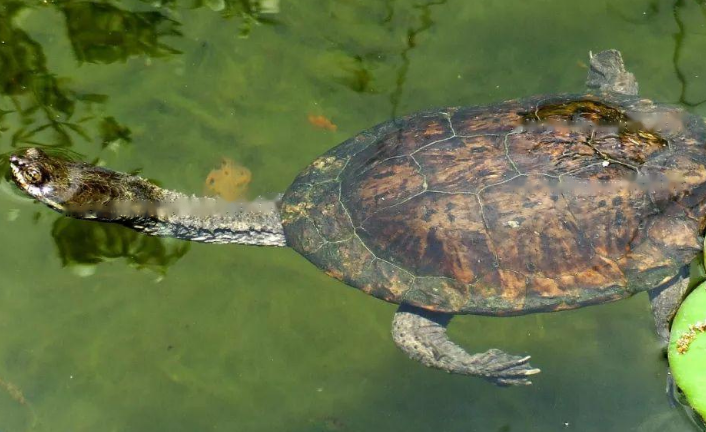
1. Long and flexible: The neck of the South American snake-necked turtle can twist and coil like a snake. When extending out of the shell, the full length is close to the length of the carapace, and its carapace is 12-30 cm long. By comparison, everyone should be able to imagine how long its neck is.
2. Smooth and fragile: The neck of the South American snake-necked turtle does not have spines, so it looks smooth, but it is also fragile, easily injured, and easily infected with bacteria and germs in the water. (This is one of the main reasons why there are fewer breeders)
From this point of view, the neck seems to be its soft underbelly, but the species can continue to this day and naturally has a unique way of protecting itself. So how does it protect the neck?
Second, neck protection
Although they cannot retract the entire neck into the shell like the snake-necked turtle in our country, the South American snake-necked turtle The neck can be hidden in the side of the carapace, which has achieved the purpose of protection. Not to mention whether this protection method is comprehensive, the editor is more worried about whether their necks will be sore if they are coiled like this for a long time?
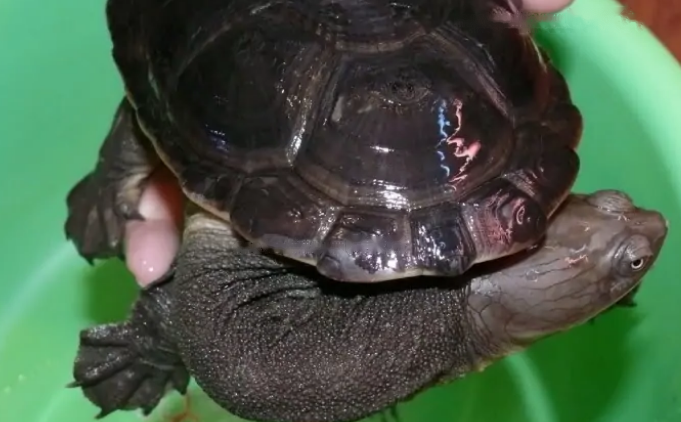
In order to survive, they have no other choice. Looking in the right direction, the neck still plays a big role in the life of the South American snake-necked turtle!
3. Neck function
1. Flexible prey: It usually preys by ambush, or approaches by sneaking, waiting for an opportunity to launch a surprise attack. During predation, it relies on contracting its neck muscles to drive its head, while opening its mouth to swallow food and water. It is with its long and flexible neck that the South American snake-necked turtle is much easier to hunt than other turtles.
Don't look at its slow and gentle appearance on weekdays. At the moment of raiding and preying, its sturdy neck is full of explosive power and its movements are as fast as lightning, so please don't put your hands in front of it and dangle. ~
2. Breathing: Although most water turtles have a strong ability to hold their breath, they also need to take a breath. They can only swim to the surface to breathe, and then sink to the bottom for activities. The South American snake-necked turtle is different. They can stretch their necks and expose their nostrils to the surface of the water while lying on the mud at the bottom of the water, so as to achieve the purpose of ventilation.
When breathing, the South American snake-necked turtle will quickly retract its neck when it hears movement on the water surface, not only timid, but also full of vigilance.
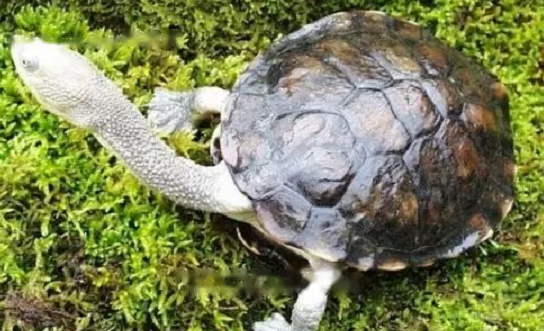
After reading this popular science, do you think that the neck structure of the South American snake-necked turtle is more beneficial than harmful, or does it do more harm than good? Welcome to discuss~

![[Original] Sharing of popular science knowledge of ringed map turtles](/static/img/11249/11249_1.jpg)