1. Morphological characteristics
1. Body length: up to 17.5 cm.
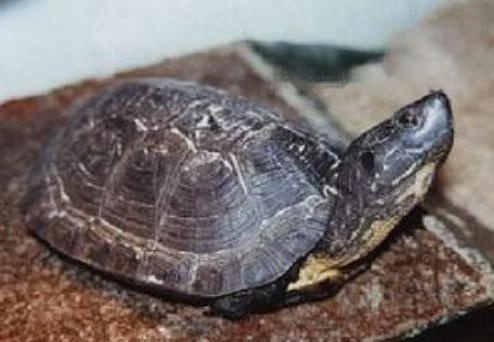
2. Head: The head is broad, with a protruding snout, a moderately hooked upper jaw, and 4 tentacles on the chin. The top of the head is brown, and some have some spots or markings.
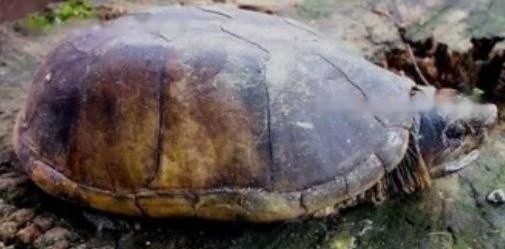
3. Carapace: The carapace is oval, slightly flattened, and mostly brown in color. The adult carapace does not have a protruding vertebral keel in the middle, but in juveniles, there are 3 longitudinal, more indistinct vertebral keels. The shields overlap slightly, and there is a black dividing line between the shields, and the entire shell will shrink at the bridge of the plastron.
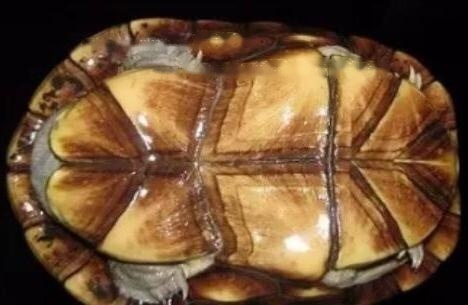
4. Plastron: The plastron is relatively narrow, with a hinged cover at the front and back, and a groove at the end of the rear. Both the front and rear hinged lids of the plastron are slightly smaller in width than the carapace and are yellow in color. In addition, there is a yellow and black seam line between the plastron and the bridge. In juveniles, a large black stripe in the middle of the plastron is very conspicuous.
5. Tail: The tail is long and thick, and the color is light gray.
Second, the difference between males and females
Male Columbia mud turtles have horny joints on their thighs and lower limbs, while females do not. In addition, males are larger and have long and thick tails; while females are usually around 15 cm in length and have shorter tails than males.
Three , Living habits
1. Diet: The Columbian mud turtle is an omnivorous animal, generally feeding on grass, sometimes cow dung and mollusks in the soil.
2. Habitat: Columbia mud turtles generally inhabit slow-moving rivers in lowland forests, streams in basins and swamps, preferring upstream water sources and deciduous environments. Build in soil with foliage as mulch.
four , Breeding method and time
The Columbian mud turtle is an oviparous animal. It lays eggs from April to June every year. The number of eggs in a clutch generally ranges from 1 to 5, which are white and oval. The size is about 45×25mm, and the incubation period is about 100~130 days.
V. Hibernation
The Columbia mud turtle needs to hibernate, and the cycle is about 4 to 5 months.
Okay, the above is the editor's detailed introduction to the Colombian mud turtle. If you have anything to say after reading it, you can tell the editor below~

![[Original] Sharing of popular science knowledge of ringed map turtles](/static/img/11249/11249_1.jpg)