This rare and uncharacteristic variety is exported in very small quantities, and is even less known in my country. So if you want to know more about the white-chested side-necked turtle, you might as well read this popular science article.
1. Morphological characteristics
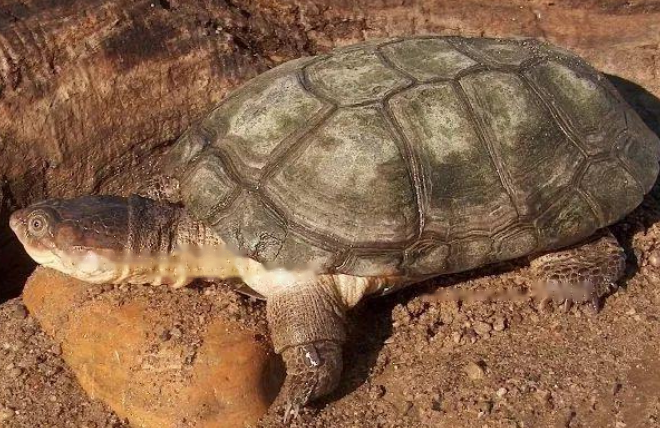
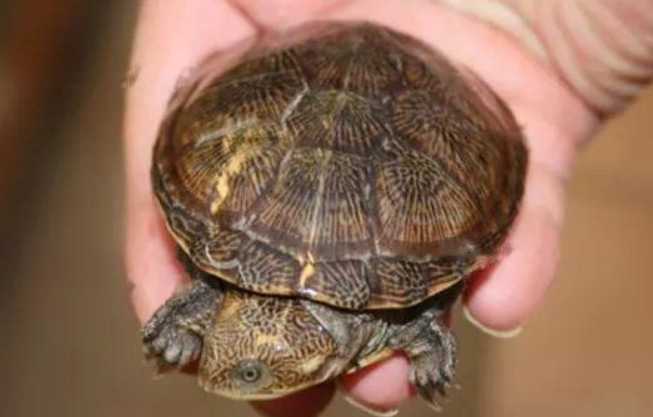
1. Carapace: The carapace of the adult white-chested side-neck turtle is about 35 cm long, and the overall shape is relatively flat, but There is a distinctly raised ridge in the middle that runs across the pattern in the middle of the carapace. Ps: Ridges are a common feature of African side-necked turtles and cannot be used as a basis for their identification.
2. Plastron: Its plastron has closed joints, and the white spots on the plastron are one of their distinctive features.
In general, the white-breasted side-necked turtle is less recognizable. To recognize this turtle, we have to turn it upside down...
2. Living habits
1. Activities: The white-breasted side-necked turtle is a social turtle species, and even activities are carried out in groups. Especially in the face of some birds or reptiles, there is no chance of a turtle alone, but it is not difficult to drag it into the water in a group, and then they can share this delicious food.
2. Diet: The birds and reptiles mentioned above are only occasionally used to open meat. Under normal circumstances, the white-chested side-necked turtle mainly eats fish and shrimp, shellfish, insects, earthworms, and even some plants.
All in all, although the white-breasted side-neck turtle is not common, there are still many bright spots worthy of our understanding. Friends who like this article, welcome to pay attention to this site.

![[Original] Sharing of popular science knowledge of ringed map turtles](/static/img/11249/11249_1.jpg)